Showing posts with label novels. Show all posts

Wednesday, September 2, 2026

Autographed, Creepy-Ass Books at Chapter & Hearth Booksellers

Chapter & Hearth Booksellers, in nearby Collinsville, Virginia, has picked up autographed copies of several of my books, and they're doing a bang-up job promoting them, which I so appreciate. Currently, they have The House at Black Tooth Pond, Gods of Moab, Blue Devil Island, and The Lebo Coven. Chapter & Hearth is located at 3408 Virginia Avenue, Suite 2, Collinsville, VA 24078, (276) 352-5117, and open Monday through Friday, 10:00 a.m. to 6:00 p.m., and Saturday, 10:00 a.m. to 4:00 p.m. I love this shop!

It's cozy, comfortable, and has all the character of the best neighborhood bookstores from their heyday — not to mention a fine selection of books! If you love books, and you're anywhere in traveling distance, I strongly recommend that you stop in!

THE HOUSE AT BLACK TOOTH POND
Stephen Mark Rainey delivers a chilling Appalachian tale steeped in atmosphere and creeping dread. The House at Black Tooth Pond follows the unsettling mysteries surrounding an isolated home and the dark history embedded in the surrounding woods. Rainey’s signature slow‑burn tension and vivid sense of place make this one of his most haunting works. Our in‑store copies are signed by the author, making this eerie novel a perfect addition for collectors and horror fans alike.

THE GODS OF MOAB
In The Gods of Moab, Stephen Mark Rainey blends Appalachian dread with cosmic horror, pulling readers into a remote mountain community where ancient forces stir beneath the surface of everyday life. The novel builds a slow, unnerving tension as characters confront otherworldly menace and unsettling revelations that challenge their grip on reality. Rich with folklore, psychological unraveling, and that signature Rainey atmosphere, this is a gripping descent into mythic terror. Our signed copies make an exceptional addition for collectors and fans of dark, immersive storytelling.

BLUE DEVIL ISLAND

Set against the backdrop of WWII, Blue Devil Island blends military suspense with Lovecraftian terror as a squadron of soldiers encounters something far more sinister than enemy forces. Mark Rainey’s mastery of claustrophobic tension and otherworldly menace turns this remote island into a nightmare landscape. These signed editions offer readers a gripping mix of historical adventure and cosmic horror — a standout for anyone who loves dread that builds page by page.

THE LEBO COVEN

In The Lebo Coven, Mark Rainey taps into dark rural folklore and the shadowy traditions of a small Appalachian community. Witchcraft, ritualistic secrets, and ancestral darkness converge in a story that feels both timeless and deeply unsettling. The novel’s slow‑building supernatural tension makes it a perfect read for fans of occult horror. Our signed copies highlight Rainey’s local roots and give collectors a chance to own a piece of Martinsville’s horror legacy.

Thanks, Ed & Mitch at Chapter & Hearth, for all your support!

Tuesday, May 16, 2023

Back in the Shadows Again

I recently wrote on this blog that I’m getting too old for this shit, and I’m thinking I might swipe that line from Danny Glover on a more permanent basis. Whew! Brugger and I are well into getting the Martinsville house restored, although there are still weeks and weeks’ worth of (expensive) work left ahead of us. Today, it’s the new roof. Concurrently, we’re trying to whip the Greensboro house into saleable condition, which is also anything but a small (or inexpensive) job. Since all this restoration work began back in April, I’ve been going to bed each evening mostly satisfied with the progress we’re making, but so sore of muscle and bone that getting a solid night’s sleep is possible only occasionally.

Still, there’s so much cool stuff happening. It was nice to get some of my old books—all the James Bond novels (and certain associated titles), the Dark Shadows novels (and certain associated titles)—back into the old homestead where they and I grew up together. The Bond books, at least all the old Signet editions, are back on the same shelf in the den where I discovered them as a youngster, when they belonged to my dad. It was in that same den that I first started watching Dark Shadows on a regular basis (right at the start of the Leviathans storyline in 1969), so I’ve put all the Dark Shadows books together on the shelf below the Bond books. And, for shits & giggles, I’ve started rewatching the Dark Shadows Leviathans episodes on Freevee.

The other day, I dug up an envelope, which I feared had gone forever missing, of old love letters (as well as a few that expressed something distinctly other than love) from certain young ladies in my junior high and high school years. Marybeth, Gretchen, DeeDee, and Courtney... it’s so nice to read all those lovely sentiments again, haha.

We’re holding an estate sale this weekend, Saturday, 5/20 and Sunday, 5/21, from 10 a.m. to 4 p.m. each day. Here’s the Facebook listing for it: Estate Sale, 5/20–5/21. If you’re in the vicinity, stop on by.
Some of the James Bond novels, the original Signet editions of which now re-reside on their original shelf
in my dad’s old den

Friday, July 1, 2022

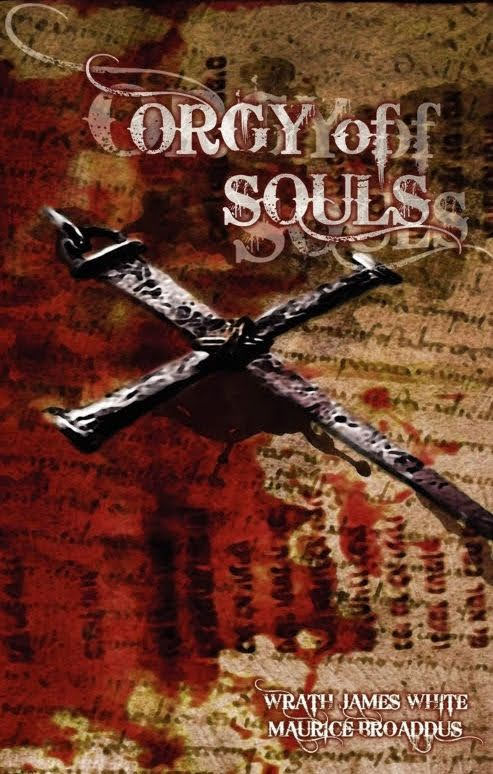
A Graveside Chat with Maurice Broaddus

Maurice Broaddus is a best-selling author, Afrofuturist, minister, teacher, and community organizer — among many other endeavors, magnanimous as well as fiendish. His work has appeared in Asimov’s Science Fiction, Cemetery Dance, Fiyah Magazine of Black Speculative Fiction, Apex Magazine, Black Static, Weird Tales, Fantasy & Science Fiction, and others. His books have been lauded by The New York Times and The Washington Post. And these accomplishments barely touch the tip of the iceberg. Maurice was kind enough to take some time to share his thoughts for this edition of A Graveside Chat. Buckle up and read on!


AGC: As an author, you have an impressive catalog of works under your belt (not to say you are overweight or anything). What drew you to become a writer — particularly about the most frightening side of humanity? Looking back, can you pinpoint any particular authors — or other individuals — who inspired you?

MB: I have been writing for as long as I can remember. In second grade — when our family arrived in the U.S. from England — my teacher didn’t know what to do with me. She had an overloaded class and I could be a handful since I was easily bored. So she put my desk in a corner, gave me a stack of paper, and just told me to “create.” I guess I’ve been doing that ever since.

My Sunday School teacher in fourth grade was probably my first nudge in the horror direction, as he was a closet horror and comic book fan (and in that church, you had to be in the closet if you were into “that demonic stuff”). Let’s face it, the story of Noah and the flood was my first exposure to a postapocalyptic story! The first story I remember writing was in fifth grade called “The Big Mac Attacker,” the tale of a burger being eaten… from the burger’s perspective.

It was my senior year in high school and my A.P. English teacher encouraged me to read Edgar Allan Poe after reading some of my (admittedly, angst-ridden) dark short stories. He kept introducing me to new authors to challenge me (he assigned me Bram Stoker’s Dracula), really encouraged me to think about writing seriously. I was pretty much locked in from there.

I was a huge comic book collector, with Neil Gaiman’s Sandman being a favorite. In college, I tried giving up writing, but after a few years, I came back to it. I did an independent study course and was randomly paired with a professor who, as it turned out, did his dissertation on Stephen King and Clive Barker. That’s when I knew I was on the right path.


AGC: You’ve been called (quite lovingly, I can safely say) “The Sinister Minister,” given your role in your church and in the Christian community. I know you’ve talked about this many times, but can you speak a little about your views on horror and religion, and how they are inextricably fused?

MB: Basically, I believe we’re in a Story, written by an Author, who is wooing us to connect with Him. It’s a tale of flawed people, who were created (in God’s image), for great things (to join in with that Author in a mission to redeem the world), who sometimes encounter things that interfere with their journey: sometimes themselves, sometimes others, and sometimes An Other.

Faith is never easy, and I tend to have more questions than answers. I think that’s the most critical part of anyone’s spiritual journey — walking that line of tension between holding on during times of doubt and questioning. I think one of the best ways to explore that tension is in story. (The Bible does it too: the book of Job was probably the first book written, and it’s all about faith, doubt, and frustrated questions. And quite the horror story when you think about it.)

I guess you could say that in some ways, I’m working out my own spiritual journey in front of my readers. And sharing my nightmares.


AGC: You have been — and are — very active as a teacher and a community leader. Your writing clearly draws on your rich and plentiful experiences with these endeavors. Can you tell us something about any pivotal or memorable experiences that have evolved into your stories and books?

MB: This has been the case for me for nearly ALL of my work. I process my feelings and life in story. Probably the most personal example was my story “Bound By Sorrow” which was me processing the death of my sister and my father. But that’s simply my process, from my first published novels, the Knights of Breton Court trilogy, being loosely based on my time working for the homeless teen ministry Outreach Inc; to my current trilogy, Astra Black, based on my work in the community through the Kheprw Institute.

For a long time, I struggled with the notion that “I’m only a writer, what can I do?” But what it boils down to is empowering agency: start where you are with what you have. With my neighbors, with my students, whoever I meet, I try to see, learn, and love the person in front of me. Get to know the gifts and talents they bring to the community.

My community work informs my writing and my writing informs my community work. One of the things that I’m doing is mentoring young creatives to be the next generation of dreamers, storytellers, and vision casters. Because that’s the work of art informing community work and community work informing the art. The merger of art and social practices, artists and activists. In order to create radical change, we have to be able to envision it. So, we dream the possible future, cast a vision of what a better tomorrow could look like, and then start making steps, charting a course to get there. Being a resident Afrofuturist of a community organization represents a public statement of the attitude and mindset of the organization and community. It’s about creating desired future states in the present by constantly re-imagining the work and the way we move through the world.

Let’s look at my two most recent works. My latest middle-grade novel, Unfadeable, was inspired by my mentoring one of my former middle school students. My latest story in Uncanny Magazine, “Spirit Folks,” was co-written with another former student as a way to process some of the things she was going through.

AGC: What was the greatest piece of advice you ever got about writing?

MB: The following three pieces of wisdom:

  1. Writers finish things. This was something told to me by one of my high school teachers. He said what separates people who want to write/talk about writing from writers is the fact that writers finish what they start. Where this really helps me is in the fight against “the Shiny”: I constantly battle ditching what I’m working on to run with the latest shiny idea that pops into my head. Every time I have to remind myself that “writers finish things.” If you’re going to call yourself a writer, you need to take those ideas you have, get them down on paper, then get to “the end”. And it helps battle the imposter syndrome: did you finish what you started? Yes, then you’re a writer.
  2. Your angst won't pay the bills. Sometimes we attach a lot of romance to the idea of being a writer. We have to be inspired. We have to wait on our muse. This “advice” was given to me by my wife during one of my “my muse has left me” sessions as I stared down a blank page. She reminded me that my “muse” was now named Deadlines. This was a follow-up to our “exposure won’t pay the bills” conversation. (Her other bit of clutch perspective was “you can go to as many conventions as your writing pays for” which helped me not only guard against the temptation to give away my stories early on but challenge me to only submit to professional markets).
  3. Do that $#!+! This was told to me by fellow author, Daniel Jose Older. I was feeling anxious about a project I was working on. It was a novel that was plunging headlong into territories of race, class, and politics. I called up Daniel and that was the advice he gave me. Writers have to be bold and take risks. It can be scary sometimes (which is why it’s good to have friends who can nudge you). In the end, taking those risks, accepting those challenges, only makes you a better writer.

AGC: I was privileged to attend Mo*Con some years ago, and it was one of my most memorable — and enjoyable — gatherings of creative souls. Tell us a little about how Mo*Con came to be. I know that, for a spell, circumstances resulted in No*Con(!), rather than Mo*Con, but do you have plans to resurrect/continue this traditional (and I know, for you, surely physically and probably emotionally fatiguing) gathering in the coming days and years?

MB: Whenever there is a writer’s convention, there are always room parties at night, where people unwind, lower their guards, and have great conversations over food and drinks. Mo*Con is like that room party for a whole weekend. What also makes it different is that it takes place in a church. So we have all these horror, science fiction, and fantasy writers from various spiritual backgrounds who come together and hang out all weekend in a church. We have a couple of panel discussions ranging from spiritual issues to social issues to writing issues all over meals.

Mo*Con has evolved over time. We took a hiatus after year ten. I thought I was retired from it. After the first year of not doing it, folks wanted to at least gather. So we started “No*Con,” which basically meant “I wasn’t planning anything but if folks wanted to come by my house, we could hang out.” When fifty people showed up, we decided at that rate, we might as well do Mo*Con. We brought it back with more of an eye of being a community support: the art in the space done by black artists, food catered by different black caterers, and even having our own in-house vintner (who DEFINITELY was not used to folks who bought wine by the bottle... the MANY bottles). The pandemic brought another hiatus and this year we did another No*Con. But it’s looking like we’ll be doing Mo*Con again starting next year. It’s very much a time rooted in getting to know one another and one of the highlights of my year.

AGC: Thank you, Maurice. This was a pleasure!

Saturday, April 23, 2022

A Graveside Chat with Ronald Kelly

For some time, I have been considering posting regular author interviews here on ye old blog, and I finally decided to jump in and just do it. To kick things off, the very sporting Ronald Kelly has agreed to play guinea pig. I published several of Ron’s stories in Deathrealm back in the day, starting with his wonderful “The Web of La Sanguinaire” in Deathrealm #6 (1988), which I loved at the time and still do. Since those long ago days, he has gone from establishing himself in the field of dark lit to taking a decade-long hiatus to returning and retooling himself and his work. He has cultivated and retained a receptive audience with an impressive body of work spanning several decades now.


GC: During the mid-to-late 1980s and early 1990s, your short fiction was a mainstay in just about every publication in the dark lit field. By way of Zebra, you also published a fair number of horror novels. Do you have a preference for the short form over the long form — or vice-versa — from the perspective of both reader and writer? You do both quite adeptly. Do you find the disciplines for writing short fiction significantly different from writing novels?

RK: By nature, I’ve always been a short story writer. The compact form seems to suit my storytelling style extremely well. There’s not a lot of fluff and filler involved; a scaled down plot, flesh and blood characters that are real, but not with every mole, freckle, and scar described, and preferably a twist end, sometimes ambiguously so. When I grew up as a child, and well into early adulthood, I would listen to my Grandmama Spicer spin tales of family history, Civil War lore, and horrifying stories of local ghosts and cryptids. They were always very short and compact, but told in a way that conveyed an encompassing sense of place and time. Maybe subconsciously, I’ve emulated that in my prose. I do enjoy doing novel length fiction, and the disciplines are very different. Writing a novel is like taking a two week road trip from the east coast to the west. A short story is more like a fast and fun day trip. Personally, I find a short story much more pleasurable and rewarding.

GC: After Zebra crashed and burned in the mid-1990s, you retired from writing, or at least publishing, for several years. During that period, did you produce any fiction? Or did life carry you in a wholly different direction? I know many — including me — were happy to see you blaze back into action a few years ago. After the hiatus, did the writing/publishing world seem a much different animal to you?

RK: When the Zebra horror line shut down in 1996, I found myself in limbo. Writing mass market novels had been my job for six years and suddenly I was unemployed. Since the “H-word” was pure poison and no publishing houses were reading or accepting that genre of fiction at that point in time, my agent suggested that I write anything but horror. So, I tried my hand at several other genres, including detective and romance, even children’s books, but nothing panned out. So, I got bitter and discouraged. I flat-out stopped writing for ten years. And, even worse, I stopped reading horror as well. I laced up my steel-toed boots and punched the clock… went back to the factories. I pretty much figured that I’d had my shot at a writing career and blew it. So, I worked blue collar jobs and raised a family. It wasn’t until 2006 that I decided to come back to the horror genre and give it another try. As for how the publishing world differed from before, it was pretty much completely different. The sheer mechanics of the writing process had progressed far beyond where I had left it. Where you had to type and submit multiple copies and send them off via snail mail before, everything was submitted digitally through email and where it once took weeks or months to receive a reply, you could be accepted or rejected in a matter of minutes. Also, social media made it easier to promote your work and communicate with readers, fellow writers, and potential publishers. Sure, there are pros and cons to Twitter and Facebook — sometimes more negativity than positivity— but for the most part it’s a useful tool to get folks interested in your work and build an audience of readers.

GC: Your influences have ranged from the classic horror and science fiction movies that so many of our (increasingly ancient) generation grew up with to the works of Edgar Allan Poe, H. P. Lovecraft, Richard Matheson, Stephen King, and many others (not that I’m saying you’re old or anything — no, no, not at all!). Your recent collection, The Haunt of Southern-Fried Fear, carries a strong EC Comics vibe (and to me, especially with the art you’ve provided for the book, something of a Hugh B. Cave/Lee Brown Coye feel, such as with Murgunstrumm & Others). So, it seems you still have an affinity for the “old” treasures. Once you returned to the writing fold, so to speak, did you find yourself moved by any new and different dark influences? Do you have any recent favorite books and movies?

RK: When I was debating on whether or not I actually wanted to write horror again, there were two authors — both totally unfamiliar to me — that pretty much made my mind up for me. After I read Brian Keene’s The Rising and James Newman’s Midnight Rain, they really ignited a creative fire in me and I thought “Hey, I think I can do this again!” And I found that I actually wanted to. So I attribute my desire to come back into the fold to Brian and James. As for recent books I’ve enjoyed, there are almost too many to mention. I really enjoyed Rich Chizmar’s Chasing the Boogeyman and the Gwendy series he did with Stephen King. Also, about anything by Keene, Jonathan Janz, Wesley Southard, Hailey Piper, Laurel Hightower, and Eric Larocca. There are dozens of others, too. The horror genre is so full of creativity and energy these days, the selection of different styles and voices is hard to keep up with. As for movies, I don’t watch many theatrical horror flicks these days, but some of the streaming services like Netflix are putting out some good horror, like Malerman’s Bird Box and Lebbon’s The Silence.

GC: I purchased The Haunt of Southern-Fried Fear literally a day or two before Silver Shamrock blew up. After your experience with Zebra, did you by chance get a nasty sense of of deja-vu? (I expect I would have.) Am I right in thinking you’ve come to an arrangement with Crossroad Press (with whom I’ve had consistently excellent experiences) for your work that would have otherwise come out via Silver Shamrock? Anything you can tell us about your upcoming stories and books?

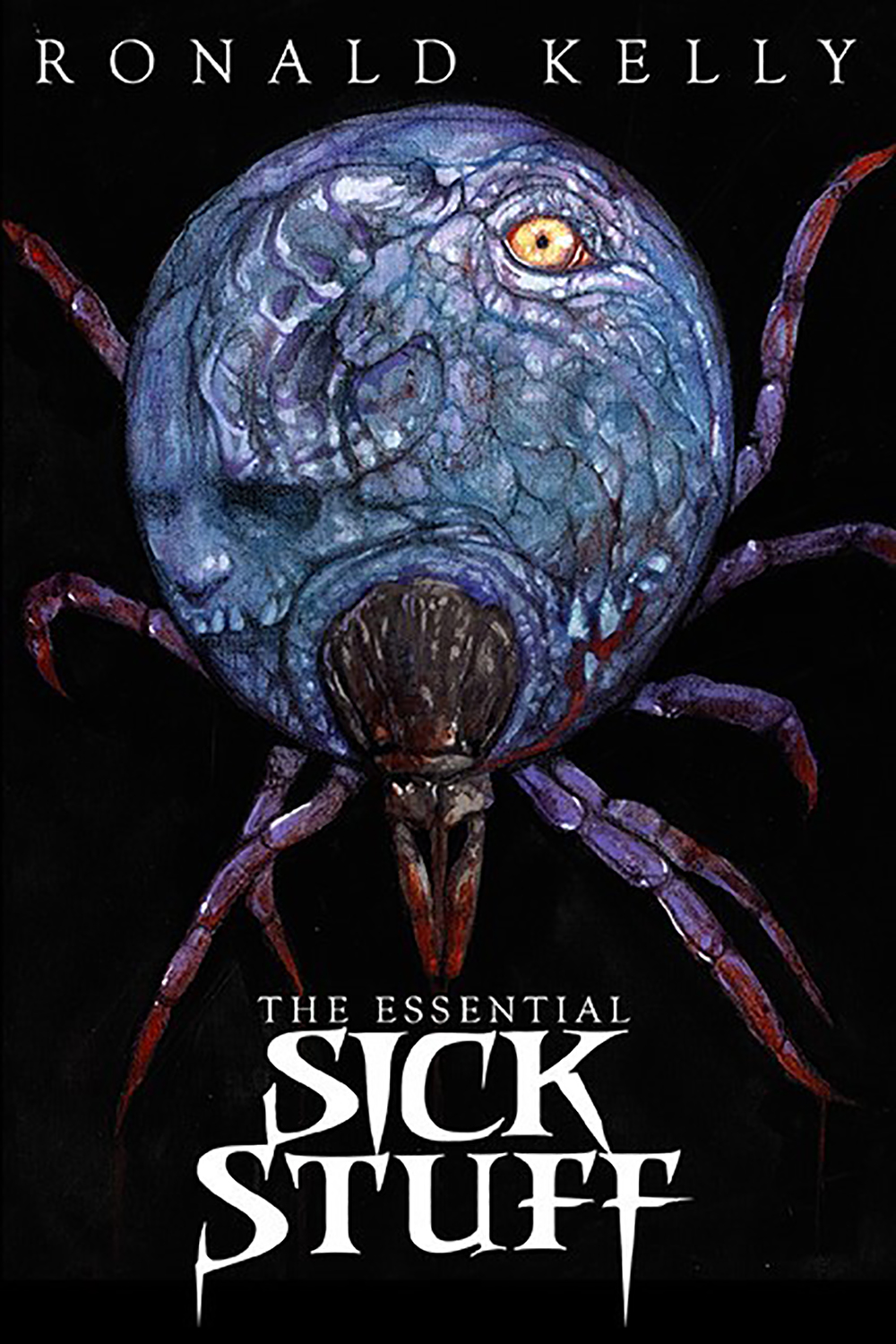
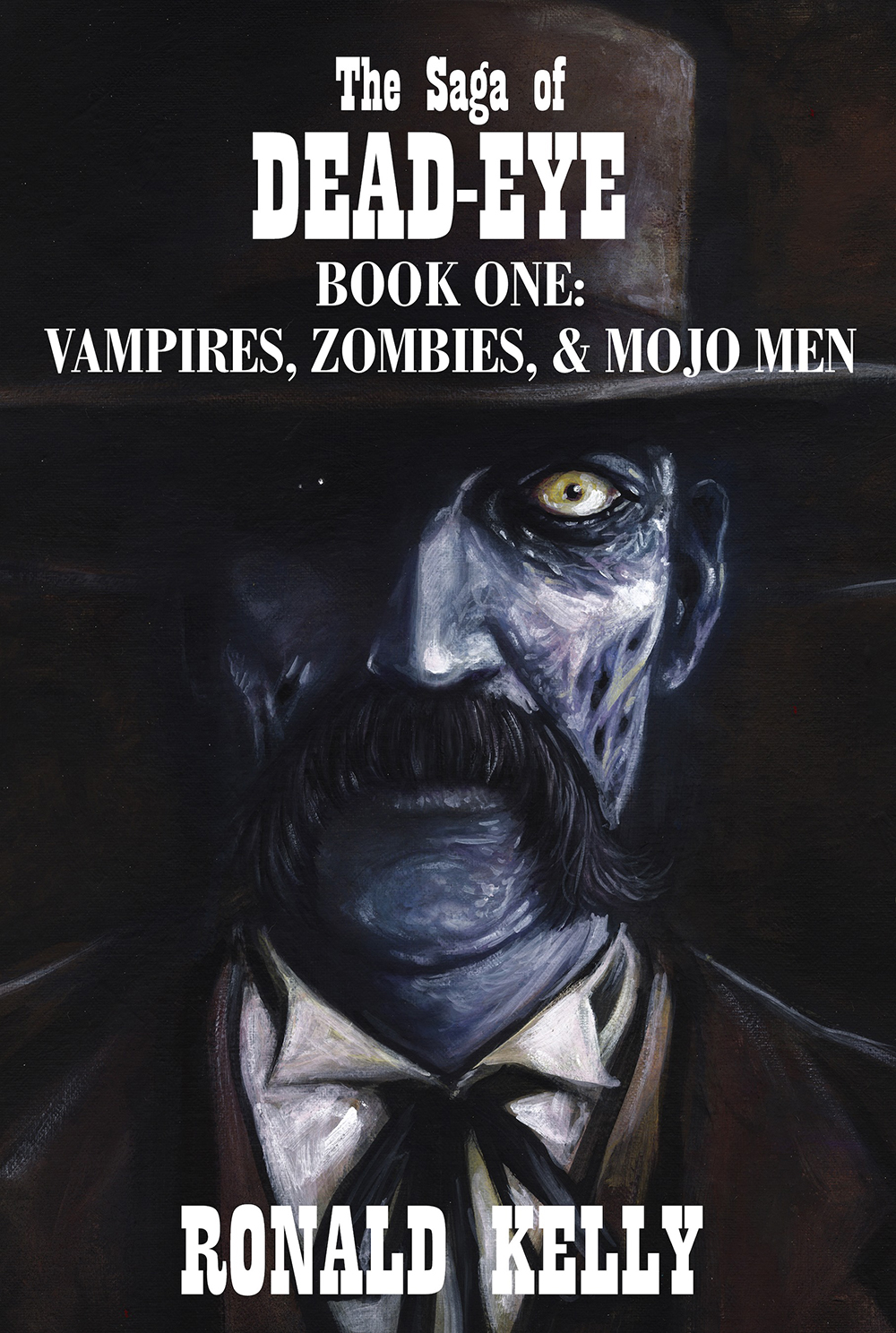
RK: The fiasco with Silver Shamrock wasn’t as heartbreaking and chaotic for me as it might have been for other authors. I’ve gone through these sudden, unexpected publisher shutdowns seven times during my writing career, so I reckon I’ve kind of grown accustomed to the chance of it happening at any given moment. Nothing is guaranteed from day to day in indie publishing. Sometimes it’s financial woes or low sales due to disinterest from potential readers. In this recent case, it was an extremely negative reaction to a social media promotion. Luckily, the Davids at Crossroad Press contacted me shortly after SS announced their demise and the transition of The Essential Sick Stuff, The Saga of Dead-Eye, and the Southern-Fried collection series from one publisher to another was relatively smooth and painless. Crossroad is in the process of making all three available in ebook and paperback, and eventually audiobook… something that Silver Shamrock never seemed to have a genuine interest in pursuing. As for upcoming books, Dead-Eye, Book Two: Werewolves, Swamp Critters, & Hellacious Haints should be released sometime this summer, along with a new edition of my extreme horror collection, After the Burn, illustrated by Zach McCain. Plus, Stygian Sky is releasing my memoir/writer’s guide, Southern-Fried & Horrified, in September.

GC: Most of today’s horror authors are finding career success in their twenties and thirties. Your recent surge in popularity seems to be taking place during your early sixties. Do you think there is a reason for that? And, where do you see yourself and your career in ten or twenty years?

RK: You know, there was a long stretch of several years after I returned in 2006 where very few readers were familiar with me or my work. It was discouraging. At one point, I seriously considered hanging it up because of lack interest. Then folks started discovering Fear and reading The Essential Sick Stuff and The Halloween Store, and they began to get a hankering for old fashioned storytelling. I don’t know… maybe they grew a little weary of all the gloomy, angst-ridden fiction that was prevalent and craved a bit of fun and nostalgia in their horror. Maybe it just took thirty-six years for me to reach a point where I had the confidence to write what I truly wanted to write; traditional tales that serve as comfort food for those who have a true love for old-school horror. Yes, true, I’m nearing retirement age, and that’s when many writers tend to slow down and take it easy. It seems to be the opposite for me. I have more story and novel ideas in my head, more projects in the works, than I ever did during my younger days. If I can hang in there, I’m planning on serving heaping helpings of Southern-Fried horror for another decade or two. If the readers keep hankering for what I have to offer, I’m more than happy to oblige them.

GC: Thanks, Ron — it has been a pleasure!


In the next Graveside Chat, look for celebrated author Jeffrey Thomas to offer his unique insights into thrills, chills, and mind-numbing terror!

Friday, July 16, 2021

Martinsville Oktoberfest, October 2, 2021

I have reserved a space at the Martinsville Oktoberfest, coming up on October 2. I'll be bringing plenty of copies of my Ameri-Scares novels (West Virginia: Lair of the Mothman, Michigan: The Dragon of Lake Superior, and Ohio: Fear the Grassman!), my novelization of  The Smith Brothers’ movie Young Blood (which was filmed in Martinsville), some of my Dark Shadows audio dramas, as well as The Monarchs, Blue Devil Island, Other Gods, and more.

I figured I’d put together an author banner to slap on the booth canopy, so I came up with the design you see above. I’ve requested a booth adjacent to authors Stephen H. Provost & Samaire Wynne, which I hope will actually happen.

If you’re anywhere in the southwestern Virginia area, I hope you’ll come check out the Oktoberfest — it’s always great fun — and stop by to support your local authors. We’d love to see you.

Friday, July 9, 2021

Overnight Takes a Long, Long Time

With the major house renovation slowly wrapping up, I’m starting to unpack all the shit that’s been stowed in boxes for several weeks. I figured I’d take this opportunity to put my own books, as well as anthologies that include my work, together on the shelves in my office; something I’ve never really done before. There’s another couple dozen more books to dig up, and the hundred or so magazines featuring my short fiction will have to find a different home. Looking at this, I am forced to admit that, after 30-some years, my plan to become a rich and famous author overnight was a failure.

The plaques and critter are awards from the Deathrealm days. Those are happy things.

Thursday, August 22, 2019

Deadlines!

It's been a busy, busy month, writing-wise and life-wise. A couple of tight deadlines for short stories have kept my schnozz to the grindstone for most of the past month. Both tales are now finished, the second one sent off to the editors as of this afternoon. Even geocaching time has been sparse these past few weeks, although I have managed a handful of decent outings. Blogging, for better or for worse, has been right out. Next up, I have my third Ameri-Scares novel — set in Ohio — to write. It'll be about the Ohio Grassman — basically, the Ohio version of Bigfoot. I've always been keen on the idea of writing a Bigfoot book, so here it comes, and you people better watch out.

Don't know when I'll get to blog next, but rest assured I will return eventually. In the meantime, here's a spider.