Showing posts with label publishing. Show all posts

Thursday, November 20, 2025

OUR SHADOWED PAST III on Terror at Collinwood

A couple of weeks back, Bob Issel and I appeared on Penny Dreadful's Terror at Collinwood podcast to talk about his latest Dark Shadows volume, Our Shadowed Past III, which he and I spent several weeks producing, back in August and September (see "Our Shadowed Past III Is in the Works," September 16, 2025). Penny Dreadful—a.k.a. Danielle Gelehrter—has been running this Dark Shadows–themed show for I don't know many years now, and I've had the honor of appearing on it numerous times. This time around, Bob and I get into the nuts and bolts about how Our Shadowed Past III was conceived, developed, and produced, and how so many Dark Shadows fans contributed meaningful essays, stories, artwork, and photographs to bring Bob's most ambitious publishing project to life.
 
The book itself is 256 big-ass pages in full, bloody color, with hundreds of photographs of countless events and fan gatherings, with an entire section devoted to those at Seaview Terrace in Newport, Rhode Island, which served as Collinwood in the original Dark Shadows TV series (1966–1971).
 
We had a great time on the podcast, and our thanks to Penny Dreadful for seeing fit to inflict Bob and me upon an unsuspecting world.

Friday, October 11, 2024

Hospital of Haunts Authors on NBC's House of Mystery Radio Show

I, and a few other authors in the new anthology, Hospital of Haunts, from Watertower Hill Publishing, recently appeared on the House of Mystery Radio Show on NBC. (Apparently, I am known as Mr. Grainey here; maybe because that's how I look early in the morning.)

My segment is here:

Maria Lanza
here:
https://shows.acast.com/houseofmysteryradio/episodes/marie-lanza-hospital-of-haunts

Rebecca Cuthbert here:
https://shows.acast.com/houseofmysteryradio/episodes/rebecca-cuthbert-hospital-of-haunts

Note: The frequency and length of the commercials on this show are INSANE. Sorry about that; I had no idea. It wasn't like that last time I was on the show, a couple of years ago.

Thursday, June 27, 2024

A Graveside Chat with M. Wayne Miller


M. Wayne Miller
is one of the most prolific and recognized talents in the field of the dark arts. Well, not necessarily black magic, but for three decades, his artwork has graced the pages and covers of countless magazines, anthologies, collections, and novels — including many of mine. Wayne's earliest work appeared in Deathrealm magazine, but it wasn't long before his list of clients began to include such noteworthy names as April Moon Books, Dark Regions Press, Journalstone Publishing, Necro Publications, Celaeno Press, Pinnacle Entertainment Group, Chaosium, Crossroad Press, TOR, and many others.

AGC: It was purely serendipitous that when you first began submitting your art to various publications in the 1990s, you lived literally around a couple of corners from me in Greensboro, NC. Thus, I had the privilege of seeing some of your early artistic development first-hand. To say I was impressed is a gross understatement. Do you have any stand-out recollections of those pioneering days, so to speak, as far as the challenges and rewards of that formative period?

MWM:
Yes indeed, Deathrealm magazine was my first paid commission, for a story by the late Tom Piccirilli, no less. At that time I was submitting to any publisher of line art. Hundreds I expect. Deathrealm was the first to respond, and we met in person as you mentioned at my home to discuss the work. I am pleased that our working relationship has become true friendship over the years.

That initial commission became a wave of work done for horror magazines and anthologies over the next several years. There were multiple issues of Deathrealm, as well as work in Lore, Terminal Fright (both magazine and anthology), Epitaph, Aberrations, and Flesh & Blood magazine. This led to many interior art commissions for RPG games from Chaosium and WEB Games, as well as many anthologies and poetry collections. There was a period where I was hugely prolific with line art, and while the financial reward was less than desirable, the work was huge fun and laid the groundwork for my subsequent freelance career.

AGC: Your earliest published work was mostly black & white interior illustration, but you very quickly became adept at producing full-color illos and cover art. Your portfolio includes an impressive number of works in various media. Do you have a preference — or particular fondness — for one medium or style over another?

MWM:
I knew early on that black & white illustration would not pay the bills no matter how prolific I was. I had to gain color work in the industry to progress. While I see tone extremely well, color use was not something I had any natural ability with. My first forays into creating color work was using markers and color pencil to colorize line art. While the results were good in themselves, it was only a stepping stone towards my use of color in illustration. I made a concerted effort to learn to paint in acrylic and oils from 1999 to 2005. My line art had phased out, and I basically took that time to redevelop my skillset. I was successful in learning to paint, and for several years painted for myself. Those were quite good years, but of course, I had to break into the industry again to get my color illustration career off the ground.

Dark Regions Press offered my first color cover commission, for one of your books, Mark, titled Other Gods. After that, my cover illustration career was off to the races. I soon learned that traditional media was not viable for production on quick deadlines. I was just not fast enough with it, and the drying times required meant I was fighting both the medium and deadline to get work done as quickly as possible. In 2009 I made the transition to all digital workflow, and have maintained steady work ever since. While not as visceral as traditional media, digital painting has offered a rich arena for learning and growth, and I still strive to improve and grow using software and learning new techniques. Regarding fondness, while digital offers fast production and ease of preparing print files, lately I have been feeling the urge to return to oils and acrylics. I attend a weekly drink-n-draw group where I only work traditionally with graphite, charcoal, watercolor, and color pencils. It is my “sanity break” from steady digital art production the rest of the week!

AGC: As far as artists go, who might you consider a major creative influence, if any? How about writers? Are there any particular authors whose work you haven't illustrated but that you're dying to?

MWM: I consider the late Bernie Wrightson to be my greatest artistic influence for both my line art and color illustration. His work is sublime, and always inspiring to me. For color work, I was heavily influenced by Michael Whelan, and still am in awe of his artistic output today. Along with these major influences, I love the work of Brom, Larry Elmore, Virgil Finlay, Wayne Douglas Barlowe, and Phil Hale. Honestly, I could rattle off dozens of artists, but nobody wants to read such a list here. Suffice it to say I love visual art and artists, and can gain inspiration from them all. My biggest author influence (after yourself of course, Mark!) is Stephen King. He is a very visual writer, and I can literally “see” his prose. Judging by all the adaptations for film and television, others are similarly affected by his writing style. For the most part, I have no use for such adaptations, because they never live up to what I saw in my imagination.

Coincidentally, King is also the “holy grail” author whose work I would love to illustrate. To get a cover or interior project for one of his books would be a dream come true! As with artists, there are multitudes of writers I am influenced by with my art, and a few will suffice to represent the rest. I love the work of Douglas Preston and Lincoln Child (Pendergast rocks!), Daniel Suarez, Jim Butcher, Neal Stephenson, Piers Anthony, Robert E. Howard, Scott Sigler, and of course H.P. Lovecraft.
AGC: In addition to the dark lit business, you've done plenty of work for the gaming industry. Is there any creative difference in your approach — or style — for these, or are they flip sides of the same coin?

MWM: I feel they are synonymous with regard to my artistic output. Granted, subject matter and style can vary, but I strive to put my artistic stamp on them all. The fact that a fair portion of both the fiction and RPGs share similar Cthulhu Mythos themes reinforces my love of creating such art, and I revel in depicting the indescribable and maddening. Fantasy and Young Adult genres stretch my artistic comfort zone, which is never a bad thing. Science Fiction is a mainstay genre for me, and I strive for the day when I can walk through a bookstore and see a dozen of my covers on mass market shelves. The illustrator’s journey is never-ending for certain!

AGC: You and I used to work for rival educational publishing companies in Greensboro. Did you ever feel inclined to resort to covert ops to get a leg up in the business? I know I did.

MWM: Ha! It’s funny, but at the time I never considered that rivalry to be “a thing,” though it evidently was in hindsight. I loved that job and the company, and I was aware of your company as another similar business, but I never felt that competition. I was just happy to have steady fruitful employment. Of course, that ended in layoff, and when I got hit with the reality of the existing rivalry between the companies was when I figured I would seek employment there since it was a similar business. For whatever reason, the boss at your company would not take any former employee of my company, period and end of story. Frankly, that pissed me off at the time, as I would have been a great asset for that company, and would have willingly shared anything I knew with them in the course of work. Even now, I look back on that owner’s stance with perplexity. Thankfully, that perceived rivalry is moot, since both companies are no longer operating in the area, and it never affected our friendship.

AGC: Were you a "monster kid" in your youth? Watch every horror/SF/critter feature that came on TV or to the theater? Do you have any favorite memories or inspiring moments that set you on the creative course you chose?

MWM: Of course! I loved anything monstrous on TV — Godzilla, aliens, saucers, cities being trampled by who knows what. Friday nights were my favorite time for watching such movies, and naturally I had to build models of such things, and play Ultraman or Destroy All Monsters with my friends of the time. All that changed in 1977 when Star Wars came out. It was the formative moment of my 10-year-old life, and after that, nothing would be the same about my artistic output. Even to this day, I still draw Star Wars stuff, despite never having been hired to do so professionally. One of these days, though, I will attain that dream as well! Hear that, Disney? Lets talk!

AGC: Anything you can mention about upcoming projects? What can we look forward to from you in the coming days/months/years?

MWM I am pleased to be working on a cover and interiors project for Joe Morey at Weird House Press. Years ago Joe ran Dark Regions Press, and I have been working with him ever since. Yet another long-running professional association that has developed into a true friendship. I am thankful to have such friends in the industry, and that they evidently enjoy working with me! Additionally, I am happily working on a Chaosium project for a new property of theirs, and like most things, I can say nothing about it due to NDA. Unfortunately, with times being as they are, business is not as it once was. As an illustrator, I am running head first into the AI thing, and I can feel its effects on my field. But as with any transitive period, flexibility and resiliency are foremost in my efforts to maintain a fruitful and growing career. I am nothing if not hard-headed, and I'm in this for the long haul. You may look forward to having me and my work popping up for many years to come.

AGC: Thank you, M. Wayne Miller!

Monday, June 3, 2024

New Short Story Complete: "The Foragers"

New story completed, submitted, and...accepted! The story, "The Foragers," will be appearing in an upcoming anthology — details will follow when the all-clear sounds — most likely early in 2025. It's set in the Revolutionary War, just before the Battle of Guilford Courthouse, which occurred on March 15, 1781, more or less in our backyard when we lived in Greensboro. Here's a wee excerpt.
#
The fast-flowing stream was called Alamance Creek, and now that darkness had fallen, it was easier to hear than to see. After so many hours, Lieutenant William Voss found it impossible to believe that he and Sergeant Thomas Landrake had yet to emerge from these deep woods. And that, somehow, they now found themselves alone.

Since breaking camp in Hillsborough—God knew how many days ago—General Cornwallis had pushed his army at a hard march, with no provisions other than what each man could carry, so hunger and thirst had begun to take a deadly toll. This morning, Voss and Landrake, along with eight hand-picked men of the Duke of Wellington’s Regiment, had departed their new encampment along the southern banks of Alamance Creek and followed the stream through the woods, expecting to come upon farms or villages where they might plunder food, water, tobacco, and whiskey. To their dismay and disbelief, the damned woods appeared to go on forever.
 
And then…

“Where in bloody hell did we get separated?” A burly, powerful man from Glastonbury, Landrake’s voice sounded like a bear’s growl. “And how? We were all together, and then we weren’t.”

With great effort, Voss kept his voice measured. “I wish I knew. But they can’t be far away.”

“Winters! Carlisle! Pryce! Where the hell are you?”

The stream’s gurgling voice could hardly have overpowered Landrake’s. But the otherwise silent darkness offered up no reply.
#
Hope that piques your interest. Stay tuned for more details and news about the book's release!

Friday, November 24, 2023

Black Friday at Black Tooth Pond

I needed to perform maintenance on a geocache out on the Dick & Willie Trail near uptown, so I headed out fairly and hiked out to it. Once I'd replaced the old, damaged container, on a whim, I decided to drive over to my old high school and see if I could get back to Black Tooth Pond, where I'd misspent countless hours back in my checkered past (you can read about an early adventure or two here,)

I gave Black Tooth Pond its name because, when I first discovered it, several hundred yards down a little dirt road behind the high school, a large number of old tree trunks protruded from the water at the pond's farthest end. (In more recent years, my dear, late friend Pete Wells, an expert in local history, informed me its actual name is Lester Pond; the Lesters have been a prominent family in this area for many, many years.) In 11th grade, circa 1976, my biology class hoofed it down the old road to the pond and took samples to test for water quality. Later, I furthered my education here with a select number of female specimens of the species. Not long afterward, I returned to the area to conduct experiments with certain chemical substances, the results of which are in mostly hazy.

I knew from looking at Google Maps that, some time ago, most of the woods around the pond had been razed, which pisses me off royally. (Around these parts, wooded areas no longer stay wooded very long. I'm assuming the motherfuckers want the trees solely for the wood, since, inevitably, only hideous scrub grows back in place of the once-healthy forests.) Thankfully, the pond remains back there amid all those now-desolate acres, though with only a thin ring of living trees surrounding it. Almost all the old trunks that once jutted from the far end of the pond have finally succumbed to the elements. Only a couple of very small, stubby trunks still protrude from the water.

Still, I very much enjoyed walking back there and taking a few photos. My latest short story, titled "The House at Black Tooth Pond," which is based both on this location and an ancient, abandoned house my brother and I discovered out in the county a good thirty years ago, will be appearing next year in a new anthology, titled Shunned Houses, edited by S.T. Joshi and Katherine Kerestman. Of course, I will post updates on the book as it gets nearer to release time.

Black Friday indeed.
View of Black Tooth Pond from 2010. As you can see, in those days, far more unspoiled forest surrounded it. More of the old tree trunks in the water are visible here, although even then, they were far fewer and smaller than when I first laid eyes on the location in the mid-1970s.
Another current view
A very old bench overlooking the water
A view of the current terrain, which up until recently was lush, beautiful forestland.

Saturday, April 23, 2022

A Graveside Chat with Ronald Kelly

For some time, I have been considering posting regular author interviews here on ye old blog, and I finally decided to jump in and just do it. To kick things off, the very sporting Ronald Kelly has agreed to play guinea pig. I published several of Ron’s stories in Deathrealm back in the day, starting with his wonderful “The Web of La Sanguinaire” in Deathrealm #6 (1988), which I loved at the time and still do. Since those long ago days, he has gone from establishing himself in the field of dark lit to taking a decade-long hiatus to returning and retooling himself and his work. He has cultivated and retained a receptive audience with an impressive body of work spanning several decades now.


GC: During the mid-to-late 1980s and early 1990s, your short fiction was a mainstay in just about every publication in the dark lit field. By way of Zebra, you also published a fair number of horror novels. Do you have a preference for the short form over the long form — or vice-versa — from the perspective of both reader and writer? You do both quite adeptly. Do you find the disciplines for writing short fiction significantly different from writing novels?

RK: By nature, I’ve always been a short story writer. The compact form seems to suit my storytelling style extremely well. There’s not a lot of fluff and filler involved; a scaled down plot, flesh and blood characters that are real, but not with every mole, freckle, and scar described, and preferably a twist end, sometimes ambiguously so. When I grew up as a child, and well into early adulthood, I would listen to my Grandmama Spicer spin tales of family history, Civil War lore, and horrifying stories of local ghosts and cryptids. They were always very short and compact, but told in a way that conveyed an encompassing sense of place and time. Maybe subconsciously, I’ve emulated that in my prose. I do enjoy doing novel length fiction, and the disciplines are very different. Writing a novel is like taking a two week road trip from the east coast to the west. A short story is more like a fast and fun day trip. Personally, I find a short story much more pleasurable and rewarding.


GC: After Zebra crashed and burned in the mid-1990s, you retired from writing, or at least publishing, for several years. During that period, did you produce any fiction? Or did life carry you in a wholly different direction? I know many — including me — were happy to see you blaze back into action a few years ago. After the hiatus, did the writing/publishing world seem a much different animal to you?

RK: When the Zebra horror line shut down in 1996, I found myself in limbo. Writing mass market novels had been my job for six years and suddenly I was unemployed. Since the “H-word” was pure poison and no publishing houses were reading or accepting that genre of fiction at that point in time, my agent suggested that I write anything but horror. So, I tried my hand at several other genres, including detective and romance, even children’s books, but nothing panned out. So, I got bitter and discouraged. I flat-out stopped writing for ten years. And, even worse, I stopped reading horror as well. I laced up my steel-toed boots and punched the clock… went back to the factories. I pretty much figured that I’d had my shot at a writing career and blew it. So, I worked blue collar jobs and raised a family. It wasn’t until 2006 that I decided to come back to the horror genre and give it another try. As for how the publishing world differed from before, it was pretty much completely different. The sheer mechanics of the writing process had progressed far beyond where I had left it. Where you had to type and submit multiple copies and send them off via snail mail before, everything was submitted digitally through email and where it once took weeks or months to receive a reply, you could be accepted or rejected in a matter of minutes. Also, social media made it easier to promote your work and communicate with readers, fellow writers, and potential publishers. Sure, there are pros and cons to Twitter and Facebook — sometimes more negativity than positivity— but for the most part it’s a useful tool to get folks interested in your work and build an audience of readers.

GC: Your influences have ranged from the classic horror and science fiction movies that so many of our (increasingly ancient) generation grew up with to the works of Edgar Allan Poe, H. P. Lovecraft, Richard Matheson, Stephen King, and many others (not that I’m saying you’re old or anything — no, no, not at all!). Your recent collection, The Haunt of Southern-Fried Fear, carries a strong EC Comics vibe (and to me, especially with the art you’ve provided for the book, something of a Hugh B. Cave/Lee Brown Coye feel, such as with Murgunstrumm & Others). So, it seems you still have an affinity for the “old” treasures. Once you returned to the writing fold, so to speak, did you find yourself moved by any new and different dark influences? Do you have any recent favorite books and movies?

RK: When I was debating on whether or not I actually wanted to write horror again, there were two authors — both totally unfamiliar to me — that pretty much made my mind up for me. After I read Brian Keene’s The Rising and James Newman’s Midnight Rain, they really ignited a creative fire in me and I thought “Hey, I think I can do this again!” And I found that I actually wanted to. So I attribute my desire to come back into the fold to Brian and James. As for recent books I’ve enjoyed, there are almost too many to mention. I really enjoyed Rich Chizmar’s Chasing the Boogeyman and the Gwendy series he did with Stephen King. Also, about anything by Keene, Jonathan Janz, Wesley Southard, Hailey Piper, Laurel Hightower, and Eric Larocca. There are dozens of others, too. The horror genre is so full of creativity and energy these days, the selection of different styles and voices is hard to keep up with. As for movies, I don’t watch many theatrical horror flicks these days, but some of the streaming services like Netflix are putting out some good horror, like Malerman’s Bird Box and Lebbon’s The Silence.

GC: I purchased The Haunt of Southern-Fried Fear literally a day or two before Silver Shamrock blew up. After your experience with Zebra, did you by chance get a nasty sense of of deja-vu? (I expect I would have.) Am I right in thinking you’ve come to an arrangement with Crossroad Press (with whom I’ve had consistently excellent experiences) for your work that would have otherwise come out via Silver Shamrock? Anything you can tell us about your upcoming stories and books?

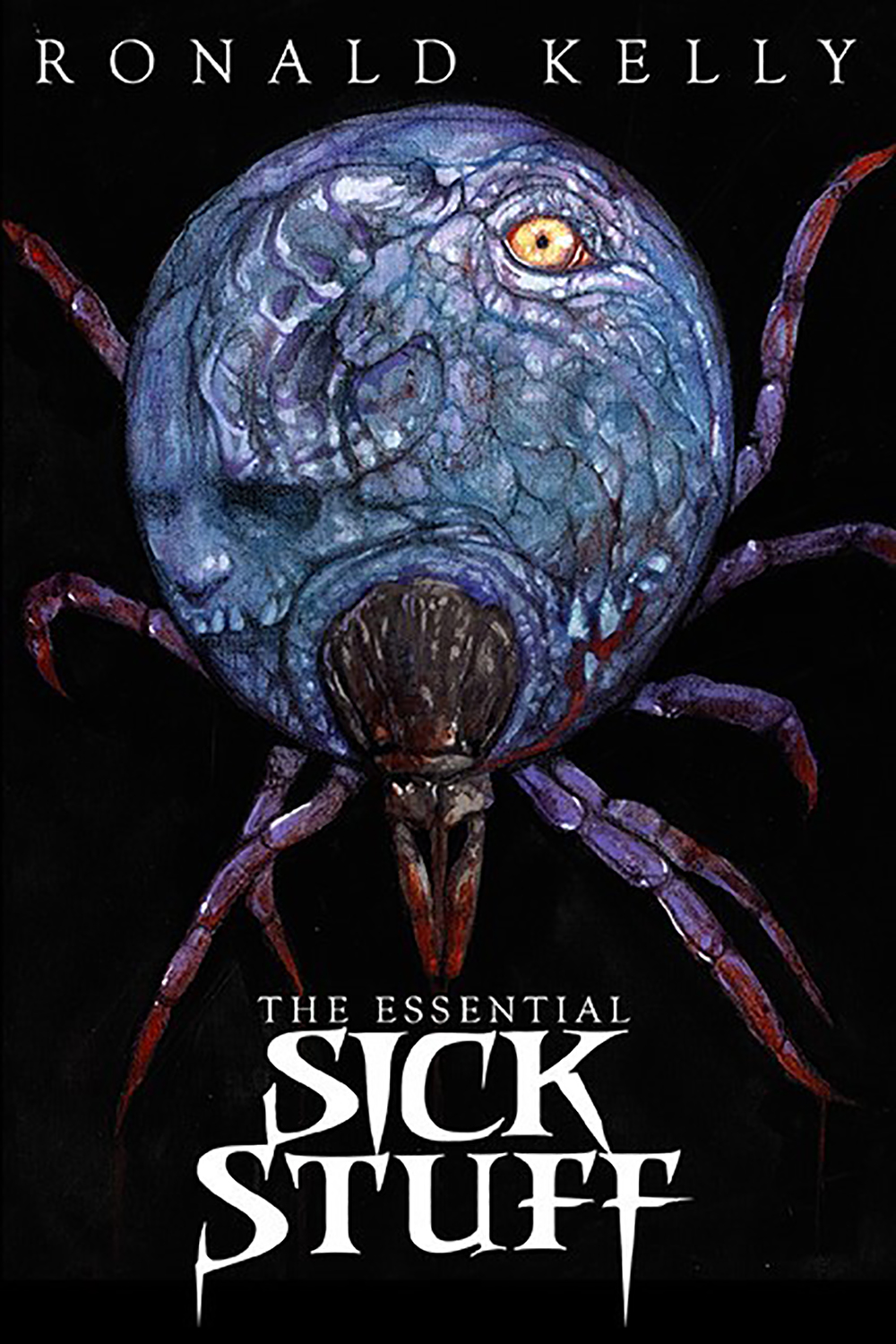
RK: The fiasco with Silver Shamrock wasn’t as heartbreaking and chaotic for me as it might have been for other authors. I’ve gone through these sudden, unexpected publisher shutdowns seven times during my writing career, so I reckon I’ve kind of grown accustomed to the chance of it happening at any given moment. Nothing is guaranteed from day to day in indie publishing. Sometimes it’s financial woes or low sales due to disinterest from potential readers. In this recent case, it was an extremely negative reaction to a social media promotion. Luckily, the Davids at Crossroad Press contacted me shortly after SS announced their demise and the transition of The Essential Sick Stuff, The Saga of Dead-Eye, and the Southern-Fried collection series from one publisher to another was relatively smooth and painless. Crossroad is in the process of making all three available in ebook and paperback, and eventually audiobook… something that Silver Shamrock never seemed to have a genuine interest in pursuing. As for upcoming books, Dead-Eye, Book Two: Werewolves, Swamp Critters, & Hellacious Haints should be released sometime this summer, along with a new edition of my extreme horror collection, After the Burn, illustrated by Zach McCain. Plus, Stygian Sky is releasing my memoir/writer’s guide, Southern-Fried & Horrified, in September.

GC: Most of today’s horror authors are finding career success in their twenties and thirties. Your recent surge in popularity seems to be taking place during your early sixties. Do you think there is a reason for that? And, where do you see yourself and your career in ten or twenty years?

RK: You know, there was a long stretch of several years after I returned in 2006 where very few readers were familiar with me or my work. It was discouraging. At one point, I seriously considered hanging it up because of lack interest. Then folks started discovering Fear and reading The Essential Sick Stuff and The Halloween Store, and they began to get a hankering for old fashioned storytelling. I don’t know… maybe they grew a little weary of all the gloomy, angst-ridden fiction that was prevalent and craved a bit of fun and nostalgia in their horror. Maybe it just took thirty-six years for me to reach a point where I had the confidence to write what I truly wanted to write; traditional tales that serve as comfort food for those who have a true love for old-school horror. Yes, true, I’m nearing retirement age, and that’s when many writers tend to slow down and take it easy. It seems to be the opposite for me. I have more story and novel ideas in my head, more projects in the works, than I ever did during my younger days. If I can hang in there, I’m planning on serving heaping helpings of Southern-Fried horror for another decade or two. If the readers keep hankering for what I have to offer, I’m more than happy to oblige them.

GC: Thanks, Ron — it has been a pleasure!


In the next Graveside Chat, look for celebrated author Jeffrey Thomas to offer his unique insights into thrills, chills, and mind-numbing terror!

Friday, March 18, 2022

Recalling The Monster Times


After posting yesterday about actor Akira Takarada’s passing, I ended up browsing the internets for all kinds of old Toho monster stuff online. One thing led to another, and I discovered (or actually rediscovered, since I had happened upon it some time back) a site that features full issues, by way of JPGs, of The Monster Times, a tabloid-style publication that ran for several years in the 1970s. My first published work, for which I was actually paid — a filmbook of Godzilla vs. the Thing — appeared in issue #42 of TMT (July 1975). I remember discovering TMT at a bookstore in Atlanta when I was a young teen and being blown away that such a publication existed. It was printed on cheap newsprint, featured tons of articles and photos from my favorite monster movies (especially Godzilla and other daikaiju flicks), and leaned distinctly toward humor. Not necessarily good humor, but humor nonetheless. Eventually, issues of TMT began appearing at our local newsstand in Martinsville, VA, which delighted me no end.

I remember picking up an issue one day — Fall of 1973, when I was 14 — and going utterly mad to find the familiar poster art of one of my favorite Godzilla movies, Destroy All Monsters (which, by the way, remains a favorite to this day). Not only that, the filmbook’s author was Tom Murdock, a pen pal I had met sometime earlier by way of the late Greg Shoemaker’s wonderful Japanese Fantasy Film Journal. I asked Tom how he’d gotten published in The Monster Times, and he said he basically asked them if they wanted a filmbook of Destroy All Monsters. They said yes, so he wrote it and sent it to them. They published it and sent him money. So, I immediately wrote The Monster Times and asked them if they wanted a filmbook of Godzilla vs. the Thing. They said yes, so I wrote it and sent it to them. They published it and sent me money (though not all that quickly or without prompting; some things never change).

In the typical way of the publishing business, it took some time between submission, acceptance, and publication. I wrote the Godzilla vs. the Thing filmbook when I was 14 going on 15. I was 16 before the issue came out. Regardless, seeing it on newsstand shelves was, at that time, so exciting that it’s something of a miracle that my teenage body didn’t shake itself apart. During that waiting period—in 1974—I had entered the publishing arena myself with the first issue of Japanese Giants, a cobbled-together fanzine that also featured a Destroy All Monsters filmbook (also by your humble narrator). I only published that one issue, but JG managed to continue for over two more decades, first by way of editor/publisher Brad Boyle and then at the hands of longtime friends Ed Godziszewki and Bill Gudmundson.

The Monster Times closed up shop in 1976, with issue #48, so it was well for me that my filmbook saw print before the publication’s time ran out. At one time, I had a sizable collection of TMT issues, but that newsprint tended to not weather the years very well, especially since I didn’t have the forethought to protect them adequately. Still, I have these two issues, and several others — mostly featuring Godzilla — and it would be kind of nice, I suppose, if they managed to outlast me.

The Monster Times #26 (featuring Destroy All Monsters) at From Zombo's Closet

The Monster Times #42 (featuring Godzilla vs. the Thing) at From Zombo’s Closet

Sunday, September 19, 2021

Whirlwind!

In the couple of weeks since Ms. and I returned from Michigan, the world seems to be getting heavier and spinning faster — at least for the short term. Several writing and publishing projects, which I’ll mention only in passing, have presented themselves to me, and while they’re too good to pass up, they also require a significant amount of work on my part; time for such niceties has not been in plentiful supply, nor do I see a wealth of it in the near future. Still, I’m hard into one of the projects and am cobbling together the details for the others. I also have an Ameri-Scares novel — Georgia: The Haunting of Tate’s Mill — to get back to... eventually. On top of all that, Ms. B. and I are both selling properties, which have required significant time and attention. My mom’s estate business, by rights, should be winding down about now, but complications involving bureaucratic bullshit are preventing this happening. At least I did manage to close the door on one detail that’s been waiting in the wings since the beginning of the estate mess (at least, I think — and hope — that door is closed). While working at Brugger’s a couple of weeks back, I managed to wrench or otherwise traumatize my neck and/or spine, which I can only hope proves to be nothing serious. There’s a little improvement there, but not as much as it seems there should be by now.

A lovely cache guardian at "Chapel Hill
History Lesson"
I have, at least, managed to fit in some geocaching, a handful of nice outings with Brugger, and a couple of relaxing gatherings with friends. Last weekend, the No-Dead-Weight Irregulars — Diefenbaker (a.k.a. Scott), Old Rob (a.k.a. Old Rob), and this old dude — hit Cary for a lovely day of hiking and caching, culminating in a beastly good bison feast at Ted’s Montana Grill in Durham. Yesterday, Ms. B. and I rode over to Chapel Hill, aiming to do a little shopping, wining, and caching. We managed to do all three, though — thanks to the football game that locked up every bit of parking in town — we couldn’t manage everything we had hoped. Still, we procured an excellent lunch at The Spotted Dog in Carrboro, which has long been one of our favorite dining destinations. Today, the usual suspects, plus Fishdownthestair (a.k.a. Natalie) made a short but happy day of caching at the Rich Fork Nature Preserve in High Point, which included first-to-find honors on a new cache, which required some effort, in that the published coordinates were a couple of hundred feet off.

Brugger and I have already worked in a few fright films to kick off the Halloween season, which we’re starting marginally early, since much of the month of October will be devoted to other necessary activities. So far, we’ve put on Indigenous (a so-so shocker from 2014), The Thing (2011), John Carpenter’s The Thing (1982), Night (Curse) of the Demon, Casting the Runes (an entertaining BBC production from 1979), The Ninth Gate, Black Mountain Side, and probably another flick or two I’m not remembering off the top of my head. Fun stuff, naturally. We have a few other must-watch movies on the docket.

And just as an aside here, if you haven’t gotten yourself vaccinated against COVID-19, for the love of Yog, do it. If you don’t plan to, unless you’ve got some kind of mitigating condition or circumstances, you and your ilk are causing more havoc for our healthcare system than is sustainable, and I personally know quite a few healthcare professionals that have absolutely had it with you. I am not a healthcare professional, but I can tell you, I’ve had it with you too.

And that, as they say, is that.
A dapper Ms. B. on the Bolin Creek Trail in Chapel Hill
The old homestead at the Rich Fork Nature Preserve in High Point
Natalie and Old Rob look on as Scott tries to stop the brain from leaking out. Not sure it worked, Scott.

Monday, September 30, 2019

Martinsville Memories at Oktoberfest


This Saturday — October 5 — is Martinsville's 40th Annual Oktoberfest, and if you're anywhere within a reasonable traveling distance, you really ought to attend. Authors Stephen & Samaire Provost, Ms. Brugger, and I will all be there, in good company with Stephen's new book, Martinsville Memories, for which I have written the foreword. I will likely also have a few copies of West Virginia: Lair of the Mothman, Michigan: The Dragon of Lake Superior, and possibly others on hand.

Martinsville's Oktoberfest is always great fun, with dozens and dozens of local merchants set up around the Uptown business district. There shall be vendors with food and spirits aplenty, presumably including funnel cakes, as they are an Oktoberfest staple. Funnel cakes are ambrosia. Funnel cakes are damn good. One might say funnel cakes are an essential component of proper southern living. Hooray for funnel cakes!

Stephen's Martinsville Memories is a meticulously researched pictorial history of my old hometown. For six decades, I've loved Martinsville, known its inner workings, explored it inside and out, and yet Stephen has dug up facts even I didn't know about. As the author writes, "Martinsville has thrived as the town with the nation’s most millionaires per capita and struggled through factory closures during the era of globalization. Packed with more than 300 images and chock full of details, this volume offers a nostalgic trek through time, with stops at drive-ins, old hotels and iconic storefronts along the way."

Also on Saturday, the Valleystar Credit Union 300 NASCAR race will be happening at Martinsville Speedway. How the race will impact Oktoberfest, I dunno, but you'd best believe Martinsville is going to be hopping this weekend. Please join us. We'll be on hand to autograph Martinsville Memories and any of our other books we have available. Look for us on Church Street near the intersection at Broad Street.

For good measure, if you're into geocaching, a veritable trove of geocaches await you in Uptown Martinsville, many that I have placed myself. And don't forget: Funnel cakes. Keep saying this to yourself, and think well on the joyful prospect of it. Funnel cakes. Funnel cakes. Funnel cakes....

Wednesday, April 4, 2018

Voices in the Darkness

Oh yeah. My little chiller-thriller, “Willow Bend,” has been accepted for Voices in the Darkness, a new anthology from Ulthar Press slated for release later this year. This new anthology will explore horror in all its many shades: quiet, chilling stories; loud, violent tales; stories about monsters, both human and not; quick jolts; lingering reflections of the macabre; classics and new voices all muttering, whispering, crying, and screaming in the darkness. Here is the complete table of contents (not necessarily in order):

  • “The Junkyard” by Joe R. Lansdale
  • “The Coming of the Storm” by Jeffrey Thomas
  • “Bedside” by Christine Morgan
  • “Broken” by Jeffery X Martin
  • “The Pipe People” by Mark Allan Gunnells
  • “Eat to Live” by Brian M. Sammons
  • “The Rennard Inheritance” by Andi Newton
  • “Dreams of Shattered Teeth” by Tim Waggoner
  • “Jack: A Dirge” by David Dunwoody
  • “She Never Swept” by Robert M. Price
  • “Luna e Volk” by Mercedes M. Yardley
  • “Something for the Weekend” by William Meikle
  • “Willow Bend” by Stephen Mark Rainey
  • “A Lack of Humanity” by Oscar Rios
  • “Here in Status Symbol Land” by D.A. Madigan
  • “Barking” by Pete Rawlik
  • “Those Who Stay” by John Linwood Grant
  • “The Beatification of Custer Poe” by Laird Barron
  • “Let Me Call You Sweetheart” by Don Webb
  • “Trista“ by Cody Goodfellow
  • “Out of Days” by Nathan Carson
  • “Those That Dwell Below” by Glynn Owen Barrass
  • “Ogopogo” by Edward Morris
  • “Down There” by Ramsey Campbell
Look forward to Voices in the Darkness with excitement and dread, if you would be so kind.

Monday, January 29, 2018

"Smoothpicks" by Elizabeth Massie


"Oh. There is blud..."
It was relatively early in Deathrealm's ten-year history that I became acquainted with Elizabeth Massie's short fiction, and not long afterward that I became acquainted with Ms. Massie herself. At the time, her work had been published in numerous reputable small press publications, such as 2AM, Grue, The Horror Show, and Space & Time, and when I met her at the 1987 World Fantasy Convention in Nashville, TN, I confess I was a fanboy. On a personal level, we pretty much hit it off, especially when we discovered we had attended the same college, though some years apart (I will be a wretched man here and tell you that she preceded me there by a few years, though I will not reveal how many). The fact that Ms. Massie [and her hubby Cortney] later took up geocaching proved she was a human of appealingly deviant character.

When Ms.Massie submitted a story to Deathrealm a couple of months or so after our first meeting, I truly was over the moon, especially because, unlike a select number of "name" authors at the time, she did not send me a trunk story*, but a first-rate piece of fiction, which was at once horrifying, heartwarming, funny, and tragic. It was called "Smoothpicks," and it became one of Deathrealm's most acclaimed published works, for very good reason. It read as both a spontaneous graphic narrative as well as a stylized fable. Based on reader feedback, for some, it tiptoed into the "I-Can't-Suspend-My-Disbelief" zone, but if one read it as this editor believed it was intended, the more far-fetched aspects of the story were an absolute non-issue.

The story is a "jernal," penned by an inmate in a home for "mental dessectives." Mary is her name, known to some as "Hary Mary," not because she is a hairy girl but because "she so hary to be wit." Mary's best friend in the institution is a gentleman who goes by the name "Buggy," incarcerated after a personally devastating tour of duty in Vietnam. Although Buggy brought back memories of untold horrors from the Far East, he also returned with certain esoteric knowledge, which some modern medical practitioners might describe as a form of acupuncture, but which Mary merely calls "smooth stiks to help the hurt"—a.k.a. "Smoothpicks."

Buggy is occasionally taken with violent, destructive fits, yet when one of the inmates is in pain, he is the one who selflessly alleviates their suffering, by way of his "smoothpicks." After Buggy reaches a point of crisis, where he can only kill his personal demons by using a "big" smoothpick—a butcher knife—he leaves Mary with a special gift: an application of smoothpicks that brings her a clarity of mind she has never before known.

At this point, Mary faces an unimaginable choice. Whatever her choice, it is horror. It is tragedy. It is unbearable.

For her choice to have meaning, the reader must willfully suspend his or her disbelief; however, in the context of the story, such suspension is not just simple but natural. Over the course of the tale, Ms. Massie has drawn us into the realm of the impossible. And because her storytelling has captured most of us fully and without reservation, in context, the impossible no longer seems even implausible. At once, we both want and dread the final, nerve-shattering revelation. Without it, there is no catharsis. And in a story such as this—the kind of story at which Ms. Massie excels—we desire catharsis. Even if it hurts.
Elizabeth Massie, or emvirginia, as
she is known in geocaching circles

Though it springs from very early in Ms. Massie's long, varied career as an author, "Smoothpicks" displays the hallmarks of an expert storyteller: engaging, memorable characters; a distinctive voice; critical conflicts, both internal and external; and imagery that haunts the mind long after the reading is done. Over the years, I've read countless of Ms. Massie's stories and novels—I've even co-written two novels with her—and while she has gone on to explore endless new avenues in fiction, "Smoothpicks" remains a landmark work, both for her and for Deathrealm.

Copies of Deathrealm #7 are difficult, though probably not impossible, to find. "Smoothpicks" was reprinted in the anthology Deathrealms (Delirium Books, 2004) which may be marginally easier to acquire. You might check with eBay or Amazon.com to find available copies.

*More than one well-known author did this early in Deathrealm's run, for the professed purpose of "testing" my editorial prowess. I've never understood such a mindset, but apparently it exists. Submissions that struck me as being trunk stories always got bounced, no matter who they came from.

Sunday, December 17, 2017

"Cool Mist" & "A Piece of Stone" by Wilum H. Pugmire


"They do get hungry this time of year..."

I first became aware of Wilum H. Pugmire in the late 1960s/early 1970s, when his name ("Bill Pugmire Jr." back then) and image (oftentimes in "Count Pugsly" attire) occasionally popped up in the "Fang Mail" pages of Famous Monsters of Filmland, which I collected for most of a decade with near-religious zeal. Soon, I found his letters and editorials appearing in the pages of Greg Shoemaker's legendary fanzine, Japanese Fantasy Film Journal, and so, even before I made his acquaintance, he seemed to me an old friend.

When I was looking for work to fill the pages of Deathrealm's earliest issues, Wilum was one of the first authors I contacted, and I was delighted when he sent me his short-short tale, "Cool Mist," which ran in issue #2 (Summer, 1987). This was no Lovecraft pastiche — a thing I came to dread receiving in the slush pile — but a piece of truly weird fiction, rooted in the Lovecraft vein but unique in style and tone.

The story features Wilum's doppelganger as the narrator (evidenced by certain anecdotes he shared with me in letters): a gay punk who's anything but the stereotypical punk. He's a tad eccentric, as he enjoys dressing in Victorian garb and wandering among the Seattle wharves carrying bits of cheese to feed to the local rats. On one of his excursions to the waterfront, he discerns another individual approaching, much to his dismay, for he prefers solitude as he wanders amid the shadows. As it turns out, the other character — another punk, or so it initially seems — also enjoys haunting the waterfront, for reasons of his own. As the two engage in a somewhat awkward conversation about their respective raisons d'être, the narrator notices certain anomalies in the mist that comes rolling in over the water, and that that his unwelcome companion carries with him a bizarre burden. It is here that the true horror of the tale takes you in its grip....

On my first reading of the story, its climax drew from me an uncharacteristic pang of sorrow, accompanied by a genuine shudder. The weirdness of the characters and setting, the lush imagery in Wilum's prose, and the depth of emotion within what is essentially a simple tale of a horrific encounter, all come together to make "Cool Mist" one of the standout stories from Deathrealm's 31-issue lifespan. Wilum revised the tale for later publication, but I find its original incarnation the more powerful, its effect having lingered with me over more than three decades.

"Be careful where you wander. We wouldn't want to lose you..."

The third issue of Deathrealm (Fall 1987) included another of Wilum's tales, this one set in the Sesqua Valley, his now well-known west-coast counterpart to Lovecraft's haunted New England. "A Piece of Stone" is the story of author Desmond Peters who has discovered a book of weird fiction written by one William Davis Manly, who originally came from Sesqua Valley. Fascinated by the material within and hoping to compile a greater volume of Manly's works, accompanied by photographs of Sesqua Valley, Peters goes to the location to research and explore. Here he meets kindly shopkeeper Nathan Vreeland (a recurring character in Wilum's Sesqua Valley tales) who listens with interest to his plan but then attempts to dissuade him, stating that the people of Sesqua Valley prefer to live in relative isolation and would not appreciate the extra attention that such a volume would bring. Naturally, Peters resists the idea of giving up on his project and decides to go exploring the valley on his own.

At first, Peters is struck by the beauty of the mountains and forests, particularly the white stone–crested Mt. Selta that rises above the valley. Yet the deeper he explores, the more edgy and apprehensive he becomes. Something he first takes to be a snake rustles through the foliage around him, but when he meets one of the locals — an elderly woman wandering on her own in the woods — she informs him "there are no snakes here." As his anxiety mounts, he decides to give up on his walk, but not before taking a piece of white stone from the mountain to keep as a souvenir.

And that, as we learn, may not have been the world's best idea ever.

With this story and others, Wilum utilizes characters that reflect his own interest in weird literature: author William Davis Manly, whose name can't help but bring to mind certain noteworthy authors in the field; Peters, whose naivete and devotion to a noble but misguided cause make him something of a "fanboy," his viewpoint one to which many of us can at least partially relate. He is skeptical of the warnings about the location, yet sensitive to its subtly menacing atmosphere. Wilum's use of imagery paints Sesqua Valley as an alluring and aesthetically beautiful natural area, but with that dark undercurrent typical of haunted places — deep shadows, sounds that don't seem quite right, unseen but subliminally perceived presences in the woods, an indefinable but tangible, unsettling air ("It is not wise to gaze at Selta for too long at a time," Vreeland tells Peters when he begins to feel disoriented from looking at the mountain in the distance). Wilum's prose reflects but does not ape the florid language of his 19th and 20th century favorites, a trait that has become a hallmark of Wilum's work over the years. The prose style and presence of such tropes in this and other of Wilum's tales, rather than playing as derivative, as they might in other hands, evoke an authentic air of age and dignity that transcends pastiche. Wilum's body of work, steeped as it is in Lovecraftian and other weird fiction, showcases a unique voice that is both for and about aficionados of the weird but that does not relegate itself to any small, dark niche.


In Deathrealm #1, by way of preparing readers for the horrors to come, author Jessica Amanda Salmonson, a longtime friend of Wilum's, provided a poem — simply titled "Wilum" — that served as something of an introduction to both his work and to him as an individual. In it she paints a vivid picture of his punk persona but also reveals an old soul with a genuine, questing spirit, contrasting his soulfulness with the superficiality of his punk contemporaries ("Wilum, in cape and high collar, is younger than the boy, although Wilum was here at the beginning of the world and will be here at the end"). True to its theme, Jessica's poem is no less relevant 30 years later than it was in its day.

As one of Deathrealm's "founding" contributors, Wilum left an indelible mark on the magazine, his work crucial to the character of the issues in which it appeared as well as shaping the editorial direction of issues to come.

You can find Wilum's stories in numerous anthologies and collections, including many Sesqua Valley tales, at Amazon.com. Click here to see more.

If you are interested in purchasing a copy of Deathrealm #2, which features "Cool Mist," I have limited copies available for $10, postage included, which can be ordered via Paypal (payee mark@stephenmarkrainey; be sure to include recipient's shipping information). Deathrealm #3, featuring "A Piece of Stone," is unfortunately unavailable.

Tuesday, December 12, 2017

Jeffrey Osier's "The Encyclopedia for Boys"


"More people are buried alive each year than most boys realize...."

I probably should do this more often: pull out an old copy of Deathrealm and read some of the stories within. I've revisited precious few of the tales from its pages since I originally published them, back in that decade between 1987 and 1997, and there are far too many I have either nearly or altogether forgotten, due simply to the passing of years and the sheer number of stories that have managed to cram themselves into my brain. Some, of course, stand out with varying degrees of clarity, and the one that rises above all is the first piece of fiction I accepted for publication — "The Encyclopedia for Boys" by Jeffrey Osier. I've read it at least two or three times since it first came out, including when it was reprinted in Jeff's fiction collection, Driftglider (Montilla Publications, 1993), but even so, it's been at least twenty years since I last read it. The other day, I decided to do something about that.

The title tome is the name of a kids' encyclopedia, much like those Golden Book Encyclopedias, kith and kin, from the 1960s (several of which I owned as a youngster), described in such a way that, on my first reading of the story, I wasn't sure whether Jeff was actually referencing a real book. Its contents, as he described them, struck me as eerily and profoundly familiar. It was only as I read further in the tale that it became clear the book was — much like The Necronomicon — entirely fictional but whose verisimilitude could damn near fool one. The mysterious volume is the centerpiece of the story, but it's the journey into the mind of its protagonist, Ralph Holland, that draws the reader fully into the narrative. An insecure, lonely bookworm, Holland's life has been a series of disappointments and unfulfilled promise until he meets Annie Stableford, whose love of books forms the bedrock of a new, long-lasting relationship for the two of them. Holland manages to find security and strength of character he never knew he had, and even opens a small but successful bookstore.

But then, unexpectedly, Annie passes away, leaving Holland wallowing in a pit of despair far deeper than the one from which he had so recently emerged. Shortly following her death, he comes into possession of an old book — yes, The Encyclopedia for Boys — that strikes him as familiar. He realizes it was a book he owned as a child, but not only that, it is the same copy he owned as a child, verified by a drawing within made by his brother, Brian, who also remembers the book.

At first, the volume seems little more than a novelty to Holland until he begins reading through it and finds the contents subtly disturbing. A strange, dark absurdity about its illustrations and informational entries bemuses and unsettles him. A standout image is a clay jar with a section broken out of it, revealing a mummified, skeletal, yet horribly aware figure within. The more Holland delves into the book the more upsetting it becomes, especially when he realizes it also appears to be affecting the dispositions of his friends and co-workers. With Annie gone, Holland has begun exploring a new relationship with his friend Natalie, but now it appears that Annie may be attempting to reach out to him through the bizarre encyclopedia.

In the book he reads: "Wrapped up in the petty intrigues of their own lives, most boys never question the lifelessness of a rotting corpse. Yet there are many people who believe that, in the thriving ecology of decomposition, awareness is actually heightened. Consider the case of Annie Stableford, supposedly dead for over two months, but at this very minute screaming out to you with a heightened perception of her own."

At this point, it becomes clear that Ralph is either hallucinating, possibly psychotic, or that there is far, far more to The Encyclopedia for Boys than either he or we, the readers, could begin to imagine. All evidence points to the latter, for Ralph is hardly the only character affected by the uncanny stressors originating from the book.

This story was the first example of Jeff's prose I had read, and it immediately appealed to me. Vibrant, lyrical, even a little manic, with imagery vivid and sensuous. Initially, the encyclopedia itself is described as a brittle, cracked, all but worn-out book with a splash of old dried paint on its cover, but it eventually transforms into a seemingly organic, warm bundle, exuding heat like a loaf of bread fresh from the oven. The body in the clay pot is bony, reed-thin, dry, the sensory triggers in the prose sending up the reek of mustiness from the page. Even though this is one of Jeff's earliest tales — from my recollection, possibly his first story ever — his authorial hand is so assured you could be forgiven for thinking the tale might have sprung from a veteran storyteller, in whom your trust is guaranteed to be rewarded.

"The Encyclopedia for Boys" was the first but far from the last of Jeff's stories to appear in Deathrealm, and I will likely showcase more of them here in coming days. This tale, as well as other  of Jeff's stories, may be found in Vol. 2 of The Complete Works of Jeffrey Osier: The Encyclopedia for Boys and Other Mutated Memories (Kindle edition). If you are interested in purchasing a copy of Deathrealm #1, which features "The Encyclopedia for Boys" and various other stories, I have limited copies available for $10, postage included, which can be ordered via Paypal (payee mark@stephenmarkrainey; be sure to include recipient's shipping information).

I'll be periodically going back to revisit various authors and works that appeared in Deathrealm during its heyday, which I hope will acquaint and reacquaint my blog followers with some of the best voices in dark fiction I've ever read.

Until the next.

Thursday, August 31, 2017

That Which Is Not Dead... Part 4

READ PART 3 HERE.
Awards and Such
In 1990, the Small Press Writers and Artists Organization (SPWAO) awarded the Best Magazine Award to Deathrealm. In the early 90s, the organization changed its name to Small Press Genre Assocation (SPGA) to be more inclusive of other media, and in 1994, Deathrealm again won their Best Magazine Award. The following year, the newly formed International Horror Guild awarded Best Publication of 1995 to Deathrealm at the World Horror Convention in Eugene, Oregon.

Stan Tal, during his tenure as Deathrealm's publisher, came up with the idea that we should sponsor a prestigious award for various categories in the horror genre. I confess I was a little dubious as to how well this would work, since Deathrealm, as a magazine itself, would of course be ineligible, and impartiality would be paramount. He suggested that the readers themselves should vote on the awards, and this is indeed how we proceeded. In 1995, the first Deathrealm Awards (for calendar year 1994), in the form of quite expensive engraved plaques, were awarded at the World Horror Convention in Atlanta, with a nice presentation ceremony that Tal and I put together. The winners were:
  • Best Anthology: The Year's Best Horror XXII, edited by Karl Edward Wagner
  • Best Artist: Alan Clark
  • Best Collection: Bibliomen, by Gene Wolfe
  • Best Fiction Magazine: Terminal Fright, edited by Kenneth Abner
  • Best Non-Fiction Magazine: The Scream Factory, edited by Peter Enfantino and Robert Morrish
  • Best Novel: Strange Angels, by Kathe Koja
  • Best Short Fiction: "Driftglider," by Jeffrey Osier
When Malicious Press assumed responsibility for Deathrealm, publishers Lawrence Watt-Evans and Terry Rossio agreed that continuing the awards would be good for keeping the magazine's name in the public eye. LWE took responsibility for creating and presenting the awards for 1995 at the 1996 World Horror Con in Eugene, Oregon. The winners were:
  • Best Anthology: Dark Love, Edited by Nancy Collins, Ed Kramer, & Martin Greenberg
  • Best Artist: Chad Savage
  • Best Collection: Pentacle, by Tom Piccirilli
  • Best Magazine: Lore, edited by Rod Heather
  • Best Novel: The Safety of Unknown Cities, by Lucy Taylor
  • Best Short Fiction: "Chatting with Anubis," by Harlan Ellison
The Deathrealm Awards existed for only two years, but they did succeed in drawing considerable attention to both the award winners and the magazine itself.

Aftermath
When Deathrealm closed its doors in 1997, I had no illusions about it ever rising again from the dead. While I dearly loved the magazine—and being recognized in the horror community as "Mr. Deathrealm"—the burden of it during that last year or so was crushing. When I wasn't at my day job, I was spending most of the rest of my waking hours playing collection agent, trying to get distributors and book dealers to pay the often substantial amounts they owed. Distributors certainly had some creative accountants, and it may be that dealing with them in 1996 and 1997 is why I lost my hair and developed high blood pressure.

For a full two years after Deathrealm's demise, I continued to receive almost as many submissions by mail as I had during the magazine's heyday. Any number of hopeful writers urged me to hold onto their manuscripts "just in case" Deathrealm might be resurrected yet again. Even three, four, and five years later, though the quantity tapered off, I still regularly received fiction submissions and queries. At one point, I had to convince one aspiring writer that the magazine really was closed, that I wasn't just trying to put him off.
Cover of Deathrealms
(Delirium Books, 2004)

Deathrealms
A year or so prior to Deathrealm's cancellation, a publisher by the name of Tangram expressed an interest in releasing a Best of Deathrealm anthology, and the proprietor and I set about making the project happen. Contracts were signed, writers were notified, payments were promised. In its relatively short lifetime, Tangram had produced some high-quality work, but as time went on, communication became more and more infrequent. Calls were not returned. At last, mail to Tangram began bouncing back to me, and it was clear that this project, as great as it had promised to be, was not going to happen. Tangram, as a publisher, was never heard from again.

The anthology, however, was not as dead as the magazine. In 2004, Shane Staley, owner of the prestigious Delirium Books, agreed to publish a signed, limited-edition hardback titled Deathrealms, a collection of stories from the magazine. It turned out to be a gorgeous book indeed, featuring 15 stories from various issues of the magazine, with striking cover art by Mike Bohatch. While many may have called it a "Best of" volume, my personal feeling, which I conveyed in the editorial, was that the book was not truly a best-of, but more a representative sampling of the stories that I felt defined the magazine's character over the years.

And that, I suppose, brings us back around to the first entry of this little blog series ("That Which Is Not Dead... Part 1"). For some time, I've been wanting to write up something that might pass as the "definitive" history of Deathrealm, since there's not that much about it to be found online these days, twenty whole years after the final issue hit the street. The magazine—the experience—for all its hard work and hard lessons, is one I wouldn't have traded it for anything. I'm confident Deathrealm has earned a respectable place in the annals of fiction magazines, and I hope it will be remembered even when I have shuffled off to the Black Lodge, or wherever it is that old horror writers/editors shuffle off to.

I hope you've enjoyed these musings of mine, which I hope to preserve for posterity—or at least for me later in life. Who knows... there may come a time I won't remember any of this.

Toodles.

A couple of links of interest: