Showing posts with label graveside. Show all posts

Thursday, June 27, 2024

A Graveside Chat with M. Wayne Miller


M. Wayne Miller
is one of the most prolific and recognized talents in the field of the dark arts. Well, not necessarily black magic, but for three decades, his artwork has graced the pages and covers of countless magazines, anthologies, collections, and novels — including many of mine. Wayne's earliest work appeared in Deathrealm magazine, but it wasn't long before his list of clients began to include such noteworthy names as April Moon Books, Dark Regions Press, Journalstone Publishing, Necro Publications, Celaeno Press, Pinnacle Entertainment Group, Chaosium, Crossroad Press, TOR, and many others.

AGC: It was purely serendipitous that when you first began submitting your art to various publications in the 1990s, you lived literally around a couple of corners from me in Greensboro, NC. Thus, I had the privilege of seeing some of your early artistic development first-hand. To say I was impressed is a gross understatement. Do you have any stand-out recollections of those pioneering days, so to speak, as far as the challenges and rewards of that formative period?

MWM:
Yes indeed, Deathrealm magazine was my first paid commission, for a story by the late Tom Piccirilli, no less. At that time I was submitting to any publisher of line art. Hundreds I expect. Deathrealm was the first to respond, and we met in person as you mentioned at my home to discuss the work. I am pleased that our working relationship has become true friendship over the years.

That initial commission became a wave of work done for horror magazines and anthologies over the next several years. There were multiple issues of Deathrealm, as well as work in Lore, Terminal Fright (both magazine and anthology), Epitaph, Aberrations, and Flesh & Blood magazine. This led to many interior art commissions for RPG games from Chaosium and WEB Games, as well as many anthologies and poetry collections. There was a period where I was hugely prolific with line art, and while the financial reward was less than desirable, the work was huge fun and laid the groundwork for my subsequent freelance career.

AGC: Your earliest published work was mostly black & white interior illustration, but you very quickly became adept at producing full-color illos and cover art. Your portfolio includes an impressive number of works in various media. Do you have a preference — or particular fondness — for one medium or style over another?

MWM:
I knew early on that black & white illustration would not pay the bills no matter how prolific I was. I had to gain color work in the industry to progress. While I see tone extremely well, color use was not something I had any natural ability with. My first forays into creating color work was using markers and color pencil to colorize line art. While the results were good in themselves, it was only a stepping stone towards my use of color in illustration. I made a concerted effort to learn to paint in acrylic and oils from 1999 to 2005. My line art had phased out, and I basically took that time to redevelop my skillset. I was successful in learning to paint, and for several years painted for myself. Those were quite good years, but of course, I had to break into the industry again to get my color illustration career off the ground.

Dark Regions Press offered my first color cover commission, for one of your books, Mark, titled Other Gods. After that, my cover illustration career was off to the races. I soon learned that traditional media was not viable for production on quick deadlines. I was just not fast enough with it, and the drying times required meant I was fighting both the medium and deadline to get work done as quickly as possible. In 2009 I made the transition to all digital workflow, and have maintained steady work ever since. While not as visceral as traditional media, digital painting has offered a rich arena for learning and growth, and I still strive to improve and grow using software and learning new techniques. Regarding fondness, while digital offers fast production and ease of preparing print files, lately I have been feeling the urge to return to oils and acrylics. I attend a weekly drink-n-draw group where I only work traditionally with graphite, charcoal, watercolor, and color pencils. It is my “sanity break” from steady digital art production the rest of the week!

AGC: As far as artists go, who might you consider a major creative influence, if any? How about writers? Are there any particular authors whose work you haven't illustrated but that you're dying to?

MWM: I consider the late Bernie Wrightson to be my greatest artistic influence for both my line art and color illustration. His work is sublime, and always inspiring to me. For color work, I was heavily influenced by Michael Whelan, and still am in awe of his artistic output today. Along with these major influences, I love the work of Brom, Larry Elmore, Virgil Finlay, Wayne Douglas Barlowe, and Phil Hale. Honestly, I could rattle off dozens of artists, but nobody wants to read such a list here. Suffice it to say I love visual art and artists, and can gain inspiration from them all. My biggest author influence (after yourself of course, Mark!) is Stephen King. He is a very visual writer, and I can literally “see” his prose. Judging by all the adaptations for film and television, others are similarly affected by his writing style. For the most part, I have no use for such adaptations, because they never live up to what I saw in my imagination.

Coincidentally, King is also the “holy grail” author whose work I would love to illustrate. To get a cover or interior project for one of his books would be a dream come true! As with artists, there are multitudes of writers I am influenced by with my art, and a few will suffice to represent the rest. I love the work of Douglas Preston and Lincoln Child (Pendergast rocks!), Daniel Suarez, Jim Butcher, Neal Stephenson, Piers Anthony, Robert E. Howard, Scott Sigler, and of course H.P. Lovecraft.
AGC: In addition to the dark lit business, you've done plenty of work for the gaming industry. Is there any creative difference in your approach — or style — for these, or are they flip sides of the same coin?

MWM: I feel they are synonymous with regard to my artistic output. Granted, subject matter and style can vary, but I strive to put my artistic stamp on them all. The fact that a fair portion of both the fiction and RPGs share similar Cthulhu Mythos themes reinforces my love of creating such art, and I revel in depicting the indescribable and maddening. Fantasy and Young Adult genres stretch my artistic comfort zone, which is never a bad thing. Science Fiction is a mainstay genre for me, and I strive for the day when I can walk through a bookstore and see a dozen of my covers on mass market shelves. The illustrator’s journey is never-ending for certain!

AGC: You and I used to work for rival educational publishing companies in Greensboro. Did you ever feel inclined to resort to covert ops to get a leg up in the business? I know I did.

MWM: Ha! It’s funny, but at the time I never considered that rivalry to be “a thing,” though it evidently was in hindsight. I loved that job and the company, and I was aware of your company as another similar business, but I never felt that competition. I was just happy to have steady fruitful employment. Of course, that ended in layoff, and when I got hit with the reality of the existing rivalry between the companies was when I figured I would seek employment there since it was a similar business. For whatever reason, the boss at your company would not take any former employee of my company, period and end of story. Frankly, that pissed me off at the time, as I would have been a great asset for that company, and would have willingly shared anything I knew with them in the course of work. Even now, I look back on that owner’s stance with perplexity. Thankfully, that perceived rivalry is moot, since both companies are no longer operating in the area, and it never affected our friendship.

AGC: Were you a "monster kid" in your youth? Watch every horror/SF/critter feature that came on TV or to the theater? Do you have any favorite memories or inspiring moments that set you on the creative course you chose?

MWM: Of course! I loved anything monstrous on TV — Godzilla, aliens, saucers, cities being trampled by who knows what. Friday nights were my favorite time for watching such movies, and naturally I had to build models of such things, and play Ultraman or Destroy All Monsters with my friends of the time. All that changed in 1977 when Star Wars came out. It was the formative moment of my 10-year-old life, and after that, nothing would be the same about my artistic output. Even to this day, I still draw Star Wars stuff, despite never having been hired to do so professionally. One of these days, though, I will attain that dream as well! Hear that, Disney? Lets talk!

AGC: Anything you can mention about upcoming projects? What can we look forward to from you in the coming days/months/years?

MWM I am pleased to be working on a cover and interiors project for Joe Morey at Weird House Press. Years ago Joe ran Dark Regions Press, and I have been working with him ever since. Yet another long-running professional association that has developed into a true friendship. I am thankful to have such friends in the industry, and that they evidently enjoy working with me! Additionally, I am happily working on a Chaosium project for a new property of theirs, and like most things, I can say nothing about it due to NDA. Unfortunately, with times being as they are, business is not as it once was. As an illustrator, I am running head first into the AI thing, and I can feel its effects on my field. But as with any transitive period, flexibility and resiliency are foremost in my efforts to maintain a fruitful and growing career. I am nothing if not hard-headed, and I'm in this for the long haul. You may look forward to having me and my work popping up for many years to come.

AGC: Thank you, M. Wayne Miller!

Thursday, April 11, 2024

A Graveside Chat with J.B. Lee

Artist J.B. Lee is a prolific painter/illustrator with an impressive portfolio of scary images, influenced by horror authors such as H.P. Lovecraft, August Derleth, Joseph Payne Brennan, and others, as well as such classic horror/science fiction TV series as The Outer Limits, Thriller, One Step Beyond, and others. J.B. kindly agreed to talk about his work and provide a number of his creations to be posted here.

 
AGC: You are clearly a devotee of some of the most seminal television science fiction/horror shows of the 1950s and 1960s — specifically, The Outer Limits, Thriller, and One Step Beyond. Much of your art is done "in the style of" these shows. Could you relate some of your earliest memories of these classics — and elaborate on how they influenced your art and its themes?

JBL: I saw all three of those shows in their original run, maybe not every episode, but enough to make an impression on a kid somewhere between 3 and 9 years old. The first One Step Beyond — or “Alcoa Presents,” as we called it — that I remember was "Emergency Only," and that aired in 1959, three days before I turned three. Maybe I caught it in reruns, I couldn’t say, but I do recall it. But I could read at two and a half, or at least that was when they realized I was reading. L’il Abner gave me away! Remember L’il Abner, the newspaper comic strip? My parents thought I was just making up things the characters were saying until they actually checked one day. That must have been a shock! August Derleth would have italicized that sentence: “The boy was actually reading what it said in those word balloons!”

So, I was quite precocious, and if I didn’t understand everything that was going on, I sure caught enough of it. And I was a kid, so I took everything that was said at face value. When scary John Newland said this was a true story, hey, it was a true story! He’s an adult, so he wouldn’t lie about it! So, yes, that woman foresaw the future, and yes, the ghost really haunted the U-Boat, and you bet that guy’s wife kept hearing an airplane crashing through their house. That was the one that scared me the most — it’s titled "Tonight at 12:17" — not least because we lived near a small airport and planes were always buzzing around. Another gem was "The Captain's Guests," written by Twilight Zone scribe Charles Beaumont, based around an idea he’d resurrect a few years later for the Lovecraft adaptation The Haunted Palace.  That certainly left an impression!

The first Thriller I remember seeing was "The Purple Room," and that’s considered the first “horror” episode, even though it Scooby-Doos us with a fake monster in the end. But there would soon come things that weren’t fake, oh, you bet! Harry Townes’ good look at himself through the cursed eyeglasses of "The Cheaters"… Macdonald Carey striking a deal with John Emery’s terrifying devil in "The Devil's Ticket"… Hans the mannequin coming to life in "The Weird Tailor"… William Shatner, not yet Captain Kirk, vainly fleeing the scythe of "The Grim Reaper." And Boris Karloff as host. He was very different from One Step Beyond’s John Newland; he was rarely sinister, he just invited us to join him and see sinister things. More often than not he was seemingly as scared of what was coming as we soon would be!
From H.P. Lovecraft's "The Call of Cthulhu"

The scariest episode of that show, at least to a 5 year old, was "The Return of Andrew Bentley." The undead Bentley skulking around the house was bad enough, but he had a demon familiar with him, clawed, cloaked, with an eyeless maw for a face! When the first pictures from 1979’s Alien began to appear in magazines – just a close-up of the business end of the head – I looked at this eyeless monster and his mouth full of teeth and immediately flashed on Andrew Bentley’s Familiar. And John Newland is in that one as a hero – I didn’t recognize him as the One Step Beyond Man, but I have no doubt that at least subconsciously that made the episode even scarier.

And then came The Outer Limits, and by that time I was old enough to recall every episode. Not perfectly — for many years I thought "The Guests" was titled "Parasite Mansion," and when a Starlog Magazine episode guide revealed it as "The Guests," I found myself baffled, because I knew something scary had been titled "Parasite Mansion," but couldn’t recall what. (It’s a Thriller episode.) I was there from the start, Monday night 9/16/63, watching Cliff Robertson pick up a transmission from the Andromeda Galaxy, and ultimately picking up a radioactive alien from said galaxy in the bargain! I have no doubt that Joseph Stefano’s purple prose for that show helped prime the pump for me to be completely receptive to H.P. Lovecraft’s strange stories about 6 years later. Consider this alien’s line from "The Invisibles": “We were conceived in the nothingness of space, sired by a satyr of cosmic energy, formed by the coming together of sick, nameless nuclei that waited a billion billion years for that precise, ungodly moment.” HPL would sign his name to that! And while The Outer Limits was supposedly science fiction, it was actually the most Lovecraftian of the three shows that powerfully influenced this Monster Kid way back then. For many years certain TOL episodes were the most HPL-ish films we had. Watch "A Feasibility Study," "Don't Open Till Doomsday," "The Guests," "Wolf 359," "It Crawled Out of the Woodwork," everything about those shows is Lovecraftian — the direction, cinematography, monster design, Weird Science. They nailed the atmosphere perfectly.

And it was the atmosphere that I took away for my own work. The bizarre camera angles, the chiaroscuro. Since embracing this monochromatic approach to my monsters, I absolutely believe there is something about black and white that makes things more terrifying — working on your subconscious fear that the light is failing, and you’re about to be left in the dark. “Red is grey and yellow, white,” intoned the Moody Blues all those ages ago, speaking of nightfall. And I say “my monsters,” but they’re someone else’s monsters. I’m like Lovecraft’s weird artist Richard Upton Pickman — he was a skilled craftsman with no imagination at all. Thurber goes on in the story about how the best weird artists have a model conjured up by their imagination, but the irony is that Pickman doesn’t have that. He has his skill and a camera, and he knows where the weird things are. I do the same thing with other people’s imaginations. Someone writes “…a darkness fell out of the clouds like a black meteorite, a darkness grotesquely shaped like a man with carmine eyes like stars for eyes in its bloated blot of a head,” and I show that to you with my craft. Points if you know who wrote that — it’s from the best story about that monster that’s out there, and it wasn’t written by the creator of said critter. In fact, its creator never saw that story! Another tale that someone needs to be putting on film, instead of putzing around with the unfilmable At the Mountains of Madness! Oops, did I say that out loud?

AGC: The works of H.P. Lovecraft and other writers from that "weird tales" era feature prominently in your compositions. Do you feel that those literary works and the visual/narrative styles of the shows mentioned above naturally complement each other? Given the constraints of budget, technology, etc. from the 1950s and 1960s, those black and white television shows oftentimes presented remarkably effective "bears," as they called the monsters in those days. What "bear" out of dark lit would you most liked to have seen back then if you'd had your druthers, so to speak?
From August Derleth's "The Shuttered Room"

JBL:
One Step Beyond was hampered by its format. It could only do things that might be accepted as “true” by the audience. So dreams, visions, premonitions were its stock in trade, occasionally a ghost. They definitely did Harvey’s "August Heat" as “The Stone Cutter”, though. Didn’t credit Harvey, either, but give that one a look and decide for yourself. I think Charles Beaumont forgot he was writing for OSB, not Twilight Zone, when he did "The Captain's Guests," because there’s a transformation there that might be a little hard to swallow as a real event. Not that I had any problem accepting it, not back then! But Thriller and The Outer Limits had no such constraints. The Outer Limits always tried to explore the human condition with its stories — Joseph Stefano famously said he was allowed to show a genocidal massacre as long as aliens were the ones getting massacred — but Thriller, at least under the hand of producer William Frye, existed for one reason: to scare the viewer. To the devil with morality plays!

That said, I would have given much to have seen The Outer Limits take on Lovecraft’s "The Colour Out of Space." That oft-filmed story begs for the sort of grotesque noir approach TOL became famous for… and their Acme Optical Printer would have been putting in overtime on that show, when the Colour began to spread through the farmhouse and over the farm! But Lovecraft doesn’t have the sort of character depth and interaction The Outer Limits demanded, and Thriller just barely touched on science fiction, so "Colour" didn’t happen. A second-season TOL episode titled "Cry of Silence" proves to be a much more benign take on the same sort of story, and as close as TOL ever came to such a thing. The German filmmaker Huan Vu gave us something pretty close to what I imagine TOL would have presented in his 2010 version of the story, Die Farbe (The Colour). I consider it the best HPL film we have at present.

And Thriller — how I wish we’d had a good Joseph Payne Brennan adaptation from that show! They did two of his stories as "The Lethal Ladies," and they’re good, but neither of them were the sort of weird horror he did so well. I absolutely believe that show could have pulled off his classic "Slime," even in 1960 — no TV show had shadows blacker than Thriller could muster, and they could have used that cinematography to make us think we saw more of Brennan’s shapeless black monster than any costume could present. Failing that, though, I’m sure Thriller’s take on "Canavan's Back Yard" or "The Horror at Chilton Castle" would have been unforgettable, and much easier for the show to accomplish. Worlds of If!

AGC: You are a minister at a Christian church, if I'm not mistaken. Have any of the tenets of your faith played into your appreciation of cosmic horror — or vice-versa?
From H.P. Lovecraft's "The Haunter of the Dark"

JBL: I am the pastor at Hughes Creek church of God, up the hollow where I live. I tell people I pastor "up Hughes Creek" and people say “Oh, you’re the pastor of that great big church with the electronic sign,” only to have me reply “No, I’m the pastor of the little tiny church with no sign, where the paved road ends and the dirt road begins.” Our tenets are somewhat different from much of Christendom — at least American Christendom, I don’t know what people are teaching in the churches of Denmark or Vietnam! We believe there’s one church; the Biblical name for it is "Church of God," but every follower of Christ is in it, regardless of what it says over the door. Hence one of our mottos is “We reach our hand in fellowship to every blood-washed one.” We keep no roll and sign no membership books for the same reason — your membership in the church is between you and God. We don’t believe in a literal millennial reign on the future earth, but a spiritual kingdom of the heart in the here-and-now, where the law of Christ is to be followed: Love God, love people (Matt. 22:37-39). The church and the kingdom are the same thing. We believe the book of Revelation to be almost all symbolic, and that most of it has already occurred. So we don’t expect a literal Great Tribulation, or a literal capital-A Antichrist — a term that doesn’t appear in Revelation, by the way. We don’t believe 666 is the number of the devil, the mark of the beast, and we don’t believe it’s going on your head or your hand in some nightmare future dystopia, and we don’t buy a piece of gum to prevent getting $6.66 in change back at the grocery. So we differ from much of Christianity in our doctrine. If someone reading this does believe in those things and wonders what kind of heretic I am, then I’ll say to them what I’ve said to many others: “You pray for me and I’ll pray for you, and we’ll come into an understanding of the truth together.”

I said all that to say this: traditional Christian-based demonology horror, which revolves around exorcisms and demons and antichrists, never did much for me before I was Christian, and does even less given my beliefs now. I did like the first two Omen movies, 666 or no, and Jerry Goldsmith’s scores for those films are great. And The Car, in which the devil becomes an automobile, is definitely a “guilty pleasure,” as they say. Had a great time with that film at the Kearse Theater in 1977. Alas, the Kearse is gone now, like so much of the Charleston of my youth.

But my favorite horror movie, without question, is Tourneur’s Night of the Demon, and that demon certainly wouldn’t listen to Fathers Merrin and Karras or trouble Regan MacNeil, unless she went to school with Karswell’s kid and he pranked her with the dreaded runes. That fiend isn’t a Biblical demon. Much closer to one of Lovecraft’s menagerie. There’s this bit in the film where one of the investigators shows us all these pictures of demons from different mythologies, reciting their names, and yikes! They all look the same! That was a constant in August Derleth’s Cthulhu stories — someone relating all the mythological fiends that resembled Cthulhu or Ithaqua or whoever the monster of the month was, so we’d believe there was Something To It and all these peoples had seen the same horror. Anyway, the monsters that really scared me, from childhood on, weren’t Biblically based at all. The Zanti Misfits. the Killer Shrews. the Monolith Monsters. the H-Man. So even before my experience with Christ, weird horror, cosmic horror, meant much more to me than traditional demonic stuff. The three greatest horror stories ever written are "The Colour Out of Space," "The Willows," and "The White People." You won’t find much traditional Christian-based horror in any of those.

AGC: Although not at all similar in style, I feel your body of work is in some ways comparable to that of Lee Brown Coye, who rendered many, many of my favorite illustrations of Lovecraftian horrors and related imagery. Are there any artists, either in the horror field or out of it, whom you might claim as influences for your work.
From John Wyndham's Day of the Triffids

JBL: I like Coye’s work, but just not as illustrations! His Wilbur Whateley, for instance, on the dust jacket of The Dunwich Horror and Others — that’s a remarkably creepy guy, but it doesn’t look like Lovecraft’s Whateley boy at all! I grew up watching all the Hanna-Barbera superhero shows on Saturday morning, so of course Alex Toth influenced my stuff. Likewise the comic book artists of the time — Dr. Strange’s Steve Ditko, Fantastic Four’s Jack Kirby, Magnus Robot Fighter’s Russ Manning. My parents were suspicious of comic books, no doubt because of the Horror Comic Panic of the early Fifties, which they’d probably heard about in the magazines and newspapers. That was all over by the time I came along, but my folks didn’t want me reading those “bad books.” So of course they had the magnetism of the forbidden, and when I was 6 I cried and begged and pleaded to get one. The one I wanted — and got — was DC Showcase #39, starring the robotic heroes The Metal Men, and introducing their most tenacious enemy, a walking vat of toxic waste called Chemo. This thing was drawn by the team of Ross Andru and Mike Esposito, and it scared me senseless. I was afraid to touch any part of the comic where Chemo resided. I’d read so far and then go bury it at the bottom of the toy box, only to eventually come back and go on reading. I had occasional nightmares about Chemo until I was in my mid 20s. I’d be dreaming about some girl I had a crush on in jr.high school, and suddenly Chemo would barge in and Ruin Everything. There’s one for you, Dr Freud! Sometimes a monster is just a monster! It wouldn’t surprise me a bit if the old boy would pop up again some night, all these years later. So I’d say Andru and Esposito — and Metal Men scribe and creator Robert Kanigher -- definitely influenced not only my art, but my BENT as well!

There were others, surely. I remember the epiphany I had the first time I ever saw an Edward Hopper – that would have been "Gas," when I was in 10th grade. My goodness, that struck me powerfully. I wrote an essay about it so overloaded with Lovecraftian adjectives my art teacher could only say “I guess you liked it—?” And still others. Piet Mondrian. Was he a synaesthete? I sure think he was. Marc Chagall. Paul Klee. Roberto Matta, exposing the terrifying colliding angles of other dimensions! Frank Belknap Long referred to two Matta works I have never been able to track down, with weird Cthulhuoid names: "Icrogy Fecundated" and "Rghuin Monstrous Triumphs." Somewhere out there those things are waiting to blast me, I’m sure. “Sometimes it’s better not to know…” but I’m determined to know, sooner or later. Brancusi and Calder, bringing the abstraction of dream into the real world with their sculptures and mobiles, not that I’ve ever been very good at that sort of thing. But they sure were! I sometimes refer to the wonderfully designed alien robot in the movie Kronos as the “Brancusi bot.” And that reminds me of William Neal’s biomechanical creatures that were all over the sleeve of Emerson Lake and Palmer’s Tarkus album, itself an opener of the way as well. Dali of the molten watches, of course. And the EC Comics artists, better late than never. My favorite of that lot was Jack Davis; really liked Bernard Krigstein and Wally Wood, too.

There have been all kinds. I could go on, but I won’t. I’m happy to have lived in a time when so many great works of art are so easy to find. All but Matta’s Icrogy and Rghuin, those mysterious devils! Someday... SOMEDAY...

AGC: You typically post a "NOT AI" disclaimer with your work, which I personally applaud. I think it's safe to say that you have anything but a positive opinion of AI-generated art. Do you foresee AI having longterm negative ramifications for the creative field? What about in the broader world — in business, science, news, etc.?
From Walter C. DeBill's "Where Yidhra Walks"

JBL: I’m sure you know about the recent "Willie Wonka" Experience — they couldn’t use the name Wonka in the thing, so they called him Willy McDuff — in Glasgow across the pond, where all the ads and the script were generated by AI, and that was the beginning of sorrows. Quite a few people believe Disney wrote the script to their film Wish with AI, and if you watch that film you’ll understand why they think that. AI is nothing but a plagiarism engine, shaving real people’s art and writing so it can present its user with an aggregate of the stubble. A musician named Per Thomhav, who releases excellent Tangerine Dreamish electronic music under the name Synth Replicants, bought one of my pieces for the cover of his album Zentropol — which you can buy on Bandcamp, let me add! I was looking at that cover one day and glumly thought to myself “AI could turn out something like that pretty easily.” Especially if my Zentropol cover was used to train it first! That’s the world we live in. Before I learned that the more you play with an AI, the better it gets at its crimes, I fiddled around with ChatGPT a little. I asked it for an outline for a sermon once, giving it the pericope to use, and it spat out a reasonably teachable Bible study with absolutely no practical application to real life. Next, I asked it to write an outline for a horror story about a man possessed by the cold. I don’t know who fed it Ramsey Campbell’s Midnight Sun, but it had definitely been trained on that novel! But I no longer play with it at all. I know a man involved in the mechanics of film-making who considers it the greatest tool he’s ever encountered, but I don’t know how he’s using it. His talents are beyond my understanding. Let’s hope it has some use beyond plagiarism. We are certainly going to find out if it does, because you can’t put the explosion back in the bomb.


But there will always be artists and writers who do it because they want to, no matter what AI does or doesn’t do. Keep creating! Keep expressing yourself! Everyone is an artist until life talks them out of it. Don’t let that happen. Work to show the world the worth of human inspiration. As Phillips Brooks said a long time ago, “Do not pray for easy lives; pray to be stronger men! Do not pray for tasks equal to your powers; pray for powers equal to your tasks! Then the doing of your work shall be no miracle. But you shall be a miracle. Every day you shall wonder at yourself, at the richness of life which has come in you by the grace of God.” That seems like good advice to me.

AGC: Thanks very much, J.B.!
Another rendering from H.P. Lovecraft's "The Haunter of the Dark"
From Henry Kuttner and C.L. Moore's "The Twonky"
L: From John W. Campbell's Who Goes There?
R: From H.P. Lovecraft and August Derleth's The Lurker at the Threshold

See More of J.B. Lee's Cosmic Horrors at
Deviant Art and Art Station


Thursday, January 26, 2023

A Graveside Chat With David Niall Wilson

USA TODAY–bestselling author David Niall Wilson has been writing and publishing horror, dark fantasy, and science fiction since the mid-1980s. He has written over a dozen standalone novels as well as numerous novels for his own DeChance Chronicles and Cletus J. Diggs series, plus tie-in novels for Star Trek: Voyager, Stargate Atlantis, World of Wraith, and others, plus ten short story collections (not to mention about 150 stories in various magazines and anthologies). An ordained minister, former editor of The Tome magazine, former President of the Horror Writers Association, and recipient of multiple HWA Bram Stoker Awards, Dave is CEO and founder of Crossroad Press, which occasionally keeps him a little busy. His collection, The Devil’s in the Flaws & Other Dark Truths, is scheduled for release in January 2023.

Thanks for taking time out for A Graveside Chat, Dave.


AGC: You’ve been a prominent figure in the speculative fiction field for four decades, there or about, and you’ve not only kept up with its evolution but influenced it, particularly with Crossroad Press. What are some of the biggest changes — and challenges — you’ve experienced in this business over these decades, be it from the perspective of author, editor, and/or publisher?

DNW: The Internet has changed the world, and writing is no exception. Ebooks and simpler avenues for self-publishing have opened a lot of doors, which, in one sense, is good. The world of publishing, when I started, had clear boundaries. Success was a sale to NYC, and you could get there through the other side of the boundary, the small press. But slots were very limited. Agents and editors were like gatekeepers and thousands of books, good, bad, wonderful, and awful were simply never in a position to have a legitimate chance. That has all changed.

That’s the upside. The downside is those thousands of books are all out there now. Some are good, some are awful, many are edited poorly but packaged with professional covers. More are awful than good, and as this becomes clear to consumers, it becomes more difficult to sell an independently published book. It’s also a totally one-sided marketing war — NYC with millions of dollars, and the rest of us with, well, Bookbub, who now take too many titles, still charge a fortune, and have become hit-and-miss. More than ever before, the key to writing success has become a mix of talent and visibility, the second being the hardest thing to achieve. I think the floor has leveled over the years, but you have to be very active, you have to remain relevant to the world, read what is selling now and not what sold twenty years ago. It’s a very volatile industry.

AGC: You’re widely read, not just in speculative fiction, but in all varieties of literature. Who do you consider some of your primary influences as a writer? What most inspires you as a storyteller?

DNW: Sometimes questions like this flummox me. I am probably influenced by thousands of books and writers, but I can trim it down and offer reasons. I love the work of Edgar Allan Poe, his themes, and his sense of dread. Modern writers I have learned pacing and formula from Stephen King, writing on different levels from Peter Straub, Kathe Koja, and Poppy Z. Brite showed me how inconsequential limits are…

More recently I’ve learned things that limit my writing by reaching beyond my normal reading… authors like Hailey Piper, Eric LaRocca, and Gemma Amor have shown me different perspectives. Stephen Graham Jones, a recent obsession, has a voice he can hit where it’s him telling the story, and it’s mesmerizing. Grady Hendrix, Paul Tremblay, I steal bits and pieces. And books like The Things They Carried, where you pick up on how objects and settings can anchor your writing. It’s an endless stream. Lately, I’ve found rabbit holes while writing letters to my daughter in college, adding trivia to each one, which have given me things I know I will use. Maybe I influence myself? I hope I never cease finding new inspiration.


AGC: You’ve collaborated with other authors on numerous works — many of which appear in the volume, Intermusings: A Cabal of Dark Fiction, which features a broad sampling of your collaborative stories. Do you particularly enjoy collaborating with other authors? Is there anyone with whom you’d especially like to collaborate that you haven’t yet? Do you have more upcoming collaborative work scheduled?

DNW: Currently I’m not collaborating on anything. I think my last major collaboration was with my wife, Trish, when we wrote Remember Bowling Green (all proceeds to the ACLU). I have had a lot of interesting collaboration experiences. I’ve written the most with Brian A. Hopkins, Brett A. Savory and Trish, but, as you know, that book is FULL of collaborations. I find that when it works, when the editing goes back and forth a few times, a new voice arises. It’s not what either author would have done, but it builds on the strengths of both.


AGC: You are an insanely prolific author, even with Crossroad Press (and a full-time day job) occupying what is presumably more than a negligible amount of your time. (Do you ever sleep???) What do you have on your upcoming agenda(s) as a writer, editor, and/or publisher that you can talk about here?

DNW: It’s funny you say that. Up until last spring, I was becoming less and less prolific. I’ve started publishing stories again, have a lot of things in the works, a novella upcoming, and other things in anthologies, but only recently. Before that I have done nothing but poke at it since around the time the Orange Anguish became president. I’m pulling it all back together and feel as if I’ve written a lot of things lately, new things I’m proud of, pushing some boundaries. I have at least two stories in anthologies this year. I have an NFT-only book of stories involving Potatoes coming out through Book.iO (It would take an entire separate interview to cover all of that). I have at least two novels in serious progress, a novella, and some stories that are for markets who have solicited me. It’s a sort of rebirth. I’ve been asleep creatively for a very long time.

This year, finally, my anthology The Canterbury Nightmares will be published, and I had a lot of fun with that, but the general miasma of the last few years has prevented it from happening as quickly as it should. You keep moving or you grow moss and mold, so I’ll be writing a lot. My collection, The Devil’s in the Flaws & Other Dark Truths, just released and seems to be doing pretty well.


AGC: You have written a lot of series projects as well as standalones. Which do you prefer, and why? What can we expect to see in the future?

DNW: I’ve noticed over time that almost everything I’ve written ties together. I mention a place, or an event, and suddenly there is a link between Deep Blue and Donovan DeChance. I write in a set number of fictional locations, which probably facilitated this. I’ve created a sub-page on my website called “The Worlds of David Niall Wilson,” where I’m relaunching all of the books, one at a time, as NFT collectible editions (and eventually readers editions) through a company called Book.IO.

The first to come out was Heart of a Dragon, so the DeChance Chronicles will come out first. Readers of my work will know this ties in with the Cletus J. Diggs stories, the works I’ve done with Poe as a character, and the novels of the O.C.L.T. – but the standalone novels like Deep Blue, Ancient Eyes, and Darkness Falling intersect again and again.

I see myself taking twin paths going forward. I intend to continue the series books because I love the characters, but I am also working on new stories, a novella, and at least two novels that don’t directly connect — at least not yet. Still hoping for that one break-out, as are we all.


Wednesday, August 17, 2022

A Graveside Chat with Kristin Dearborn

Kristin Dearborn is a life-long New Englander, author of numerous novels and novellas such as Trinity, Sacrifice Island, Woman in White, Whispers, and others, as well as a host of short stories in various publications. She was kind enough to take some time to answer a few questions for A Graveside Chat, so, Kristin, a scary welcome!


AGC: Tell us a bit about you — when you first became inspired to write, especially in the dark vein; who some of your influences were (and are); and — as I understand you enjoy cheesy movies — what you consider some of… if not the best… then your personal favorites.

KD: I grew up in a house full of books. The Bunnicula series by James Howe was an early influence, teaching me what puns were, the proper pronunciation of hors d’oeuvres, and what happens when an unsuspecting family adopts a vampire rabbit. When I became a serious reader — you know, when I was ten — I read Jurassic Park and devoured everything Crichton had written to that point. When I ran out of Crichton, I moved on to Koontz. Then I found Stephen King and have been a constant reader ever since. I remember digging through boxes of musty paperbacks in our attic, finding books like Harvest Home, The Other, The Omen. I had free rein over our small local library, and I loved mass markets with lurid, cut-out covers. I grew up in Maine, and my Grandparents lived in Orono, home of the University of Maine, and haunt of Stephen King. My Grandmother worked in the school library when he was a student there. He was an omnipresent figure in my life like a folk hero, and when I eventually went to U Maine myself, I was never dissuaded from writing dark fiction as I worked towards my B.A.

As for movies, Lost Boys had a profound effect on me and still does. It’s a perfect blend of scary and camp and heart, I’d never seen anything like it. (I could read whatever I wanted, but was more restricted when it came to movies). From Dusk till Dawn was another movie that swept me away. It’s a crime movie! Oh shit, now it’s a vampire movie! Oh, shit, the main character just got bitten and no one is going to save him! (Sorry for the 26-year-old spoiler there.) In college, I worked at a theater (stage, not movie) but we had a set up for movies, and we would drag couches out onto the stage and watch movies like Predator and The Stuff with a professional sound system, 1600 seats, and a series of catwalks behind us. That was my introduction to Alien, and it was impossible not to think of all that empty space behind me and what could be out there. I’ll never turn down a chance to watch The Thing. I prefer Aliens to Alien (though agree Alien is the superior film).

AGC: Whispers is a wonderful novella that uses H. P. Lovecraft’s work as a jumping-off point — and it works brilliantly, particularly in that you build strong characters; typically, Lovecraft’s characters were hardly so well-drawn. Does HPL’s work in general have any particular allure for you? Are there other “classic” authors and/or works that might move you to reimagine for more contemporary times?

When Hurricane Irene tore Vermont apart in 2011, I immediately thought back to “Whisperer in Darkness,” HPL’s only tale set in Vermont, taking place in the aftermath of the 1927 floods. I got some amount of delight from populating a story inspired by Uncle Howie’s with characters I knew he wouldn’t approve of. Most of the time I’m content to let classics be classics, but HPL is a special case: his ideas are genre-defining, but most of his actual stories aren’t really that great, and to your point, his characters are almost entirely forgettable. It builds a fun playground for contemporary authors to expand on his ideas with characters that show emotional depth.

AGC: From what I gather, you enjoy traveling, rock climbing, motorcycle riding, and other “extracurricular” activities — such as flying! Do these activities excite your creativity or in any manner influence your storytelling?

KD: Travelling absolutely ignites my creativity, and I rarely go anywhere without getting a story seed in my brain. Sacrifice Island came from a boat tour I took in the Philippines where I stumbled across an old church decaying in the middle of paradise. For some crazy reason, Florida has always been my muse. Much of Stolen Away is set in Florida, and the idea was born there. My upcoming releases, The Amazing Alligator Girl (Fall 2022, Bloodshot Books) and Faith of Dawn (February 2024 Cemetery Dance) are both entirely set in Florida.

Hiking with my dog friend and riding my motorcycle give my brain a lot of time to work out story ideas, I’m a big fan of exercise and being outdoors to lubricate plot bunnies!

AGC: What’s next for you? Do you have any projects coming up you’d like to talk about?

KD: Oh no, I spoiled the answers to this question in the previous question! The Amazing Alligator Girl is a fun novella about a swamp tour gone terribly wrong… the gators are going crazy and environmentalist/alligator wrangler Bethany needs to get to the bottom of things to save the swamp…and make sure too many tourists don’t get eaten. Faith of Dawn is my third full-length novel, this one involves a suicide cult, a teenage prostitute, and the Florida bigfoot: the Skunk Ape. I’m also chewing on another novella about MLMs and Lizard People, but that one isn’t quite done baking yet.


AGC: Insert your own question here. Any topic you like, whatever you might want to share, have at it!

KD: I will use this time to haul out my soapbox and talk about feminism in my writing!

I’m extremely frustrated with the trope of the Strong Female Character — we’ve all seen her on Urban Fantasy novel covers in her black tank top, brandishing a weapon, she probably has a motorcycle and she’s almost always an incredibly unpleasant human being. I’m pretty sure Michelle Rodriguez has made her entire career being this character. Her armor against the world is meanness and not letting anyone in. Unfortunately, these women are often barely characters at all and don’t make for a satisfying read. I’ve made it my mission to write books about real, three-dimensional women who find themselves thrust into horrible situations and must be strong. To be true to these characters, I’ve made a conscious decision to read more women authors (and more BIPOC authors, but that’s another soapbox to stand on). Alma Katsu, T. Kingfisher, Jennifer McMahon, and Sarah Langan are a few whose books I get the moment they come out. There’s so much good horror out there right now, every year the Stoker ballot is filled with better stories and more diverse than the year before! Striving to build out my characters while fiddling with feminine monsters (in “Woman in White” the monster only eats men; in Stolen Away the demon transforms the protagonist into lamia) is a fun way to explore gender and how the human mind works.


Tuesday, July 26, 2022

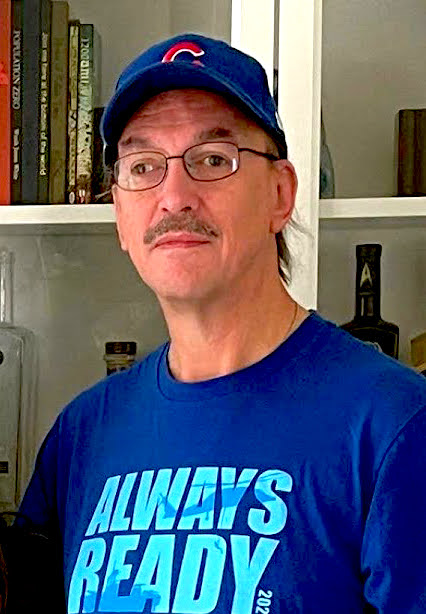
A Graveside Chat with Tim Waggoner

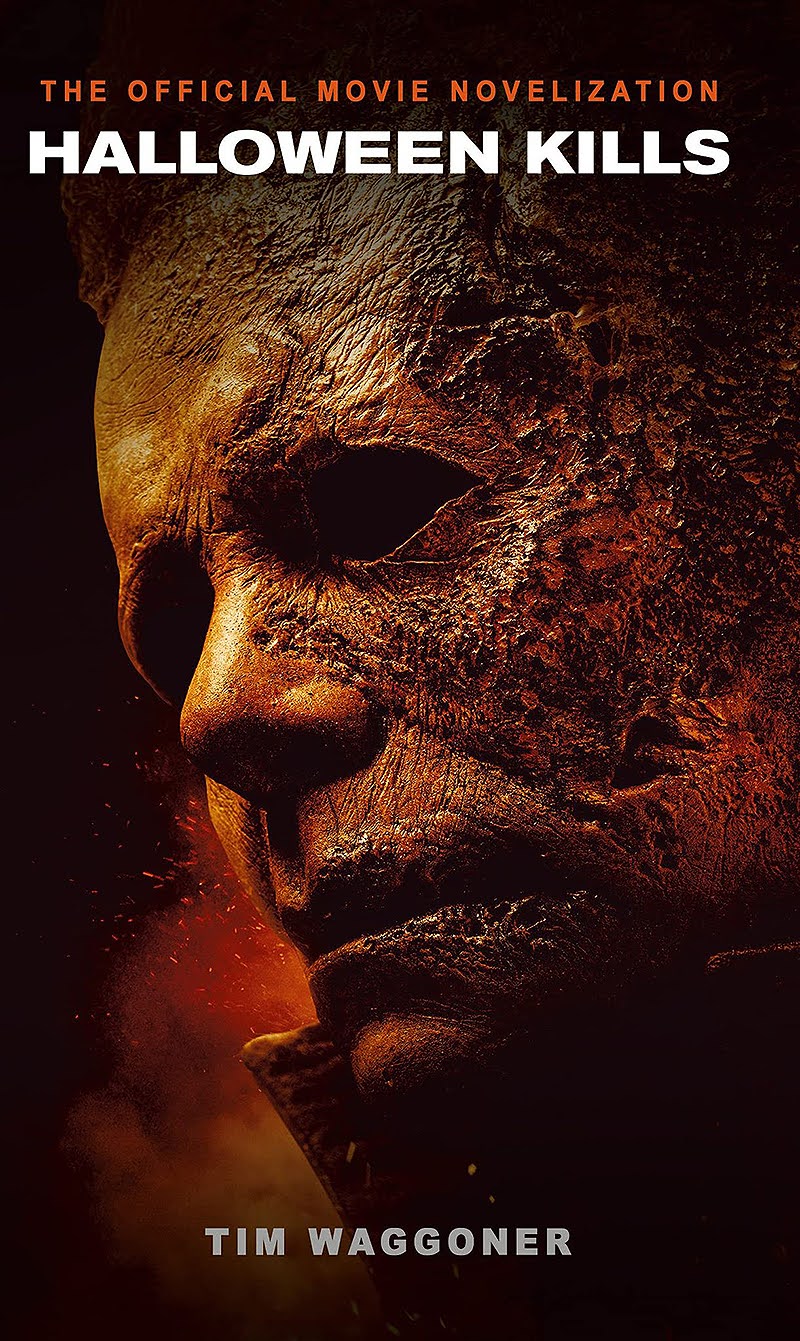
Tim Waggoner is a prolific author, with a hefty catalog of original novels; media tie-in novels for Supernatural, Grimm, The X-Files, Doctor Who, A Nightmare on Elm Street, and Transformers; and novelizations for the films Resident Evil: The Final Chapter, Kingsmen: The Golden Circle, and Halloween Kills. He has been a newspaper reporter, magazine editor, and copy editor, and he is currently a professor of English at Sinclair Community College in Dayton, Ohio. Tim’s writing has won numerous awards, including three HWA Bram Stoker Awards. So, Tim, a big welcome to this edition of A Graveside Chat!


AGC: A fair portion of your published work is media-related — tie-in novels and movie novelizations. You clearly have worked in some popular and highly entertaining franchises. Beyond the requisite paycheck, what drew you to pursue this particular creative outlet? Have you pursued writing for any of these franchises due to your own personal interest, or was it more a matter of opportunities being available and you happened to be the right writer for the job?

TW: I’m 58, and when I was a kid, there was no cable TV, no video rental stores, no Internet, no social media, no YouTube. The only way for us to experience more adventures of our favorite movie and TV heroes was in media tie-ins — novelizations, novels, and comics. I read the old Gold Key Star Trek, Lost in Space, and Dark Shadows comics, and later I started reading novelizations, a lot of them by Alan Dean Foster, as well as Dungeon & Dragons and Star Trek novels. Not only did I enjoy getting to read more about these properties, the writers were able to tell stories they couldn’t in TV and movies, going into more details, and — my favorite part — letting us know what the characters were thinking and feeling.

When I started writing seriously, with the intention of making it my life’s work, I decided to try writing different types of things to increase my chances of success, and one of those things was tie-in novels. At first, I pursued tie-ins for properties I was interested in — such as novels in various D&D game settings (I wrote and published seven of those). Sometimes I still do that, but other times publishers approach me about doing a tie-in, and those may be for properties I’m unfamiliar with or wouldn’t have thought about trying to write, but I’ve enjoyed those as much as any others I’ve done. I still haven’t got to write a Star Trek novel, damn it, even though I’ve tried to snag a Trek gig on and off for years!

AGC:
You’ve written numerous nonfiction articles and books, such as Writing in the Dark, about the process of writing. Is it safe to assume you are as passionate about sharing your knowledge of writing as you are about storytelling? What would you consider the first and best piece of advice for someone looking to test the waters as a writer?

TW: I fell in love with writing about writing when I first started reading Lawrence Block’s columns on fiction writing in Writer’s Digest in the early 80s. I found his advice warm, encouraging, and entertaining, and it really helped me grow as a writer. I’m a college writing teacher in my day job (composition and creative writing), so sharing knowledge and helping others is a key part of who I am.

As for advice, I’d say learn to write vivid fiction, fiction written from a clear, specific viewpoint, making sure to include the five senses, as well as what characters think, feel, imagine, etc. Too many beginning fiction writers write like they’re watching a movie. That’s a passive experience, with us as an inactive audience watching from a distance as someone else does something. The only senses we have stimulated are sight and sound, and we have no idea what’s going on in characters’ heads unless they tell us in dialogue. Fiction writers need to put themselves into their characters’ places and imagine what they might be experiencing — mentally, emotionally, and physically, then use those details to create a vivid experience for their readers. The strength of prose fiction is that it does things no other medium can do — it makes readers active participants in creating the story as they read it, and writers need to give them the details to stimulate their imaginations to do so. Writing vivid fiction helps us do this.

AGC:
In your blog, “Writing in the Dark,” you frequently delve into the relevance of horror — and fiction in general — in today’s world. Your first novel, Dying for It, came out in 2001. In the intervening years, the world of publishing — not to mention the world in general — has evolved (or perhaps devolved, in some cases) by leaps and bounds. How has this ongoing transformation impacted the process and content of your writing?

TW: When I first started out, the common wisdom was that novelists would write their first book, get it published, and then since editors knew you were a pro, you could sell new novels to them on the basis of a short pitch or outline, maybe with a few sample chapters if they requested them. All the novels I’ve sold for the last twenty years have been on the basis of pitches and outlines. (Tie-ins are always done this way since you’re working with other people’s IPs, and they need to approve what you do every step of the way.) Over the years publishers have gotten more conservative in the risks they’re willing to take. A big part of this is that now the sales force has to approve a book — they have to believe they can sell it to the public effectively — before the editor can make an offer. Those people aren’t typically creative people, so the decisions they make will be based solely on financial concerns. So mass-market editors don’t take chances on as many weird, quirky, original projects as they used to. They’re also not issuing contracts based on outlines from pros, even if you have a long track record as a novelist. If they haven’t worked with you before, they want to see an entire finished novel, just as they would from someone just starting out.

Since I like to write weird stuff, I often sell to small-press publishers, who are more interested in the artistic aspect of publishing than money. There’s not a lot of money in the small press, so if I tried to make my entire income from my writing, it would be disastrous financially. Many mass-market publishers have been swallowed up in mergers, so there are fewer places to submit novels, and the midlist — where most writers made their living — has all but vanished. In horror, thankfully, the small press is strong and offers a lot of opportunities for writers, both new and established.

AGC:
Where do you see yourself heading creatively in the coming days, months, and years? Do you have any projects on the horizon you’d be willing to talk about?

TW: I have two finished horror novels in the pipeline at Flame Tree Press: A Hunter Called Night and Lord of the Feast. They won’t be out until 2023 and 2024, though. I have a trilogy of urban fantasy/horror novels coming out from Aethon Books. I’ve submitted the first one, called The Atrocity Engine, but I don’t have a publication date for it yet. I still need to write the next two books in the series. I’m also trying to branch out a little, and in the last year I’ve written a thriller novel, a middle-grade horror novel, and I’m currently working on a fantasy novel. Since these are fields I’m not known for writing in, and because I’d be working with new editors, I’ve written (or will write) the entire novels before sending them out, instead of trying to sell them on a pitch and an outline, as I used to. I’m also trying to write work that’s less strange and bizarre and more marketable, which I hope will appeal to mass-market editors. We’ll see how it goes.

AGC: What’s the best piece of advice you have for someone who wants to start writing horror specifically, or who wants to write better horror?

TW: My advice is to write stories that come from your own fevered imagination — stories that are original and not just tired retreads of well-worn tropes such as vampires, haunted houses, vengeful ghosts, etc. (At least not without putting an original spin on such tropes.) A huge part of what makes horror work is a sense of the unknown, of mystery and suspense, and there’s little that’s unknown about a stereotypical zombie outbreak story. But if you write a story about an old person who grew up during a zombie outbreak that’s been long over, and they miss it for some weird reason and want to restart it, then you have an interesting story idea. Plus, this idea will have a strong emotional core because the central idea comes out of a character.

Write down your fears, your obsessions, your nightmares. Pay attention to the wonderfully bizarre world around you and write down what you see. Look over all these notes when it's time to write a story or a novel, pick several, combine them, add a strong emotional core, maybe one drawn from your own experience, put them all into a blender, mix them together, then pour them out onto the page. The story that results will be completely yours, not like anyone else’s, and it’s stories like these that have the best chance of getting published, and — more importantly — having a lasting impact on readers.

AGC: Thanks very much, Tim!

Visit Tim on the web at
timwaggoner.com.

Thursday, July 7, 2022

A Graveside Chat with Kathe Koja

Kathe Koja’s name hit the heights early in her writing career, with the release of her acclaimed first novel, The Cipher (1991, Dell-Abyss) which showcased her fresh, unique voice as well as a distinctly dark tone. Since then, she has written numerous novels (her latest is titled Dark Factory), YA novels, short stories, and essays — and has added director and producer to her credits. Her work has won the Shirley Jackson Award, Bram Stoker Award, ASPCA Henry Bergh Award, and the Deathrealm Award, among others. Through her company, Loudermilk Productions LLC, she stages immersive events with musicians, visual artists, dancers, fire performers, and scent creators. Kathe is based in Detroit, thinks globally, drinks coffee, and dances to techno whenever she can.

Photo by Rick Lieder

AGC: Your first novel, The Cipher, attracted significant attention, both with critics and with readers; Josh Malerman has called it “a stone-cold landmark of the genre.” Since then, you have been an author (or perhaps “creator” is a better term) to reckon with. Your distinctive prose tends to have a vivid, organic flow; one might say an overwhelming sense of immediacy. Can you pinpoint any specific influences or inspirations for your style?

KK: Style is voice, right, it’s as unconscious and integral as speech, we don’t consider how we speak, we just talk to each other. I remember wondering, years ago at Clarion Workshop, if I had a style, and was assured by Kate Wilhelm that I did. And Shirley Jackson’s brief, masterclass essay, “Notes for a Young Writer” assured me that stories should move, that nothing should be on the page that doesn’t absolutely belong there. You go a lot faster when you throw out the deadweight.

As a reader, I’ve always sought out and reveled in writers — like Anthony Burgess, like Angela Carter — whose relationship with words is headlong and exuberant, so my work tries to do that too, keep the play in wordplay.

AGC: Many of your works involve marginalized, “misfit” characters, who seek, knowingly or unknowingly, to transform themselves. Can you identify any specific factors — social, personal, political, or dramatic — that shape the identities of your characters? Do you have any characters to whom you relate more personally than others?

The first thing I see before I write anything is a character, and it’s that character who forms the nucleus of the narrative. So I relate to them all, I feel for them — even the ones I don’t “like,” even the ones no one likes, like Nakota in The Cipher — or else I couldn’t write them, I’d run the risk of them becoming cardboard markers just moving that narrative along. I do have favorites, though. (Remember when your mom said she didn’t have a favorite kid? She lied.) In my newest book, Dark Factory, it’s Ari Regon — he’s up for anything, he’s anything but introspective, he’d be huge fun to hang out with — though Ari is a different kind of rebel: he pushes things further and farther, seeks transformation, out of pleasure, not pain.

And “misfit” can be taken as a compliment, right? To be unable to fit into something that’s wrong for you, that refuses to give space to you, is not a bad thing. And to have courage enough to play with and push those limits is not too shabby either.

AGC: You’ve published novels for young adults as well as for us older folks. Do you find writing for a younger audience appreciably different than writing for... shall we say... more seasoned readers? In your YA work, how much do you tackle what some might call controversial topics or particularly graphic imagery? Do you aim to write more books for your YA readers?

KK: I had the amazing good fortune to publish seven YA novels with a legend for an editor: Frances Foster of FSG, who modeled and affirmed the belief that YA is every bit the equal of any literature for adults. Because it is. And I found that I had to be even more economical and on point for younger readers, because they have less patience for bloat than adults.

And I made certain to be as honest — utterly, hopefully honest — as possible, even in novels that were very dark, like The Blue Mirror, that follows young artist Maggy as she confronts the inner darkness that blinds us, and Going Under, where siblings Hilly and Ivan are stalked and manipulated by an adult evil that hides behind a therapeutic smile (both horror novels IMO). Because younger readers, unlike some adult readers, are still able, and are fully willing, to take in new information that may change their minds and their worldview. If you’re talking to someone who’s listening, you make sure to tell all the truth you know.

And yes, I would love to write more YA!

AGC: Your immersive events and adaptations of classic as well as your own works look absolutely fascinating. How did you come to develop these events? You clearly have a very active role in their production; can you give us an idea of what audiences/participants experience during these events? (As an aside, the video I’ve seen of your Dark Factory book release really makes me regret I wasn’t in Michigan at the time.)

KK: Making the book trailer for Under the Poppy, my novel about Victorian puppeteers, got me involved in creating performances — I produced immersive events with artists, actors, dancers, musicians, fire perfomers, scent creators... So many amazing and dedicated creative people who wanted to play along in these worlds that we devised for our patrons. (We always said “patrons” instead of “audience,” because being a patron is more participative, less passive.)

And each one was different. My Dracula was structured as a dinner party in the basement of a historic mercantile building, where Dracula is interviewing Jonathan Harker, and patrons were at the table too, everyone moving down a seat, closer to Dracula herself as the night progressed. My Alice in Wonderland, called ALI<E, set the patrons loose in a preschool, where the Mad Hatter, the Red Queen, and the Carpenter brought existential questions to violent life — being menaced by the Red Queen is an experience in itself! And recreating Christopher Marlowe’s Faustus in a church put the patrons face to face with a devil and a pack of Deadly Sins, who all had a great time scaring, luring, flirting with, and interacting with those patrons.

I found that making these events, creating the script, directing and producing the performance, is really very, very much like writing a novel, only you get to watch how the reader reacts! Which is what led to Dark Factory, where I’ve combined a novel with the ongoing opportunity for readers to participate — via the site, or by entering one of the contests (the mask contest was wild), or by an interview with one of the characters, or on social media — so that anyone who feels moved to be part of the club can do that, can help create the Dark Factory experience. And fiction, the act of reading, has always been immersive, but now we can take it a step further. And Meerkat Press was such a badass collaborator in creating this experience, which takes the act of publishing a step further, too, expanding the idea of what a novel can be — and the preorder folks got a swag pack that was the first, as far as we know, to include condoms (play safe!). And we’re still extending the story, this time with an eye on VR... Because everything we make in the real world corresponds with something in the novel — the sparkling drink fountain and floating bubbles and masked DJ at the Detroit launch, the studio setting and blasting techno of the Atlanta launch — the novel and the real world hold hands, they dance, and together define a third reality.

AGC: Okay... whatever topic, have your say. Anything you want — or have wanted — to share, go for it!

KK: One of the great lessons of making — a novel, a story, a show, anything — is that life, and how we choose to live it, is supposed to lead us to joy. That’s almost a strange thing to say, now, a contradictory thing when we’re in such an awful moment of history — but maybe it’s the moment where we need joy most. Joy creates, joy bolsters, joy makes us whole.

AGC: Thanks for taking the time for A Graveside Chat, Kathe. Most appreciated, and I hope you enjoyed it.

KK: Thank you for inviting me!


Coming Soon at A Graveside Chat: Tim Waggoner,
and many more!