Saturday, February 4, 2012

Destroy All Planets!


Gamera vs. Viras (Gamera Tai Bairasu, 1968)

DVD Description: Released by Shout! Factory, (2010; double-billed with Gamera vs. Gyaos); Japanese version with subtitles; original AIP dub; publicity gallery

Directed by Noriaki Yuasa

Starring Kôjirô Hongô, Tôru Takatsuka, Carl Craig, Peter Williams, Carl Clay, Michiko Yaegaki, Mari Atsumi, Junko Yashiro

Rating: 2 out of 5 stars

Unbeknownst to its people, the earth is about to come under attack! As a bizarre cluster of striped spheres hurtles toward the unsuspecting planet, Gamera suddenly comes round, pops the spaceship a good one, and down it goes. Before their demise, the aliens on board report back to their home world that they have an enemy on Earth—the big flying turtle.

Cut to Japan, where we meet Jim (Carl Craig) and Masao (Tôru Takatsuka), a couple of precocious Boy Scouts who are visiting an aquarium with their troop. They finagle their way into an experimental mini sub and take it cruising around the bay. Under the sea, they discover Gamera, who engages them in an amusing race. Suddenly, another alien spaceship appears and unleashes a force field beam that entraps the monster as well as the boys. Jim and Masao manage to get free, but the aliens examine Gamera's memories (by means of stock footage) and discover its affection for children—a weakness they intend to exploit.

The aliens capture Jim and Masao and take control of Gamera by means of a brain-wave control device. Gamera...again via stock footage...inflicts serious damage on some miniature sets. Aboard the alien ship, Jim and Masao encounter a grotesque, squid-like being, which they assume to be another captive of the aliens—only to learn that it is, in fact, the alien leader. The ingenious younsters figure out how to make Gamera do the opposite of what the aliens order it to do, and so it attacks the spaceship, saving the boys and forcing the aliens to rethink their plans of conquest. In desperation, the squid-like alien decapitates its minions—all of which transform into squid-like critters and then combine to create one gigantic, malevolent Viras monster. For the final ten minutes of the movie, Gamera and Viras battle to the death, and in the end...shock of shocks...the big turtle again emerges victorious.

If this movie sounds ridiculous, it's because it's a ridiculous movie. While none of the preceding Gamera films were shining examples of cinematic sophistication, this is the first of the series to cast off its shackles of inhibition and shamelessly shoot straight at the kiddie market. That's not to say Gamera vs. Viras isn't reasonably entertaining for the older set; you just need to be a member of the older set with more than a few remnants of the ten-year-old left lingering in your psyche. Then again, I'm really not so sure. As I've said many times before, as a ten-year-old (and even younger), I wanted my daikaiju played straight. I wanted merciless monsters, hard-boiled heroes, and exquisite destruction. Nothing irked me more than juvenile protagonists and muppet-like monsters. To a large extent that's still true, though in my old age I tend to have a more sporting attitude.

The threadbare budget works against this movie right from the start. The miniatures and sets are sparse, and the cinematography does nothing to disguise the fact. Gamera looks more puppy-like than ever, and Viras treads the line between the wicked and the comical. Stock footage from the previous films comprise a distressing percentage of the film's running time. However, much like its predecessor, this film trusts that its younger viewers can handle it and features one of the most surprisingly violent scenes in all daikaiju history. Once the Viras leader has revealed itself, furious at having been foiled by the earthlings, it uses one of its arms to graphically behead its subordinates—which then grow new squid-like heads that protrude grotesquely from their humanoid bodies. I don't believe I saw this movie until I was well into adulthood, and I recall being quite taken aback (agreeably so, I must say) by this unabridged display of savagery. It's one of those little moments that turn what might be an otherwise forgettable movie into something of a novelty.

Like Gamera vs. Barugon and Gamera vs. Gyaos before it, Gamera vs. Viras received no theatrical release in the United States. Instead, in 1969, AIP-TV released it directly to television under the title Destroy All Planets—no doubt to capitalize on the success of Toho's Destroy All Monsters, which AIP had released to theaters in May of that year. The Shout! Factory double-feature DVD (which also features Gamera vs. Gyaos, reviewed here) presents the film with both the original Japanese language version and the AIP-Titan Studios dub. It's a good buy, to be sure, assuming you're one of those daikaiju completists (like me) with the squid-like heart of a child.

Return of the Giant Monsters


Gamera vs. Gyaos
(Daikaiju Kuchusen: Gamera Tai Gyaos, 1967)

DVD Description: Released by Shout! Factory, (2010; double-billed with Gamera vs. Viras); Japanese version with subtitles; original AIP dub; Sandy Frank dub, publicity gallery

Directed by Noriaki Yuasa

Starring Kôjirô Hongô, Kichijirô Ueda, Reiko Kasahara, Naoyuki Abe, Taro Marui, Yukitaro Hotaru, Yoshirô Kitahara

Rating: 3 out of 5 stars

With the third Gamera film of the Showa era, one can clearly see that, for Daiei Studios, a period of declining budgets and a focus on younger viewers was in the offing. While Gamera vs. Gyaos has more in common with its marginally grimmer-toned predecessors than with the juvenile romps that were to come, the increasing budget constraints of the day lend the special effects a cheesier quality than either of the preceding films, and the storyline ventures farther than ever before into the domain of the ludicrous. The Gamera suit is clearly cheaper and less menacing in appearance than the previous two, reflecting the monster's definitive transition from marauding daikaiju to savior of the earth's children. Gyaos is an interesting enough creation, clearly inspired by Rodan; however, the suit is poorly realized, far less convincing than even the inferior Rodan suit designs of the mid-to-late 1960s.

Ironically, despite their predominantly juvenile tone, several of the Gamera films—perhaps this one above all—do anything but shy away from relatively graphic violence. Gyaos is quite clearly carnivorous in this movie, and our protagonists even exploit the monster's taste for human blood in their attempts to destroy it.

One can't deny the imaginative allure of film's plot. An engineering corp building a new highway through the forest near Mt. Fuji encounters an unseen, horrifying unknown—something capable of emitting a highly destructive sonic beam. A team surveying the area is killed when the beam emanates from the forest and obliterates their helicopter. A reporter arrives to investigate the situation and ventures into the forest with a young boy named Eiichi from the nearby village. The monster Gyaos appears, and the reporter leaves Eiichi behind while attempting to escape. Gyaos devours the man, and it's not looking too good for Eiichi until Gamera appears and engages Gyaos in battle. Gamera saves Eiichi by placing him on its back and flying him away.

Scientists identify Gyaos as a type of prehistoric monster, whose unique, twin vertebrae structure functions as a kind of tuning fork to generate its sonic beam. Gyaos is vulnerable to fire and even sunlight, but despite this handicap, it remains powerful enough to severely injure Gamera during their next battle. Gamera retreats to the ocean to recuperate and Gyaos sets out to wreak havoc in the city of Nagoya. With some of its strength restored, Gamera attacks Gyaos again and attempts to destroy it by restraining it in the ocean as the sun rises. However, Gyaos uses its beam to sever its own foot and make its escape.

The Japanese Self-Defense Force attempts to entrap Gyaos by constructing a rotating platform filled with synthetic human blood (True Blood?), the idea being that the rotation will affect Gyaos's equilibrium and keep it immobile until the sunlight destroys it. Unfortunately, however clever, this endeavor fails. Now Gamera appears and engages Gyaos in battle once again, and this time, the big turtle manages to keep Gyaos from escaping the sunlight. Weakened, Gyaos succumbs to Gamera's superior strength and is finally destroyed.

Gamera vs. Gyaos never received a theatrical release in the United States. Instead, in 1968, AIP-TV released the film directly to television under the title Return of the Giant Monsters. In the 1980s, Sandy Frank released a number of the Gamera films with new (and mostly atrocious) dubbing to the American television market. This, and several other of the Sandy Frank–released Gamera films, frequently appeared on Mystery Science Theatre 3000.

The Shout! Factory DVD release this time is a double-feature; Gamera vs. Gyaos is paired with Gamera vs. Viras, Daiei's next—and far sillier—entry in the series. The video and audio quality are quite good, per Shout! Factory's usual standards, and it's definitely a bargain to get two for the price of one. I must say, I'm glad that the original Gamera and Gamera vs. Barugon came out as single DVD releases, being that both are superior films and certainly warrant the more "respectful" treatment. As far as Shout! Factory is concerned, they probably make out better pairing the subsequent films as they have.

Despite its limited appeal, at least for me personally, seeing the entire Gamera series given a decent-quality DVD release is indeed a fine thing for us hardcore daikaiju enthusiasts.

Friday, February 3, 2012

The Criterion Collection: GODZILLA


Godzilla, King of the Monsters
(Gojira, 1954)

DVD Description:
Released by Criterion (DVD and Blu-Ray); additional material: Japanese and U.S. versions, trailers, commentaries, documentaries, booklet

Directed by Ishiro Honda

Starring: Akira Takarada, Akihiko Hirata, Takashi Shimura, Momoko Kochi, Fuyuki Murakami, Sachio Sakai, Raymond Burr (U.S. version)

Rating: 5 out of 5 stars

The original, 1954 Japanese version of Godzilla is surely my favorite monster movie ever. Maybe even my favorite movie ever. While most westerners equate Godzilla movies with hokey monsters, model cities, and bad dubbing, the original Japanese film transcends the genre that birthed it and, in its day, transformed that genre into something altogether new and different. Countless words have been written about Godzilla being a metaphor for the nuclear horror Japan experienced at the close of World War II, so I'll not belabor that point. While the U.S. version, with its added footage of Raymond Burr, retained at least a portion of the original's power, the Japanese version may be viewed through the same "serious" lens one would view Japanese classics such as Seven Samurai, Rashomon, and Ikiru, and find it in no way wanting. Despite some crudities in its special effects, the film's grimness and documentary-style narrative imbues it with a sense of real-world horror that no other monster film, Japanese or otherwise, has ever achieved. Its limited U.S. theatrical release in the early 2000s received almost unanimous accolades from critics and, in a sense, opened a lot of eyes to a product that most American viewers only thought they knew.

The intersecting stories of Emiko Yamane (Momoko Kochi), Ogata (Akira Takarada), and Dr. Serizawa (Akihiko Hirata) propel the drama, but Godzilla is the fourth character in this relationship, affecting and influencing the human characters' every decision. Emiko and Serizawa are engaged, their marriage having been arranged when they were young; however, Emiko and Ogata are in love and wish to marry, but both have deep feelings for Serizawa and have no desire to hurt him. Serizawa, in his scientific research, has discovered an unusual energy force with the power to destroy oxygen molecules, and his dilemma is whether to use it against the monster and risk it falling into the hands of politicians — the one thing he fears more than Godzilla — or allow Godzilla to trample Japan unimpeded. It's his sense of honor as well as his compassion for Ogata and Emiko that motivate him to make the decision he does.

Tangential to the "love triangle" is the character of Dr. Yamane, Emiko's father and Japan's preeminent paleontologist, who fervently opposes the government's position that Godzilla must be destroyed, preferring that the monster be studied for its unique in its ability to survive both untold millions of years as well as massive doses of radiation from hydrogen bomb tests. Yamane is less susceptible than Serizawa to Ogata and Emiko's efforts to convince him that Godzilla must be destroyed, despite his recognition of the fact that Godzilla might inflict upon Japan a nuclear holocaust far worse than Hiroshima and Nagasaki. Only toward the end, after Tokyo has been reduced to ashes, does he appear to be reconciled to the destruction of the greatest laboratory sample the world has ever produced.

The American version retains the better part of the original plot, but too much of the character development has been edited out to make room for Raymond Burr for the story to come across as more than melodrama. That's not to say the scenes with Raymond Burr, directed by Terry Morse, are totally superfluous; certainly, for American audiences of the day, relatively soon after World War II, having a recognizable American star to participate in the drama, in effect becoming the audience's eyes and ears, served to make the original Japanese story more palatable. While the added scenes are occasionally too obvious — especially when stand-ins are used for the original Japanese actors — they are played very straight, and oftentimes blend in surprisingly well. For all its flaws, the Americanization did allow much of the original to remain undubbed, and Burr's scenes occasionally add an additional touch of suspense, such as during the storm when Godzilla first appears on Odo Island.

While most American audiences would probably never know the difference, Godzilla's rampage in the original Japanese version is far superior, in that Tokyo has been wonderfully reproduced in miniature, with Godzilla making a logical and accurate progression through the city. To Japanese audiences, the reshuffled scenes must appear quite confusing. Having Godzilla attack at night was a wise move, since the darkness adds immeasurably to the sense of menace and also offers the practical advantage of concealing flaws in the effects. Regardless, Eiji Tsuburaya's work in this film is masterful, particularly when one considers the limited budget, the time constraints, and the fact that it was all new and largely experimental at the time.

Akira Ifukube scored the film and also created the ominous sound effects for Godzilla's roar and footsteps. Many of the themes that fans explicitly identify with Godzilla originated in this film, and it's all the more remarkable that Ifukube composed the score without having seen a frame of film. He was instructed to write music for "something big." I believe he succeeded beyond anyone's wildest expectations.

The Criterion Collection DVD release is a true masterpiece. The Japanese and U.S. versions come on two separate discs (single Blu-Ray disc), and each film features a commentary track by noted author/film historian David Kalat. Extra features include interviews with actor Akira Takarada, Godzilla suit actor Haruo Nakajima, effects technicians Yoshio Irie and Eizo Kaimai, soundtrack composer Akira Ifukube, and film critic Tado Sato. The prints of both versions have been painstakingly restored to near-mint condition, and the soundtracks have never been more impressive. I couldn't give a higher recommendation to the presentation of these films. Some have complained about the art on the packaging, but I find it quite effective, if not spectacular. While the Criterion release is no doubt the definitive release of Godzilla, the Classic Media edition (previously reviewed here) at least offers several noteworthy extra features. It pays to own both.

Tuesday, January 31, 2012

Godzilla Therapy


Had a bit of the ick yesterday, so I stayed home from work, watched Godzilla movies, and bundled up under a blanket of cats. Quite therapeutic, this treatment. Today, much better, nearly 100%.

The recent Criterion DVD release of the original Godzilla arrived the other day, so I watched the Japanese version on Friday and spent yesterday's forced seclusion watching the Americanized version with Perry Mason. It's a winner of a DVD set, with beautifully restored prints of both films and lots of special features. To me, the incredible sound quality, particularly of the Japanese version, may be the package's most impressive feature. The booming footsteps and deafening roar is absolutely awe-inspiring. My full review of both the original Japanese film and its Americanized counterpart, based on the Classic Media DVD release from a few years back (which is hardly shabby in and of itself) can be found at my Daikaiju review page. The Criterion release surpasses it in quality, with some notable special features, including several documentaries and commentary by author David Kalat, but the Classic Media DVD's special features are also very worthwhile. It pays to own both sets. I think it's time to update my Godzilla DVD review....

Since I was under the weather (and under the aforementioned blanket of cats), just for good measure, I went on and watched the Japanese versions of Godzilla Raids Again and King Kong vs. Godzilla, and the U.S. version of Mothra vs. Godzilla (a.k.a. Godzilla vs. the Thing). Nothing like a little daikaiju therapy to put everything right again.

And yes, being smushed by cats helps too. A lot.

Saturday, January 28, 2012

Faith Rock


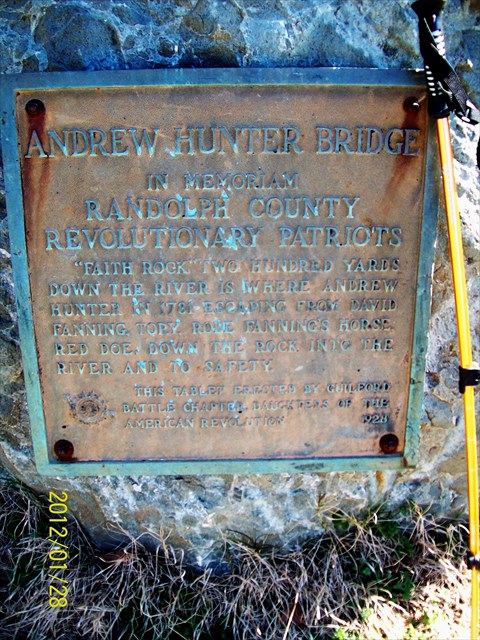
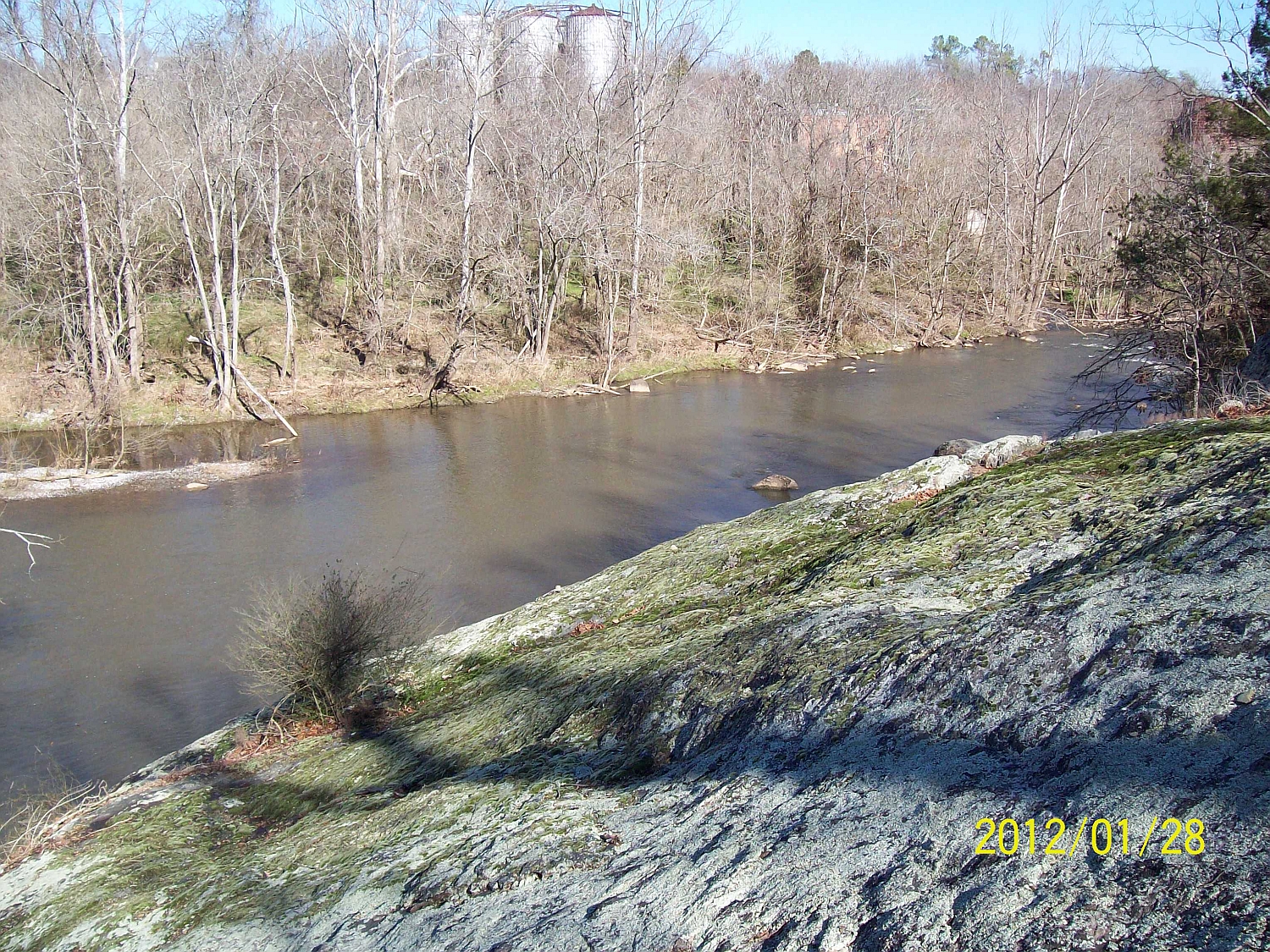
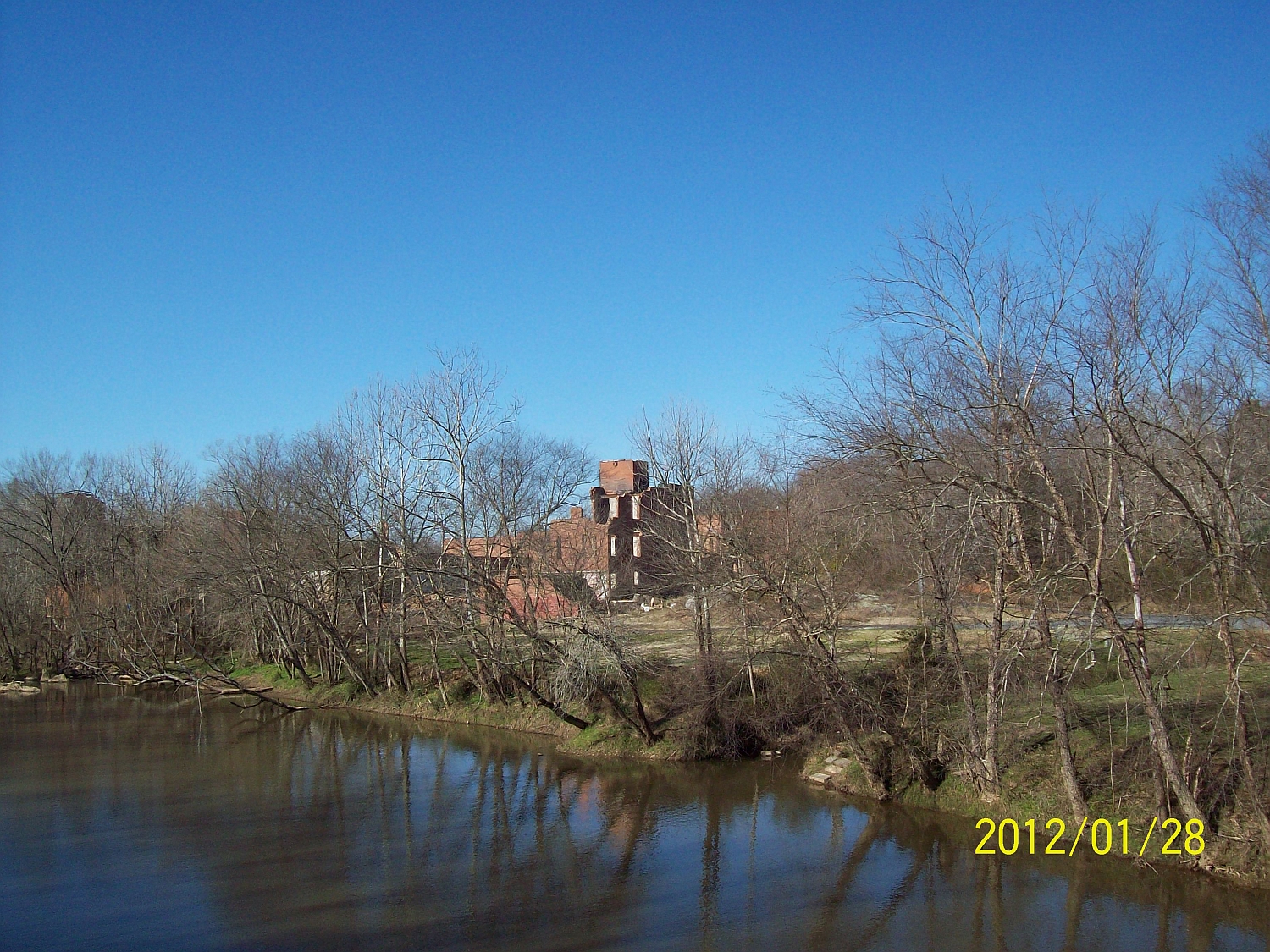
An almost uncannily warm January day, so I spent the early part of it geocaching in Franklinville, a little community about 25 miles south of here, in Randolph County. It used to be a thriving textile town; not much left of it now, though the remnants of the impressive old cotton mill still stand on the banks of the Deep River. The trail along the river is quite scenic and takes you to Faith Rock, a spectacular bluestone wall that towers over the river along its southern banks. The plaque at the left is hard to read (it's from 1928 itself), but it tells of an incident in 1781, in which local resident Andrew Hunter ran afoul of the notorious Tory leader David Fanning. Facing execution, Hunter stole Fanning's prized mare, Red Doe, and made his escape by plunging down Faith Rock into the river.

Once you've seen Faith Rock up close, you understand what a feat that had to have been—even allowing for some embellishment of Revolutionary War history. I mostly clambered around the top portion of the outcropping as I was making my way toward "Don't Fall in the River—The Revenge" (GC19H1Z), and had I taken a bad step, I could have shed a lot of skin skidding down the slope.

Also along the river, a bit farther east, one may find the remains of at least one fishing weir built by Native Americans, possibly as early as the 17th century. Weirs were v-shaped rock dams used for trapping fish. Alas, today, the water level was too high for much of the weir near the spot where I was caching to be visible.

Once again, caching has brought me to a neat, historical corner of the map I otherwise never would have seen. Always nice.

This evening, a gathering of strange friends at Casa de Damned Rodan. I'm cooking chili, and so far, there's every indication it'll turn out deadly. Perhaps I'll post the recipe. I even cleaned the house, but I must confess, the tenacity of filth is my most hated thing on earth. No, I didn't actually put any filth in the chili. Not yet, anyway.

Notes on the history of the Deep River may be found here.

Click on photos to enlarge.

Looking down at the river from Faith Rock

Across the river from Faith Rock

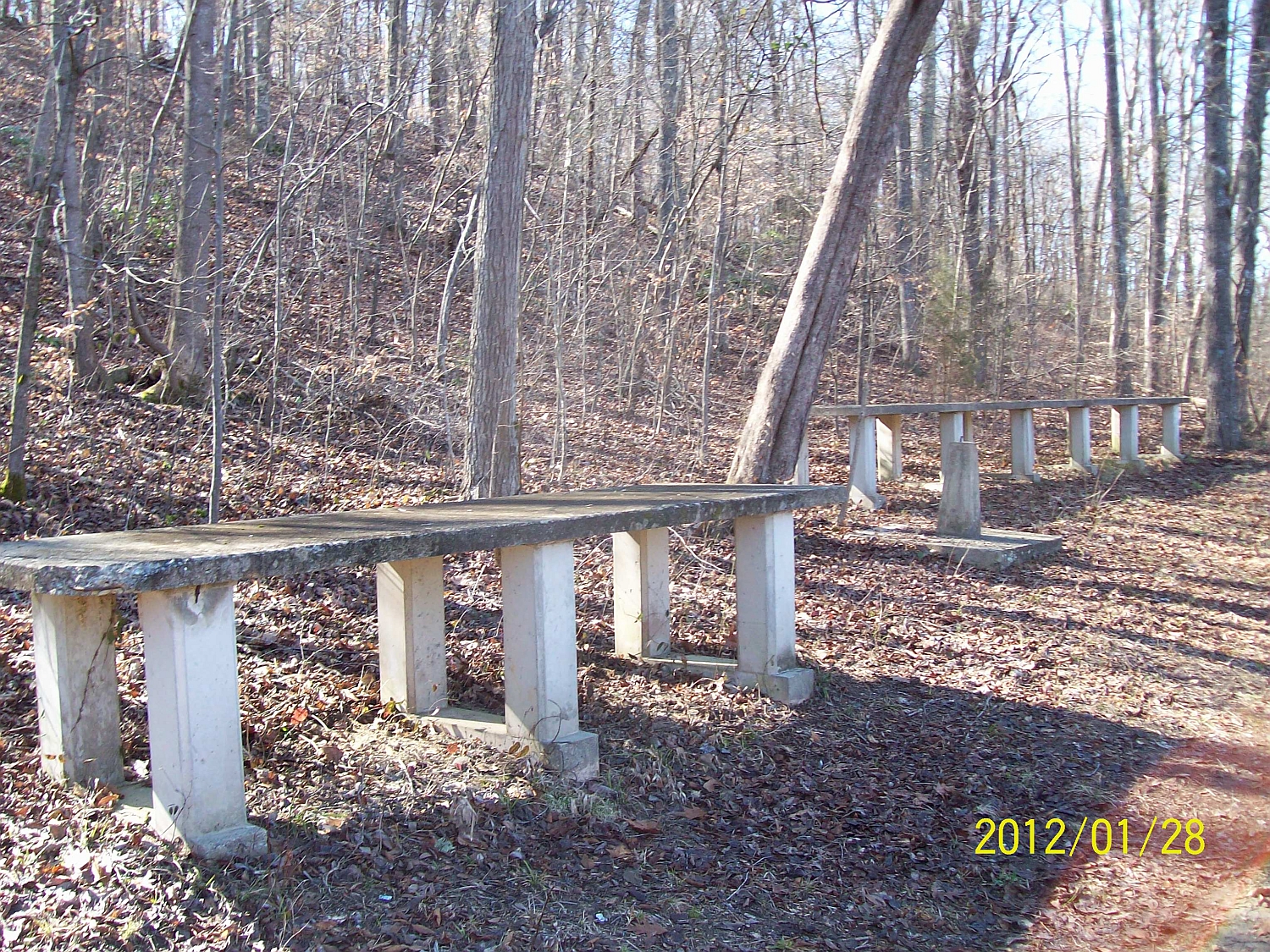
Picnic tables for trolls?

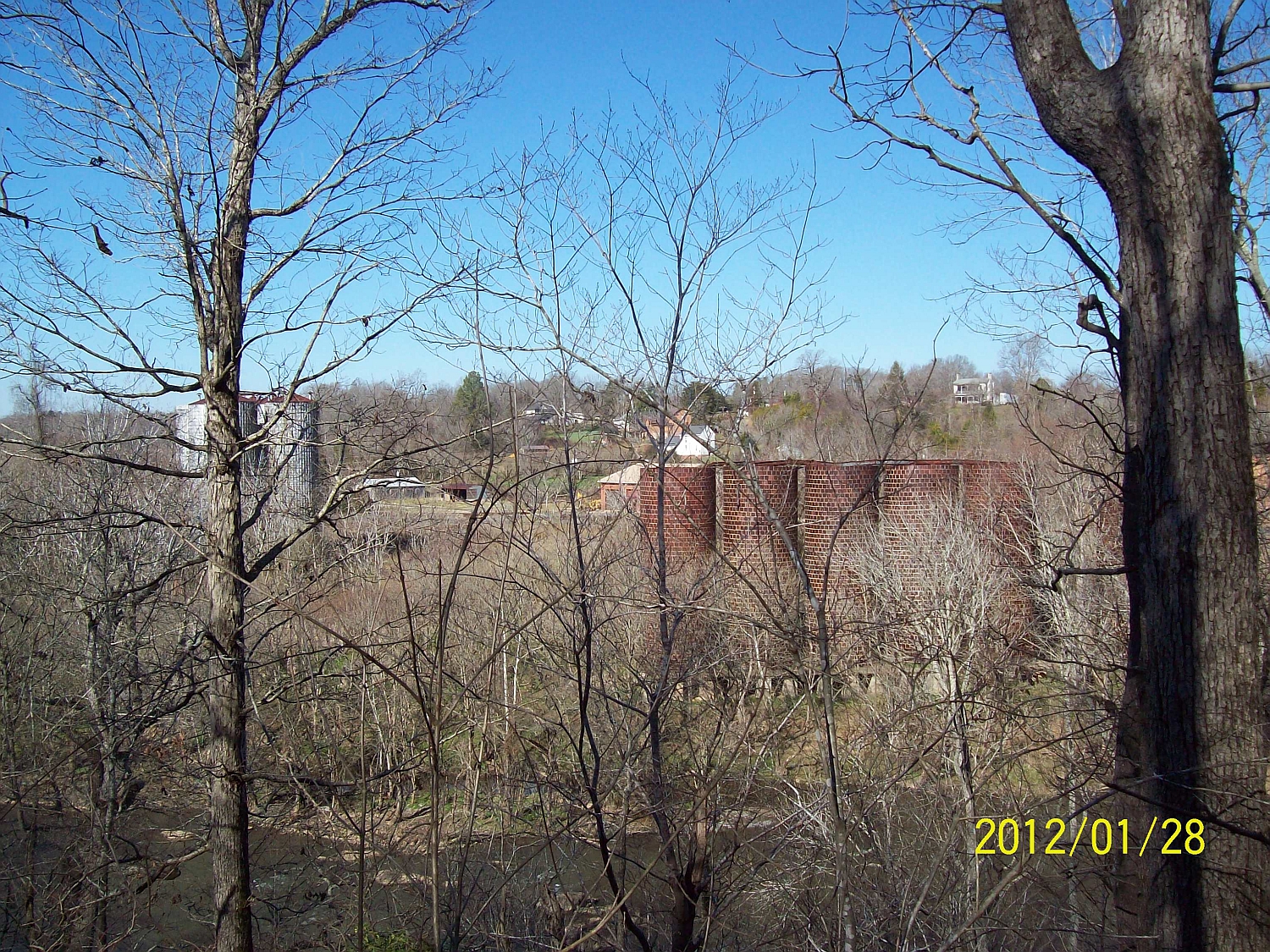
View of the old cotton mill from the footbridge across the river

Monday, January 23, 2012

Before You Find the Cache...You See The Ring

That's your predicament when you go hunting for "The Curse of Samara Morgan" (GC1QF2B), over near Chapel Hill, NC. The cache's theme, of course, comes from The Ring—the U.S. version of the Japanese horror classic Ringu—in which scary psychic girl Samara Morgan gets dumped into a well, where she survives for seven days, leaving behind a curse that kills anyone unfortunate enough to be exposed to it. No question, going after this particular cache entails taking certain risks, but then that's typical of the hides placed by some of those dastardly cachers over in the NC Triangle, heh heh heh...

Yesterday turned out very cold and occasionally drizzly, but that didn't stop the team of Bridget "Suntigres" Langley, Diana Hartman, Rob "RTMLee" Lee, Scott "Diefenbaker" Hager, and the old dude from making a big day of going after a couple of particularly challenging hides around Chapel Hill. We started out with "Preparation I: There Is No 'I' in 'Team'" (GC370N8) which required two teams, working in conjunction via cell phone, to find numerous stages along two fairly lengthy trails before rejoining and heading after the final stage.

That done, we broke for lunch at one of my favorite local establishments—The Spotted Dog, in Carrboro. They have a large selection of vegetarian items on the menu, but no shortage of absolutely delicious dead animal as well. I'm quite partial to their turkey burger, fish and chips, and spicy black-eyed pea cakes, though yesterday I opted for a good old bacon cheeseburger, since I figured it might be my last meal. It did hit the spot after the big hike. Their Sunday drink specials were bloody marys, and I do love a good, spicy one from time to time, but I fear theirs were underwhelming, to say the least. Better to choose from their extensive selection of microbrews, I think.

Hunger satiated, we were braced to move on and confront our possible downfall. By the time we arrived at ground zero for "The Curse of Samara Morgan," the temperature had dropped since morning, and the skies were turning ominous. We discovered a picturesque little graveyard nearby, which we reckoned would be handy if the worst should happen. Suntigres had accompanied the previous group to claim the cache, the previous week, and they'd had the advantage of much dryer weather; since then the rain had turned the well site into a muddy morass. That did not stop her from ridiculing us for including a rope in our retrieval recipe, since her team had forsworn such safety measures. No matter. I got myself promptly hooked up and, without undue difficulty, made the descent into the 20 ft. deep shaft. Sure enough, there's the cache. And what else? Mosquitoes. Tons of them. Joy.

Anyhoo, in short order, I signed the logbook and made my way back to the surface, by all the signs unaffected by Samara's curse. I told Suntigres that I had scratched her name off the log so she'd have to go back do it all over again, but she didn't buy it for a minute. (Maybe her mistake, what do you think?)

The cache still lurks out there, waiting for the next intrepid souls to make their way into the dark depths. I've been fortunate not to receive a phone call informing me I have seven days remaining. That doesn't mean you won't, though.

Ground zero

Down we go.

Looking up

Mr. Lee takes his turn.

A nearby option, if the worst should happen.

Friday, January 20, 2012

Space Battleship Yamato


Back in the mid 1970s, my friend Bill Gudmundson (visit Bill's Kitchen) sent me a cassette tape with some music from Space Cruiser Yamato, the Japanese animated TV series and feature film. I immediately went all gaga over the stuff. Composed by the late Hiroshi Miyagawa, the scores are loaded with atmosphere, wistful melodies, and rousing energy. The little bit of information about the series I could dig up fascinated me even more. Soon enough, much to my delight, the two seasons of the series extant made its way to our shores under the title Star Blazers. At the time, I was living on campus at the University of Georgia in Athens, and it was one of those situations where, if I wanted to watch TV, I had to settle for one of the dormitory's community sets. The show came on at 3:30 on weekday afternoons, and this was kind of bad, because those students who weren't in class were all watching General Hospital (which actually snared me for a time, a year or so later, when John Colicos of Battlestar Galactica fame was on board as a mad genius out to destroy the world with his homemade freeze ray machine). Many was the day I had to fight with a bunch of irate young women in order to gain control of the floor's TV set. I usually won out by convincing them to visit one of the other floors, where communal GH gatherings achieved legendary proportions. For quite some time I was known as the geek who shut down General Hospital to watch cartoons.

Yeah, I was a Yamato fan. Back in the 80s, I owned, either on VHS or laser disc, all three seasons of original Japanese TV series, all five feature films, every poster, every book, every model kit from the series. This is good stuff we're talking.

These days, I'm not quite so gaga over the whole business, but I will tell you that, a couple of years back, the announcement of a new, live-action Space Battleship Yamato feature did send me into a minor tizzy. The film was released in Japan in 2010 and has been available on DVD for some time now; I finally got around to purchasing a copy and watched it tonight. I'm guessing the only reason I delayed picking it up was to prove to somebody, maybe me, that I control my geeky leanings; they do not control me. (Did you know that Criterion is releasing a deluxe edition of the original Japanese version of Godzilla?)

Space Battleship Yamato, directed by Takashi Yamazaki, is, at the very least, a handsome enough production, with a decent cast; a mostly engaging story; fair special effects; and a satisfying score by Naoki Sato that interpolates many of Miyagawa's signature themes. The script of the original 1974 Japanese feature film, Space Cruiser Yamato, condensed the storyline from 26 half-hour TV episodes into a two-hour theatrical movie, and this film does much the same thing—at least for about the first two-thirds of its running time—oftentimes faithfully reproducing the original scene setup and dialogue. No doubt due to time constraints, the origin of the title vessel itself is skimmed over; understandable, to be sure, yet nonetheless unsatisfying, for it's the Yamato's unique identity that has historically lain at the heart of the franchise. Rather than building up to the revelation of Yamato, the script, for all intents and purposes, presents the ship as "just another battleship." Until near the end of the picture, one never quite gets the sense that the Yamato is as significant a character as any of the human cast.

To one so familiar with the characters and worlds of the animated series, it is both disconcerting and refreshing to find that the origins of the villainous Gamilas, including their illustrious leader Dessler, and the benevolent Stasha of Iscandar have been totally refashioned. For the benefit of other geeks, I'll not reveal much about these fundamental revisions to the mythos other than to say that, in some ways, they benefit the picture, while in others they fall woefully short. Alas, while much of the CGI in the film works nicely, particularly with the mecha, the alien characters don't fare very well.

As the film progresses, certain elements from the second, stand-alone feature film, Arrivederci, Yamato, come into play, particularly at the climax. These are profound enough to insure that Space Battleship Yamato does not represent the first chapter of an ongoing saga, at least not that could follow any previously established continuity. This was a good decision on the producers' part, I believe; this film need not spawn a whole new franchise.

In the overall, the cast members fulfilled and in some cases surpassed my expectations in their various roles. At first, I was a little dubious of lead actor Takuya Kimura as Susumu Kodai, but as his character develops, I found myself quite satisfied with his performance. Meisa Kuroki as Yuki Mori immediately struck me as better than spot-on; her character is tougher and smarter than her anime counterpart, and she's certainly easy on the eyes. When I first saw the film's trailer, I wasn't so sure about Tsutomo Yamazaki as Captain Okita. I feared he might come off as a mere caricature, assuming statuesque poses and offering stone-faced glares. I was pleased to find his character dimensioned and generally likeable. Also particularly noteworthy are Toshirô Yanagiba as Science Officer Sanada, Hiroyuki Ikeuchi as Company Commander Saito, and Reiko Takashima as Dr. Sado. It's particularly intriguing that the latter character—in the anime, one of creator Leiji Matsumoto's typical pugdy, barely human-looking figures—is portrayed by a fairly attractive young woman, but who expertly conveys many of the character's well-known mannerisms (she even has a cat and drinks sake).

I could have quite done without the closing song by Steven Tyler, thank you very much. The less said, the better.

While Space Battleship Yamato is not without its failings—some of which are admittedly glaring—it's a fun, familiar story, competently acted and directed. To say I was entertained is an understatement. In a lot of ways, this film rekindled the old excitement the original series offered me...back in my long, long, long-gone geeky days.

Space Battleship Yamato poster featuring Takuya Kimura

Meisa Kuroki as Yuki Mori

Poster from 1979 Space Cruiser Yamato film festival

Sunday, January 15, 2012

From High Point to Haw River


Despite the winter chill, I think I've spent more time outdoors than indoors this weekend—mostly hunting and hiding geocaches, of course. Yesterday, my friend Bridget "Suntigres" Langley and I spent the better part of the day on a cache run around High Point, which included everything from simple park-and-grab micros to creatively camouflaged trail hides to terrain-intensive challenges. That's my favorite kind of day—at the end of it all, a fair number added to my total cache count, but a focus more on quality than quantity of finds. Afterward, Kimberly and I did dinner, drinks, and games with the typically uproarious Jenny Chapman and Doug Cox, all of which lasted till one-something in the morning. But lo, four new caches down the road had been published earlier in the evening, so at two in the a.m., I was back out there at it—missing being first-to-find by a matter of minutes. Evidently, I wasn't the only night owl on the hunt.

Today, it was out to Northeast Park, one of my favorite spots along the Haw River, to hide a new cache (a replacement for one of the entries in my Destroy All Monsters series that had been demolished by restless daikaiju). While out there, I decided to bushwhack out along the river for one of the more remote hides, which was actually intended to be reached by canoe or kayak. It wasn't all that long a hike—just under a mile—but a fairly arduous one, requiring a few improvised water crossings and battling legions of briers and thorns. The cache itself, "Row, Row, Row Your Boat..." (GC126G9), is pretty old and in need of owner maintenance, but by gummy, I finally get to cross it off the list. As I've mentioned many times, the Haw River is one of the most scenic rivers in the NC Piedmont, and there are plenty of caches to be found at various points along its path.

Now, I'm a little bushed, but at least I managed to work off a few bites of that oh-so-delicious burger from last night's visit to Lindley Park Filling Station....

Click the pics to enlarge.

A couple of the more entertaining hides in High Point. A little cedar log that
opens up to reveal the hidden bison tube, and a frightfully clever geocacher trap.


Cachefishing, anyone?

You never know what you'll find in the woods. The Northeast Park
Conference Center, perhaps?


One of the entertaining non-traditional bridges I used to cross the water.

The only crossing spot on the Haw River at Northeast Park, which is
not without its hazards.


Aww. These folks took the easy way.


Wednesday, January 11, 2012

Damned Brugger's Thai Spring Rolls

Ms. B. and I often get together to conjure up a variety of Asian recipes—I'm particularly glad she shares my fondness for Thai cuisine—and we've managed a number of very tasty dishes. One of my favorites—which she has undeniably perfected—is Thai fresh spring rolls. We usually stuff the rolls with ground turkey, but last night we tried them with shrimp. While I generally prefer shrimp to turkey, I find I actually like the turkey rolls better...by a slim margin. Life is full of surprises, don't you know. I made up some seriously hot pepper sauce (with fish sauce, lime juice, and serrano peppers), and we also had on hand some sriracha, hot chili garlic sauce, and sweet Maesri brand spring roll sauce. Here's our recipe, or a reasonable facsimile thereof; bear in mind we always vary things a bit in the prepping. The amounts below serve two happily; adjust as needed, but bear in mind that you are responsible for the math, not me. Preparation time is about 30 minutes. It's easier if you have a partner who can prepare the wrappers while the other stuffs the innards.

What You Need:
1 lb shrimp (after cooking, peeling, and de-veining) or ground turkey
1 dozen rice paper wrappers
2 cups chopped cabbage (bak choy or napa)
1 cup cilantro
1 cup diced mushrooms
1/2 cup chopped spring onions
1 clove garlic, finely chopped
juice from 1 lime
2 tbsp hot chili oil
fish sauce
diced serrano peppers (1 to 10, depending on your tolerance for heat)

What You Do:
1) In a large bowl, thoroughly mix cabbage, mushrooms, spring onions, serrano peppers, lemon juice, and about 2 tbsp fish sauce.
2) Pour your Thai chili oil into a very hot wok or skillet. Add chopped garlic and cook for about two minutes, stirring frequently; then turn heat to low.
3) If you're using ground turkey, dump it in now and brown. If you're using shrimp, wait and throw it into the mix right at the end, so it won't get tough.
4) If you're using turkey: once it's browned, dump into the skillet the mixture of cabbage, cilantro, mushrooms, spring onions, serrano peppers, lemon juice, and fish sauce. Let simmer for three to five minutes, stirring frequently. If you're using shrimp, add it to the pan with only about a minute to go.
5) Remove from heat.
6) In a bowl of very hot water, soak each rice paper wrapper for about one minute (you'll probably need to change out your hot water every three minutes or so during preparation). Spread the wrapper onto a non-stick surface (an oiled wooden cutting board works nicely) and blot with a dry paper towel. Then spoon about three to four tablespoons of your cooked ingredients onto the wrapper. Fold the ends over; then grab one of the unfolded ends and roll the bugger into a happy little cylindrical shape.
7) Voilà.

Dip these guys into your preferred sauce, and they'll rock your world—though after about an hour, you'll be hungry as hell again. I recommend a few sticks of crushed almond Pocky to fill that gaping void.

We accompanied our dinner with a bottle of Chateau Morrisette Cabernet Franc, which is easily among this winery's best products. Their Black Dog red table wine is also a winning accompaniment. Of course, hot saké is never a bad accompaniment, either, but we were in a Cab Franc mood....

Monday, January 9, 2012

Pastorale

Too busy and/or preoccupied to blog this past week, apparently. Back to work after the most satisfying long holiday, lots of writing, activities on the caching trail, being social (or something like that). Spent most of the day yesterday across the border in Virginia. Headed out to Fieldale, met up with Tom "Night-Hawk" Kidd, grabbed a new cache (alas, missed out on the first-to-find, though I did get several this week, including one today), and did a little maintenance on "Cachefishing" (GC1PA13). Then it was over to Danville to grab a few new ones, mostly on the Richmond & Danville Rail Trail, out east of town.

I'm never uncomfortable out hiking alone, and certainly not on this trail. Still, there's something about it, more so than many of the trails in this region, that speaks of a certain eeriness...no doubt because it goes way out into picturesque, sparsely inhabited country, where my writer's mind can concoct all kinds of...uncomfortable...scenarios. From end to end, the trail is about five and a half miles; I've biked the whole thing once and hiked portions of it several times (most notably for Triskaphobia, one of the truly memorable cache hunts of late). Yesterday was a temperate but gray day on the trail, and I ended up actually meeting a couple of young women, also geocaching, from South Boston. We found a few together, and then parted ways.

The rest of the hike, I didn't see another living soul. Yet I could constantly hear sounds of distant life: occasional gunshots (lots of hunting grounds out that way), lonely birds, furtive voices, and dogs howling—quite mournfully, which only intensified the impression of remote isolation. All most conducive to mentally composing creepy tales, though my mind was admittedly more occupied with hunting the caches at hand. The trail runs past the very serene Mt. Zion Cemetery, where, I am quite certain, zombies gather in their free time, although I didn't actually see any yesterday. Of course, I stand a much greater chance of being accosted by the unsavory living than the not-so-dead, but then that's what makes the prospect all the more entertaining....

When I arrived back at the Rodan Mobile at the Shawnee Rd. trailhead, I performed my good deed for the day, or...well...for however long. There's a ton of trash out there—the disgusting, inevitable refuse of so much disreputable humanity. I spent about half an hour on cleanup detail and filled up a garbage bag, though I don't think I made a very significant dent in the mess. Come spring, when adverse weather may be less a factor, I think I'll sponsor a CITO (cache-in, trash-out) event at that trail head. Get a few cachers together, and the place will be damn near pristine again.

There's one more cache out at the other end of the trail, which I look forward to claiming in the very near future.

Sure, it looks like a peaceful, serene setting, but Night of the Living Dead started out
in just such a place, now didn't it?

Monday, January 2, 2012

Stonewalled


I've never been particularly fond of New Year's Day and its attendant traditions—as if January 1 is some magic milestone where the world changes, and you suddenly have the wherewithal you didn't have 24 hours earlier to fulfill your every dream. Far as I'm concerned, New Year's Day represents just another step along that ever-fun path to one's inevitable death. Still, I've never had reason not to celebrate when celebration is due, and this year...well, of course I did. Saturday afternoon, Ms. B. and I hauled ourselves and a couple of days' worth of provisions to the mountains of Virginia for a little sojourn at the Stonewall Bed & Breakfast, on the Blue Ridge Parkway near Floyd. Along the way, we stopped at Villa Appalaccia, a small but impressive winery that, to our happy surprise, we found open on New Year's Eve afternoon. Excellent, excellent wine, which, we learned, is made from grapes that are grown in slate earth, rather than the typical clay of the region. Apparently, it makes a significant difference, and I may have never enjoyed a wine more than their Sangiovese and Aglianico varieties.

The Stonewall has several guestrooms in the main house, but we opted to stay in the very rustic, very tiny View Cabin, located some distance away in the woods on the property. Spartan, to be sure; there's an outhouse for taking care of your personal needs—fortunately well-tended—and if you want to stay warm, you'd better fire up the old wood stove. The cabin is wired for electricity, at least, so you can plug in your electronic devices—though you won't pick up the inn's WiFi way out there. (Despite the distance from any population center, cell/3G/4G reception is quite good.) There's not room for much more than a bed, a chair, and a table, but we found it clean, stocked with wood and other necessities, and ultimately quite comfortable.

Once ensconced in our luxurious lodgings, we headed out to dinner at Chateau Morrisette restaurant and winery where Kimberly and I dined last New Year's Eve (and I found the inspiration for a new novella ["Adventures in the New Year"]). If anything, this year's fare at the restaurant was even better than last year's (filet mignon for the old man and peanut-crusted chicken breast for the young lady), and I was here introduced to an intriguing house "winetail" called the Bloody Indy—a concoction of their Independence white wine, tomato juice, and potent spices. A startlingly good drink, though more akin to a Red Eye (an old favorite of mine) than an actual Bloody Mary. This year, there were no uncomfortable after-dinner adventures, and we rather enjoyed our own little private welcoming of the New Year, sans Dick Clark or any other vestige of civilization's noise.

I might mention here that there have been some recent bear sightings on the property, so we were advised to make a lot of noise when coming and going on the path between the cabin and the inn, particularly at night. Thus, we took it upon ourselves, whenever we were out and about, to holler "Bear!" at strategic moments. I don't know that it frightened away (or attracted) any bears, but the squirrels sure looked at us funny.

Breakfast at the Stonewall is something to behold. A massive spread of eggs, bacon, country ham, pancakes, french toast, biscuits, danish pastries, fresh fruit, juice, coffee, several varieties of tea...you name it. I find proprietor Scott Truslow's bacon to be the highlight of this feast. He has his own special method of preparing it, and it's worth raving about. A lot. So don't be surprised if every now and then on this blog or in person, I up and start singing about Stonewall's bacon. Fair warning.

Then, off to Rock Castle Gorge, not too far from the inn. There's a ten-mile loop trail through the gorge, and we did about five miles along the creek at the base, rather than tackling the sheer incline from Rocky Knob, up on top. A couple of caches were involved, of course. The highlight for me was coming upon an old, private farmhouse way back in the gorge, accessible only by the trail, which absolutely could have been the setting—transplanted from the mountains of Vermont to the mountains of Virginia—for H. P. Lovecraft's "The Whisperer in Darkness." The atmosphere here couldn't have been more suited to a Lovecraftian tale, and since Kimberly hasn't read the story itself, I gave it to her pretty near verbatim.

I do understand she slept less well last night than the previous night....

Last night, temperatures dipped well below freezing, but we built a great big campfire and roasted Nathan's hot dogs and marshmallows, accompanied by some of that fabulous Villa Appalaccia Sangiovese. The bitter wind drove us in before too late, though, so we settled into the cabin and watched Larry Blamire's The Lost Skeleton Returns Again on my laptop, which more than hit the spot for us. This morning, another fine breakfast, and the rather sad departure. A few caches along the way—including one at a beautiful little park in Danbury, NC, which involved an enjoyable vertical ascent to a scenic point overlooking the Dan River.

This evening, our friends, the Albaneses, invited us over for dinner and a movie—Case 39, starring Renee Zellweger (to whom Joe refers as "Sphincter Face," an epithet that I gotta tell you, however rude, resonates madly). A most entertaining horror flick, and this little gathering made for a pleasant welcome back to Greensboro.

I hope those of you who drop in here have a wonderful New Year, such as it is. And if you don't stop in here, well, just never you mind, since you're not seeing it anyway.

Click on the images to enlarge.

The View Cabin, a short distance through bear-infested woods
from the Stonewall Bed & Breakfast


This random picture adorns the wall in the rest room of the main house at the Stonewall Inn
(along with a newspaper article about the sinking of the Titanic). I don't know what
this is from, but I love it. (Late addendum: an Ansel Adams photo of artist

Georgia O'Keeffe and Orville Cox at Canyon de Chelly National Monument, 1937.)

Fun folks with suitably blood-hued vintages at Chateau Morrisette

Brugger took this shot of us in the mirror at the bar at Chateau Morrisette.
I rather like it.
Along the trail in Rock Creek Gorge Old farmhouse back in Rock Creek Gorge. Surely, the very site of HPL's "The Whisperer
in Darkness," transplanted from Vermont to Virginia


The first sunset of 2012 as seen from the View Cabin

Saturday, December 31, 2011

Ending the Year With a Boom and a Clamor

I woke up this morning with Tchaikovsky's 1812 Overture in my head, lord knows why. When I was a youngster, my folks had a Mercury album version, conducted by Antal Dorati, recorded in 1955, I believe. It featured a fabulous orchestration of the piece, followed by a narrated account of how the sound effects (cannon and bells) were compiled for the recording. I used to listen to the album endlessly when I was around four or five, and I probably haven't heard that particular version since I was around ten. I figured I'd look for it on YouTube, on the off chance I might find a decent recording of the music.

The entire Mercury album was the first thing that came up on my search. And what a treat to listen to the narrative for the first time since I was just a wee lad. Sometimes, I really do love the InterWebz...

It's in three parts, so I'm putting the links here. Don't know if you'll enjoy it as much as I do, but it is a brilliant piece, after all.

Part 1:
Part 2:
Part 3:

May you have a Happy New Year. Or at least one that stops shy of hideous.

Sunday, December 25, 2011

A Bald Knob for Christmas

Damned Rodan at the crest of Bald Knob, just before sunset

A mighty fine Christmas Day, I have to say. Kimberly and I came to Mum's last night, and this morning, my brother arrived. We exchanged some very nice gifts, including some decent clothes for me (some would say it's about time) and a digital camera for Ms. B. Following the traditional afternoon feast, Kimberly and I headed up toward Rocky Mount, VA, to hike up to Bald Knob Ridge to hunt a relatively old geocache. Not a long hike, but somewhat arduous going up the steep incline. I knew from the cache description that there was supposed to be a decent view of the surrounding countryside from up there, but it far exceeded expectations. We reached the summit just before sunset and discovered steep, craggy rock faces covered in lichen and cacti. We had fantastic views in all directions and took a slew of pictures. The cache itself was fairly challenging because it had been moved from its original coordinates, and making my way up and down the rocky incline was at times rather treacherous. At last, I managed to locate the thing and sign the logbook. Once back at the bottom, we headed off to another nearby cache and then back to Martinsville, where we paid a brief visit to our old friends, the Wickliffes, who made sure we were properly fed (they clearly have not paid attention to the universal admonitions never to feed the Damned thing). I have to say, though, after our exertions on Bald Knob, the chow—and the wine from The Grove Winery—really hit the spot.

Happy horrordays to the lot of you. Niters.

Click on the images to enlarge.

Don't look back, Brugger, it's a long way down!

From the summit: view to the north

From the summit: view to the south

Saturday, December 24, 2011

Done?

It probably shouldn't, but this sign at The Grove Winery makes me laugh.

Shopping done...presents wrapped...presents suffer cat damage...presents re-wrapped. Yesterday, caching all day with Mark Case in Burlington; I think I logged eleven. This morning, up with the sun, out to Friendly Center for a couple of last-minute deals. Then...oh Yesu...I'm out of cat litter, so it's off to WalMart. Blech. Next...a quick cache, and then the Grove Winery with Kimberly for a picnic and some wine. All is well.