Friday, April 23, 2010

All Monsters Go Home


All Monsters Attack (Oru Kaiju Daishingeki,
a.k.a. Godzilla's Revenge, 1969)

DVD Description:
Released by Classic Media; additional material: commentary, trailers, Ishiro Honda biography

Directed by Ishiro Honda

Starring Tomonori Yazaki, Eisei Amamoto, Sachio Sakai, Kazuo Suzuki, Kenji Sahara

Rating:

Welcome to my least favorite Godzilla movie....

Ostensibly made for kids, Godzilla's Revenge is unique in that all the monster action occurs within the context of a young boy's dreams. One could go so far as to say that it's a "real world" movie, with Godzilla and the other monsters appearing only as the fantasy characters they actually are.

The landscape in which the little boy, Ichiro (Tomonori Yazaki), lives is a bleak one; it's set in Tokyo's industrial district, both of his parents work long hours and are never at home, and the older kids bully the poor little sod to the point that his retreat into fantasies of Monster Island is pretty danged sad. In his dreams, Ichiro meets Minya, Godzilla's son, who is similarly tormented by a big rubber beast named Gabara. Over the course of the movie, Godzilla attempts to teach Minya courage, the lessons from which Ichiro brings back to the waking world with him. This comes in handy, because some inept bank robbers, seeking a safe house in Ichiro's neighborhood, end up abducting him. By remembering the lessons Godzilla taught his son, he is able to stand up to them—and finally, he even faces down the rotten bastard kids who have been bullying him since the beginning of the picture.

Despite the fact that the lessons Ichiro learns about defending himself are dubious at best, some well-timed moments of levity manage to temper the film's bleakness, which—particularly for a kid's film—has the potential to be truly depressing. Ironically, some of the humor works better in the English version, just because the silly dubbing ramps up the movie's goofiness quotient. In the Japanese version, Minya's voice (yes, Minya talks) sounds not unlike a squeaky girl, whereas in the English version, he sounds remarkably like Barney the purple dinosaur after a few bourbon and ginger ales.

The other monsters in the film appear primarily by way of stock footage, from Godzilla vs. the Sea Monster, Son of Godzilla, and Destroy All Monsters, among others. The only new monster scenes of any note are those with Gabara—a turquoise, tail-less, warty, dog-like thing that walks upright and sounds like my lawnmower when I try to crank it for the first time after a winter's hibernation—and even these are not much to write home about. Gabara does have an electrifying grip, which he uses to shock poor Minya into submission on an occasion or two, a move that prompts Godzilla to take serious offense and mete out the revenge that one gathers the original English title must reference.

Minya, of course, looks just as he did in Son of Godzilla: just plain bad. The intercutting of stock footage from various films, all of which featured distinctively different Godzilla suits, is oftentimes jarring. The new monster scenes use the suit from Destroy All Monsters, which is still in fairly good repair at this point in time (by its final use, in Godzilla vs. Gigan, the suit had just about fallen apart). One could say, I suppose, that it's only natural for Ichiro to dream about Godzilla in his various incarnations, since, as a fan of the movies, he would have stored images of all those different suits in his subconscious. We'll go with that, okay?

Domestically, via United Productions of America, Godzilla's Revenge made its rounds of the drive-in circuit in 1971, originally paired with the U.P.A. release, Island of the Burning Damned (a.k.a. Island of the Burning Doomed), and later Toho's own War of the Gargantuas (also released in the U.S. by U.P.A.). The Classic Media DVD release presents both the U.S. and Japanese versions of the movie, which are mostly the same except for the language and the opening titles; in the Japanese version, there's a very silly monster march sung by hellishly obnoxious children, whereas in the English version, the titles are accompanied by a frenetic jazz number.

I never saw Godzilla's Revenge during its original run; in fact, I'm not sure exactly when I saw it for the first time, but I know I felt as if I'd been sucker-punched. This movie strikes me as one that adults think their kids would love; the real little kids are thinking, "This is stupid as shit," but they can't say that out loud because they'll end up getting whooped. I suspect that if this movie had been my juvenile introduction to Godzilla, I might not have ended up the die-hard daikaiju freak I am at age 50 (all too soon to be 51). Maybe I'm wrong, though; I saw Santa Claus Conquers the Martians when I was about four years old, and I still like Christmas.

As a Godzilla completist, it is necessary for me to own this film; it is not, however, necessary for me to view it frequently. Best I can say is that I applaud Classic Media for giving it as respectable a DVD release as it did with the other movies in their Godzilla series.

Saturday, April 17, 2010

Live-Action SPACE BATTLESHIP YAMATO

Wow. I was a huge fan of the 1970s animated series Space Cruiser Yamato, better known in the U.S. as Star Blazers. In Japan, there were three television seasons and five feature-length films, though the movies never received domestic release. The show was quite popular here in its day, and there's still a segment of anime fandom that keeps the memories alive. I haven't been much into anime, even the old classic stuff, for quite some time, but I think I'm really, really looking forward to getting a look at this. It's due for release in December.

Monday, April 12, 2010

Caching Up

The ol' caching bug has bitten again—and hard—since the weather has been quite conducive to hiking the past few days. Did a five-miler yesterday on the Lake Townsend trail, just north of Greensboro, accompanied by my friend Bridget (a.k.a. Suntigres). I didn't have exact coordinates for one of the caches, but the clue on the Web site and the proximity of two nearby caches left only a small area in which it could be located; happily, I was signing the logbook in short order.

Saturday, it was another mini-monster fest, with Mssrs. Bill Mann and Wayne Miller on hand for Monsters vs. Aliens, which was an unexpected hoot; Destroy All Monsters; King Kong Escapes; and a couple of episodes of Ultraman.

Big deal, so I have to geek out now and again. And I will do it again.

On a bittersweet note, yesterday was the ninth anniversary of my dad's death. Fortunately, these days, I'm better able to remember more of the good times than that last agonizing year before he passed away. I see an awful lot of him in me, especially as I've gotten older—both the good and the bad. The fact there was so much more good than bad in him gives me at least a little hope....

Onward.

Friday, April 2, 2010

Dinner Music

Took the day off for Good Friday—and spent it mainly working in the yard: mowing, cleaning gutters, flattening ruts, mending the fence, etc., and so forth. Gack. But then pulled out me old guitar and did some wailing on "Timothy," from 1971, by the Buoys. Finest song about cannibalism ever to hit the Top 40. Here's a subsequent Buoys incarnation, Dakota, featuring vocalist Bill Kelly, from a 2005 live show.

Monday, March 29, 2010

Semi-Literacy Roolz

Now and again, a little rant is good for the soul. Therefore...

I get a call from Nextel/Sprint, my cell phone provider. "Meester Rainey, you (garbled-in-background noise) decision-maker for (garbled-in-background noise) account, we like to give you offer to (garbled-in-background noise) can I have pin (garbled-in-background noise).

"What?"

Repeat the above, shuffle the garbled-in-background noise cues a couple of words to the left and right.

"Sorry, I can't understand a word you're saying. Learn English, call me from a quieter setting, and maybe then we'll talk." Click.

I have an idea, Mr. American CEO. You run an American company. A crap-load of American folks are looking for work. Instead of collecting 900 times the amount your lowest-paid worker makes, settle for 500 times. Give up half your bonus. Re-invest that sum in your company, and look at how many people in the U.S. you could put back to work—who could then stimulate the economy in realistic terms; in other words, in enterprises that the average American supports. Bring your foreign call centers back home and pay reasonably educated, English-speaking Americans to call on me. Maybe then I'll part with some of my hard-earned dollars to spread the wealth. Not until then, fuckhead. Far as I'm concerned, any individual who can't figure out how to make do with a few million dollars a year really ought not be breathing the same air as the rest of us anyway.

I did send a little missive to Sprint, by the way; the response was as frustrating-slash-hilarious as the original call (copied and pasted unedited): "I am sorry for the inconvenience caused to you when you receive the sales call and could not talked to our sales representative in detail due to the background noise. If you interested in any Sprint product, please reply in details. I provide you all the information regarding the services."

Semi-literacy roolz. Fuckheads rool. Yep.

Wednesday, March 24, 2010

Destroy All Monsters...Geocaching-Style


Too busy to blog much lately; taxes, writing, working the day job, and — perhaps to the approval of the local geocaching crew — creating a new series of caches with a daikaiju theme. It's titled Destroy All Monsters, after guess-which-1968-Toho-Godzilla-flick, and features 11 caches, each named after one of the monsters in the film — Godzilla, Rodan, Mothra, Angurus, etc. Ten caches each contain a clue, which must then be put together to determine the coordinates for the final cache, aptly named King Ghidorah. They will be placed in various locations in northeast Guilford County, and range from park-n-grab micros to big honking ammo boxes in the woods. A couple of the containers will include special, thematically appropriate prizes for the first finders.

One or two of them might even be a little scary....

I hope to have it all completed by the end of the week and published at Geocaching.com shortly thereafter. I trust it will be... invigorating.

Tuesday, March 16, 2010

Florida's Outback


The Circle-O Ranch (Click photo to enlarge.)

Spent a wonderful long weekend in south central Florida at the Circle-O, a citrus ranch owned by my next-door neighbors' family. The majority of the drive down (about 12 hours) and the first full day there, the rain came down in blinding sheets, which made driving difficult and tedious—though it didn't stop us from grabbing a handful of geocaches. Happily, the next couple of days turned out warm, sunny, and pleasant, though we had an almost unsettling, rip-roaring wind coming through for hours on end. The house is surrounded by several hundred acres of citrus groves and pure wilderness, a.k.a. "the Outback," where you can find wildlife in abundance, including gators, armadillos, deer, otters, snakes, a variety of birds, and spiders as big as Kansas (I happened upon one as soon as we arrived; they're kind of hard to miss). There's also plenty of moo cows wandering the range—including a big old dead one right at the entrance to the Outback, although admittedly, this one didn't so much wander as lie around assaulting the olfactories.

During the rainy spell, we stayed indoors and watched movies, such as Sherlock Holmes, Exorcist: Dominion, and Rob Zombie's Halloween II, but once the sun came out, we spent the majority of our time on four-wheel ATVs, exploring the Outback, avoiding armadillos, and staring down moo cows. In between trips (which included several exceedingly cool nighttime excursions), we drove into Fort Pierce for some caching and a fine lunch at the marina. Also got in a spot of fishing, guitar playing, and campfire-building, all of which provided some very welcome relaxation.

Of course, the relaxation is done, and it's back to the salt mines, a portion of which has included working on income taxes today.

I hates me some taxes.

Anyhoo, the Circle-O has quickly become one of my favorite places on Earth, and I hope to get the chance to go back. Mini tanks to my young neighbors, the Workmans, for providing me the opportunity for such a rocking, relaxing vacation.

The front yard (Click photo to enlarge.)

Riding through the Outback (Click photo to enlarge.)

The hidden cypress grove (Click photo to enlarge.)

Paul wanted to ride where the bull was standing. The bull was standing
exactly where he wanted to. We ended up going around.
(Click photo to enlarge.)

Sunset over the outback (Click photo to enlarge.)

Wednesday, March 10, 2010

DARK SHADOWS: BLOOD DANCE Recorded

David Selby as Quentin Collins
Lisa Richards as Chandres Tessier
David Selby and Lisa Richards recording Dark Shadows: Blood Dance
This past weekend, actors David Selby and Lisa Richards were in the studio to record my latest Dark Shadows audio drama script, titled Blood Dance. David Selby reprises his regular role as Quentin Collins, and Lisa Richards stars as new character Chandres Tessier. Here's the teaser from my Web site:

The year is 1929. Seeking a life free of the nightmares at Collinwood, Quentin Collins finds himself in Chicago, captivated by the city’s energy and the prospect of a new love. However, drawn into the twilight world of speakeasies and organized crime, he discovers even darker shadows that threaten to overwhelm both him and Chandres Tessier—the enigmatic woman to whom he feels drawn yet can’t be sure he fully trusts....

More info at my Website and at the Big Finish Web site.

Thursday, March 4, 2010

StellarCon 34


Doing the usual guest thing at Stellarcon 34, coming up this weekend in High Point, NC, at the Best Western High Point Hotel. Not sure of my entire schedule yet, but I'll be participating in the following:


Choosing a Publisher (panel), Friday, 8:00 PM
 
Allen Wold's Writer's Workshop, Saturday, 10:00 AM—1:00 PM
 
Cthulhu Take the Wheel (panel), Saturday, 5:00 PM
 
Horror, Oh, Horror (panel), Sunday, 2:30 PM

May have a reading and book signing somewhere in there, but don't have the schedule as yet.


The past couple of days have been for hunting rigorous geocaches. Yesterday, got two first-to-finds, one with a major terrain challenge. Headed down into the basin near Lake Higgins, knowing that, after all our recent precipitation, it would be something of a marsh. Heh heh...yeah. The marsh part was tough enough, but crossing a couple of streams was a real challenge. Crossed fallen trees, lattices of brambles, and set a new personal record for the broad jump, but sometimes there's nothing for it but just to go wading.

I must have made quite the sight when I stopped off at the grocery store on the way home. I'm sure I left a trail of muddy footprints and brier-covered fines all through the store. Quel rigeur!

Monday, March 1, 2010

Godzilla: The Original Japanese Masterpiece


Godzilla, King of the Monsters (Gojira, 1954)

DVD Description:
Released by Classic Media; additional material: Japanese and U.S. versions, trailers, commentary, documentaries, 12-page booklet

Directed by Ishiro Honda

Starring: Akira Takarada, Akihiko Hirata, Takashi Shimura, Momoko Kochi, Fuyuki Murakami, Sachio Sakai, Raymond Burr (U.S. version)

Rating: 5 out of 5 stars

The original, 1954 Japanese version of Godzilla is surely my favorite monster movie ever. Maybe even my favorite movie ever. While most westerners equate Godzilla movies with hokey monsters, model cities, and bad dubbing, the original Japanese film transcends the genre that birthed it, and in its day, transformed that genre into something altogether new and different. Countless words have been written about Godzilla being a metaphor for the nuclear horror Japan experienced at the close of World War II, so I'll not belabor that point. While the U.S. version, with its added footage of Raymond Burr, retained at least a portion of the original's power, the Japanese version may be viewed through the same "serious" lens one would view Japanese classics such as Seven Samurai, Rashomon, and Ikiru, and find it in no way wanting. Despite some crudities in its special effects, the film's grimness and documentary-style narrative imbues it with a sense of real-world horror that no other monster film, Japanese or otherwise, has ever achieved. Its limited U.S. theatrical release in the early 2000s received almost unanimous accolades from critics and, in a sense, opened a lot of eyes to a product that most American viewers only thought they knew.

The intersecting stories of Emiko Yamane (Momoko Kochi), Ogata (Akira Takarada), and Dr. Serizawa (Akihiko Hirata) propel the drama, but Godzilla is the fourth character in this relationship, affecting and influencing the human characters' every decision. Emiko and Serizawa are engaged, their marriage having been arranged when they were young; however, Emiko and Ogata are in love and wish to marry, but both have deep feelings for Serizawa and have no desire to hurt him. Serizawa, in his scientific research, has discovered an unusual energy force with the power to destroy oxygen molecules, and his dilemma is whether to use it against the monster and risk it falling into the hands of politicians — the one thing he fears more than Godzilla — or allow Godzilla to trample Japan unimpeded. It's his sense of honor as well as his compassion for Ogata and Emiko that motivate him to make the decision he does.

Tangential to the "love triangle" is the character of Dr. Yamane, Emiko's father and Japan's preeminent paleontologist, who fervently opposes the government's position that Godzilla must be destroyed, preferring that the monster be studied for its unique in its ability to survive both untold millions of years as well as massive doses of radiation from hydrogen bomb tests. Yamane is less susceptible than Serizawa to Ogata and Emiko's efforts to convince him that Godzilla must be destroyed, despite his recognition of the fact that Godzilla might inflict upon Japan a nuclear holocaust far worse than Hiroshima and Nagasaki. Only toward the end, after Tokyo has been reduced to ashes, does he appear to be reconciled to the destruction of the greatest laboratory sample the world has ever produced.

The American version retains the better part of the original plot, but too much of the character development has been edited out to make room for Raymond Burr for the story to come across as more than melodrama. That's not to say the scenes with Raymond Burr, directed by Terry Morse, are totally superfluous; certainly, for American audiences of the day, relatively soon after World War II, having a recognizable American star to participate in the drama, in effect becoming the audiences eyes and ears, served to make the original Japanese story more palatable. While the added scenes are occasionally too obvious — especially when stand-ins are used for the original Japanese actors — they are played very straight, and oftentimes blend in surprisingly well. For all its flaws, the Americanization did allow much of the original to remain undubbed, and Burr's scenes occasionally add an additional touch of suspense, such as during the storm when Godzilla first appears on Odo Island.

While most American audiences would probably never know the difference, Godzilla's rampage in the original Japanese version is far superior, in that Tokyo has been wonderfully reproduced in miniature, with Godzilla making a logical and accurate progression through the city. To Japanese audiences, the reshuffled scenes must appear quite confusing. Having Godzilla attack at night was a wise move, since the darkness adds immeasurably to the sense of menace and also offers the practical advantage of concealing flaws in the effects. Regardless, Eiji Tsuburaya's work in this film is masterful, particularly when one considers the limited budget, the time constraints, and the fact that it was all new and largely experimental at the time.

Akira Ifukube scored the film and also created the ominous sound effects for Godzilla's roar and footsteps. Many of the themes that fans explicitly identify with Godzilla originated in this film, and it's all the more remarkable that Ifukube composed the score without having seen a frame of film. He was instructed to write music for "something big." I believe he succeeded beyond anyone's wildest expecations.

The Classic Media presentation is easily the best of their Godzilla DVD series. The Japanese and U.S. versions come on two separate discs, and each has an excellent commentary track by Steve Ryfle and Ed Godziszewski. Extra features include a documentary on the making of the Godzilla suit, a documentary on the development of the original story, trailers, and a 12-page booklet with an essay by Steve Ryfle.

Top recommendation.

Sunday, February 28, 2010

Mom's Famous Chili Recipe


Tadabailey about to announce the door prize winners...

...and the crowd gathers in anticipation.

A most enjoyable day of caching yesterday, mostly in the Randleman area, just south of Greensboro. Cacher Tadabailey hosted a nice chili dinner, featuring... yes... his mom's famous chili recipe. And whoa! Was it ever good! Did some caching on the way down and, afterward, got with some old friends (and made some new) for a cache run around the area, picking up a new, chili-themed series that had us all chuckling (we found lots of meats and vegetables growing in the woods, which are distinctly not their native habitat).

I don't know if I got in enough exercise to work off all that chili (and some fantastic homemade cookies), but last night, just for good measure, I made Thai basil and tofu, which turned out right tasty. And hot! Yes, very, very hot....

Caching partners Spring1......and RTMLee, LadyLeo191, and Suntigres.

Friday, February 26, 2010

Three Giant Monsters: The Greatest Battle on Earth


Ghidorah, the Three-Headed Monster
(San Daikaiju Chikiyu Saidai no Kessen, 1964)

DVD Description:
Released by Classic Media; additional material: Japanese and U.S. versions, trailers, Eiji Tsuburaya documentary, commentary

Directed by Ishiro Honda

Starring Yosuke Natsuki, Yuriko Hoshi, Akiko Wakabayashi, Takashi Shimura, Hisaya Ito, Akihiko Hirata

Rating: 3 out of 5 stars

For better or for worse, Ghidorah, the Three-Headed Monster made for the single biggest directional shift in the history of Godzilla films, as in this movie, the biggest, baddest, and meanest monster of them all began his unlikely transformation into a heroic, if not exactly all-around good dude.

Despite some very cool monster scenes and a fairly engaging human story, Ghidorah registers pretty low on my daikaiju-meter. As anyone who's read these reviews knows, in my book, giant monsters ought to be giant monsters; I was never fond of the anthropomorphizing of the critters, which became a trademark of the Godzilla series after Ghidorah. Toho's rationale—more specifically, Eiji Tsuburaya's and screenwriter Shinichi Sekizawa's—about the trend was, well, we've got to appeal to the younger set. Hey, I was the younger set in those days, and every member of the younger set I knew who enjoyed monster movies wanted his beasties big, bad, and impressive. Who knows...maybe for Japanese kids, this was just what oisha-san ordered. But for some of us, it felt like the beginning of the end, monster-wise.

Still and all, Ghidorah was—and is—an entertaining monster romp. In my old age, any Godzilla movie is an enjoyable movie, no matter what form it takes. Even Godzilla vs. Megalon has its charms, and that's saying something; in 1977, I took my little brother with me to the theater to see Godzilla vs. Megalon, and 33 years later, I don't think he's ever forgiven me for it. Some horrific experiences just imprint themselves on the youthful mind, you know? Some of us adapt, while others do not.

On the positive side, in Ghidorah, Godzilla is less the willful messiah than a monster doing what he does best: messing up other critters that transgress on his rightful territory. His first appearance is memorable: Under a peaceful, midnight blue sky, an ocean liner makes its way toward a pod of whales. Then, behind them, a telltale churning of the ocean hints that something monstrous is about to happen. Akira Ifukube's now-familiar score rises along with a dark, beastly shape, and with dorsal fins alight, Godzilla unleashes a stream of fiery death on the ship, which immediately bursts into flame. It's a great scene, one of Godzilla's best ever. And shortly thereafter, he makes landfall in the harbor district of Tokyo, followed by a handful of highly impressive daikaiju-rampage scenes.

Ah, if only the rest of the movie had been made in this mode.

Rodan's appearance from Mount Aso is impressive enough, but of all the monsters, he's the one who most rapidly devolves into class clown. The Rodan suit design is among the worst ever, a far cry from the evil-looking reptilian beast from his origin film. In the commentary that accompanies the U.S. version, author David Kalat makes a reasoned case for why the monster buffoonery could be taken as a good thing, particularly in that the associated financial boon assured a new Godzilla film from Toho every few months. Be that as it may, once the monsters start mixing it up, the movie becomes an oftentimes tedious wrestling match between rubber suits. For the rest of the Showa series, the majestic, fearsome, awe-inspiring moments so prevalent in the earlier films become fewer and farther between. As a kid, this didn't sit well with me, no sir, not at all, and though I love the Godzilla movies these days more than ever, I still can't help but cringe a little when I watch the ridiculous volleyball match between Godzilla and Rodan.

Ghidorah's birth and attack on Tokyo goes a ways toward setting things right, at least for a time. Many of the destruction scenes rate among Eiji Tsuburaya's most spectacular work, and Ghidorah's design really is awesome. He, at least, is played straight, even during the more comical battles.

Then there's the "conversation" between Godzilla, Rodan, and Mothra, as the big caterpillar attempts to convince the other two to join up as a tag team and whomp Ghidorah's twin-tailed ass. Obviously, there are those who find the scene humorous and even endearing. I, as you might surmise, am not one of them.

On this very nicely presented Classic Media DVD, we have both the original Japanese version and the dubbed U.S. version, which is more radically edited than one might expect upon viewing it without the original for comparison. Dramatically, some of the alterations work quite well, while others are completely superfluous. Lots of scenes are shuffled around, particularly those that involve Godzilla and Rodan's initial appearances; the Venusian prophetess (Akiko Wakabayashi) in the U.S. version becomes a Martian prophetess; and—quite inexplicably—much of Akira Ifukube's excellent score has been replaced by unremarkable film library music. However, a few changes are actually beneficial to the film, such as the deletion of a reprise of Mothra's song, which slows the pacing of the Japanese version down to a merciless crawl. And near the end of the film, during the scenes of Detective Shindo (Yosuke Natsuki) rescuing the prophetess/Princess Salno from killer Malness (Hisaya Ito), the sounds of the monster battle are heard in the background—which only makes sense, since they are obviously fighting in close proximity.

Like the rest of the Classic Media DVD Godzilla releases, this one is an absolute must for the avid Godzillaphile—whether you believe that Ghidorah is a classic among classics or the beginning of the devolution of a once-fearsome atomic horror.

Wednesday, February 24, 2010

Ravishing a Universe for Love!


Mothra (Mosura, 1961)
DVD Description:
Released by Sony/Columbia Pictures; additional material: Japanese and U.S. versions, commentaries, trailers

Directed by Ishiro Honda

Starring: Frankie Sakai, Hiroshi Koizumi, Kyoko Kagawa, Jerry Ito, Ken Uehara, Emi & Yumi It0 (The Peanuts), Takashi Shimura, Akihiko Hirata

Rating:
4 out of 5 stars

Mothra has always been one of my least favorite of Toho's giant monsters. It's a bug; depending on its incarnation, either an unremarkable, big honking caterpillar or a terribly unreal-looking giant moth. Yet Mothra has also starred in some of Toho's best Showa-era epics, from the original Mothra to Mothra vs. Godzilla (1963). Later incarnations of the critter, such as those in Godzilla - Mothra - King Ghidorah: All-Out Monster Attack and Godzilla: Tokyo SOS have been outright impressive. Go figure. Of course, then there was the 1992 Godzilla vs. Mothra. Eh. Not so much.

After the dark, somber moods set in Godzilla, Godzilla Raids Again, and Rodan, the Flying Monster, all of which were based on the disturbing premise of science gone too far, Toho opted to produce a friendlier, fantasy-based daikaiju movie. Mothra introduces a giant monster who wreaks havoc but is essentially gentle, driven to destruction only because of its loyalty to the benevolent Shobijin (which means "little beauties"): a pair of one-foot-tall young women from the radiation-blasted Infant Island, who are exploited by a greedy entrepreneur named Clark Nelson. In his zeal to make money, Nelson abducts the Shobijin and forces them to perform in an exotic nightclub act in Tokyo. However, unknown to him, the Shobijin are using their performances to telepathically summon Mothra to their rescue, and when the big bug eventually does appear, Eiji Tsuburaya and his special effects crew get a chance to more than go to town.

Of course, it wouldn't be a Toho monster movie without spectacular scenes of miniature city destruction, and on this count Mothra definitely delivers, especially during its rampage in larval form. Several different larva puppets of various sizes were constructed, as well as a suit (only of the caterpillar's fore section) worn by actor Haruo Nakajima, which allowed for the use of very large-scale, super-realistic miniatures. Unlike in some later appearances, in this movie, the larva's movements appear very natural and lifelike, and the mottled tan and brown skin texture looks far more realistic than most of the subsequent puppets', which were a more uniform, glossy brown.

The adult "imago" Mothra doesn't fare nearly as well. For scenes of the flying Mothra's assault on Newkirk City, the capital of the fictional nation of Rolisica, the miniatures are smaller and less detailed, resulting in a far less satisfying look. Much like Rodan, Mothra is able to generate typhoon-force winds with its wings, but most of the shots of miniatures whirling around like paper confetti leave much to be desired.

The musical score is provided not by either of Toho's most frequent composers—Akira Ifukube and Masaru Sato—but by Yuji Koseki, who scored relatively few films but provided a distinctive and exotic musical backdrop for Mothra. Koseki wrote the song that the Shobijin use to summon their guardian, but it was later re-orchestrated by Akira Ifukube for use in subsequent films, such as Mothra vs. Godzilla and Ghidrah, the Three-Headed Monster.

Although little good can be said about Sony's packaging job (see comments in the Battle in Outer Space review), the DVD presents generally fine prints of both the U.S. and Japanese versions of the film. During the film's initial release in 1962, Columbia inexplicably trimmed a considerable amount of footage from the film, including some impressive special effects scenes—presumably just to shorten its running time. Unless one has a serious aversion to subtitles, there's not much point in watching the (reasonably well-dubbed) U.S. version except to listen to the insightful commentary by Steve Ryfle and Ed Godziszewski. Despite the poor packaging, this set is a good value for any kaiju eiga fan on this side of the water.

Tuesday, February 23, 2010

Molecular Man Terrorizes the World!


The H-Man
(Bijoto Ekitainingen, 1958)

DVD Description:
Released by Columbia Pictures; additional material: Japanese and U.S. versions, commentaries, trailers

Directed by Ishiro Honda

Starring: Kenji Sahara, Yumi Shirakawa, Hisaya Ito, Akihiko Hirata, Yoshifumi Tajima

Rating: 3.5 out of 5 stars

At long last, Toho's 1958 foray into the more horrific side of science-fiction, The H-Man, is now available on DVD, as part of the Columbia Toho Collection package that also features Battle in Outer Space and Mothra. The story is openly based on the 1954 Lucky Dragon incident—oftentimes referred to as the third nuking of Japan—when a Japanese fishing boat strayed into waters contaminated by nuclear fallout, resulting in the crew succumbing to radiation sickness. The H-Man goes a step further, in that the radiated crew members are transformed into green, blob-like entities who prey on other humans by dissolving and consuming their bodies. Their ship drifts into Tokyo harbor and the H-men (short for "hydrogen-bomb men") escape into the city and are soon making a grim and gooshy mess of things.

Noted Toho regular actor Kenji Sahara plays Dr. Masada, an up-and-coming nuclear physicist who deduces the origin of the H-men but has a tough time selling it to skeptical police investigator Tominaga (Akihiko Hirata). Yumi Shirakawa plays nightclub singer Chikaku Arai, the girlfriend of gangster Misaki (Hisaya Ito), who the police believe is in hiding—though in reality, he has been dissolved by the H-men. Masada, understanding what has actually happened to Misaki, becomes involved with Chikaku, but she is abducted by a rival gangster who, like the police, believes she is actually hiding Misaki. At the climax, the H-men intervene in their own gruesome way; Masada rescues Chikaku; and the authorities, in their efforts to purge Tokyo of the slimy, radioactive invaders, leave a large portion of the city's harbor district enveloped in flames.

With its grim atmosphere and suspenseful plot, The H-Man succeeds as a horror thriller, while retaining plenty of the trappings of standard, 1950s-vintage science-fiction melodramas. The early scenes aboard the abandoned, radiated ocean vessel are outright creepy, and Eiji Tsuburaya's unique special effects bring the mutated humans to life in very convincing fashion. The "dissolving" scenes were accomplished via life-size balloons created to resemble the actors, which were rapidly deflated, filmed at high speed, and optically enhanced, so that when replayed at normal speed, the illusion is of a human being dissolving into an oozing blob.

Composer Masaru Sato offers an enjoyable, somewhat frenetic orchestral score, occasionally accompanied by staccato, pinging percussion that adds an unsettling mood to the visuals. In the U.S. version, the opening theme is edited to accompany an abbreviated credit sequence, but thankfully is otherwise left intact, unlike too many other Japanese imports from this period.

The prints of both the Japanese and U.S. versions of the film are very good, though the American version is edited somewhat. Stick with the Japanese to get the fullest, best viewing experience.


Monday, February 22, 2010

Thundering Out of Unknown Skies


Rodan, the Flying Monster
(Sora no Daikaiju Radon, 1956)


DVD Description:
Released by Classic Media; additional material: Japanese and U.S. versions, Japanese and U.S. versions of War of the Gargantuas, commentary, trailers

Directed by Ishiro Honda

Starring: Kenji Sahara, Yumi Shirakawa, Akihiko Hirata, Yoshifumi Tajima

Rating: 4 out of 5 stars

Much like Godzilla Raids Again (Gigantis, the Fire Monster), the American version of Rodan, the Flying Monster, released by King Brothers in 1957, was substantially re-edited, with obligatory scenes of atomic tests inserted at the beginning and endless narration by Chinese actor Keye Luke added to the soundtrack. Numerous scenes were re-arranged or excised altogether, occasionally to good effect, though mostly to the film's detriment. Apart from the tedious narration, the most notable alteration is the elimination of the greater part of Akira Ifukube's somber musical score, which was replaced with mediocre stock library music. Regardless, Rodan performed well for King Brothers, and the giant, radioactively mutated flying rubber critter became a very popular addition to Toho's parade of daikaiju.

The first half of the movie dwells on suspense and fear of the unknown, resulting from the gruesome mutilations and murders of miners working deep underground. The killers are revealed to be Meganurons, a species of giant prehistoric insect, presumably revived after millions of years. (In the American version, blame is laid directly upon the aforementioned nuclear tests, while in the Japanese version, the nuclear angle is less prominent, with volcanic activity being the direct catalyst.) Unfortunately, the giant insect suits and puppets appear more whimsical than menacing, though several distant nighttime shots of the creatures make for fairly spooky visuals. It isn't long, though, before disasters and bizarre phenomena begin to occur far beyond the borders of the Kyushu mining town, such as airplane crashes, ship sinkings, and sightings of gigantic UFOs. The same seismic activity that brought forth the Meganurons has also resurrected not one but two giant winged reptiles, similar to Pteranodons, known as "Radon" in the Japanese version, "Rodan" in the American. "Radon" is obviously a contraction of the syllables in Pteranodon, but would probably have caused American audiences to wonder if the monster were a ferocious cloud of radioactive gas.

With the significant alterations of the soundtrack, the American version frequently comes across as much "noisier" than the Japanese, in which there are long spells of deathly silence, particularly in the early portions of the film. On occasion, the more frenetic soundtrack serves to enhance the action, such as the attack by the military on the Meganurons inside the mine, which culminates in protagonist Shigeru (Kenji Sahara) dispatching them by ramming them with a coal tram, and the hatching of the first Rodan, which in the American version is accompanied by its screeching roar.

In the Japanese version, a single Rodan first appears and is joined by the second only during its attack on Fukuoka, whereas in the American version—simply by means of reversing the frame—the second Rodan appears immediately following the first. The appearance of the second in the Japanese version is more subtle, but adds a somewhat greater element of surprise. And in the American version, there's an attack staged on the Rodans prior to the final assault at Mount Aso (called Mount Toya), accomplished by means of splicing various bits of footage together, to a most unsatisfactory effect.

Eiji Tsuburaya's special effects are frequently superb, particularly during Rodan's attack on Fukuoka, with actor Haruo Nakajima performing in a beautifully designed, very evil-looking Rodan suit. (Would that subsequent incarnations of the monster appeared so impressive.) Rodan was the first of Toho's daikaiju films to be shot in color, and the exquisitely detailed miniature work oftentimes appears as impressive as that in the original Godzilla, which had the advantage of black-and-white cinematography to help disguise flaws in the special effects. The finale of the film, in which the military launches a massive artillery barrage on Mount Aso to bury the Rodans beneath the volcano, plays out a bit long, with one explosion after another, but if nothing else, the result is spectacular, and the ending, with the Rodans perishing in the volcanic eruption, elicits a bit of pathos atypical of most giant monster films of the day. This is the one point in the American version in which the poignant narration adds something other than tedium to the film.

As mentioned, Keye Luke provides the voice of Shigeru in the American version; you'll also hear the familiar voices of Star Trek actor George Takei and the ubiquitous Paul "Boris Badenov" Frees, each playing several characters and providing numerous background voices. While the voices oftentimes match the actors' lip movements reasonably well, their faux Japanese accents have a tendency to leave one in stitches, which can't help but undercut the serious tone of the film.

On the Classic Media DVD, the Japanese version is easily the better quality of the two. The print is clear, if occasionally a little dark, and the soundtrack is far richer in tone. The American version is horrendous—frequently washed out so badly that it's difficult to discern detail. The fact that the original, unedited Japanese version is the superior of the two anyway makes it the one to most appreciate in this package. Still and all, given that the set includes four full movies at a reasonable price, Rodan/War of the Gargantuas is another winner from Classic Media.

Sunday, February 21, 2010

It's Hardly Lon Chaney's Wolfman...


...but I rather enjoyed the new one, which stars Benicio Del Toro, Anthony Hopkins, and Emily Blunt. It's beautifully photographed, and I liked the performances of all the main characters well enough—though I must say, none were sufficiently sympathetic to give this movie the heart it really needs. The atmospheric setting makes for the greatest part of its allure, most evident in scenes of the grand but dilapidated Talbot manor and the gypsy camp in the woods. Danny Elfman's music sounds like, well, Danny Elfman music, which isn't half bad, if rather generic, and Rick Baker's werewolf make-up is excellent; I appreciated the return to the critter's more man-than-wolf style of the original movie, though some of its more animalistic traits—such as running on all fours at top speed—worked nicely via reasonably decent CGI.

Though the story departs significantly from Curt Siodmak's original, it doesn't offer any real surprises. Now and again, it feels a bit too much like Van Helsing (which, despite its vile reputation, I didn't especially dislike), such as the werewolf's rampage through London and the father-son confrontation at the climax. Anthony Hopkins plays Sir John Talbot with his characteristic style, and though I much prefer Claude Rains's portrayal, Hopkins offers a dark variation on the character that I somewhat admire. Conversely, his cooler relationship with son Lawrence adds yet more distance between the characters and us as viewers. Rains and Chaney brought some authentic warmth to their respective characters; there's precious little of that to be found here, although Emily Blunt plays Gwen Conliffe with enough sensitivity to keep the people palatable, so to speak.

Del Toro is a fine actor, but though his character is hardly despicable as a human being, it's hard to feel much sympathy for his plight. The grueling scene of his torture in the insane asylum serves more to show Dr. Lloyd (Michael Cronin) as a bad man than to inspire any deep feeling for Talbot. His best scenes are his early interactions with Gwen and his first encounter with Inspector Montford (Nicholas Day), when he shows deeper emotion than just fear and anger. The tragic climax of the original film far surpasses the almost too-pat death scene here; however, the clear insinuation that the curse will now be perpetuated via Montford works well. It opens the way for new horrors, but doesn't simply scream "bring on the sequel," even though it might, should the box office numbers add up.

For my taste, there are a few too many sudden jumps at the camera, just to make you come up out of your seat—a poor substitute for true suspense—but at least the pervasive, somber atmosphere goes a ways toward making up for it. The gore scenes are plentiful and generally realistic, so it doesn't all come off as pure cheese.

Despite a ton of reservations about this movie, I still came out of it feeling satisfied, and I suspect it'll end up in my collection when the time comes. Four beers out of six.

Saturday, February 20, 2010

Back to Cachin'


With the weather having been mightily uncooperative over the past few weeks, I've not managed to get in much geocaching, but this past week has been decent enough, and today, it was outright warm. So I've been out and about quite a bit—hiking, climbing, parking-n-grabbing, and even hiding a few caches. Such a nice tonic after a long, bitchy work week....

Last night, went to see The Wolfman at the theater (see review, which follows) after a fine Thai dinner with a couple of friends. Enjoyed it rightly, and this morning, I had bacon, which put me in an excellent mood for the day. My friend Wayne lent me season 2.5 of Battlestar Galactica, so I think I know what I'm going to be doing for several evenings this coming week...

Couple of new Daikaiju reviews in the works, to be posted very soon. Till then.

Tuesday, February 16, 2010

Space Wages War on Earth!


Battle in Outer Space
(Uchu Daisenso, 1959)
DVD Description:
Released by Sony/Columbia Pictures; additional material: Japanese and U.S. versions, commentaries, trailers

Directed by Ishiro Honda

Starring Ryu Ikebe, Koreya Senda, Kyoko Anzai, Yoshio Tsuchiya, Minoru Takada, Leonard Stanford, Harold Conway, Hisaya Ito, Malcolm Pearce

Rating: 4 out of 5 stars

This release of Battle in Outer Space is part of Sony/Columbia Pictures' Toho Collection three-pack that also features The H-Man and Mothra, all of which were originally released domestically by Columbia in the late 50s/early 60s. The DVD includes both the U.S. and Japanese versions of the film, along with commentary by Ed Godziszewski and Steve Ryfle. The prints for both U.S. and Japanese versions are fairly good, if not excellent. The packaging, unfortunately, is severely lacking, with the discs all being crammed into one side of a single-width case. To remedy this, I just put the discs in separate cases and fixed them up with reproductions of the original Japanese one-sheets.

If Battle in Outer Space is not a direct sequel to The Mysterians (Chikiyu Boeigun, 1957), it certainly shares common characters and plot elements. It's unclear whether Dr. Adachi, played by Koreya Senda, and Etsuko, played by Kyoko Anzai, are intended to be the same characters from The Mysterians (played by Takashi Shimura and Momoko Kochi, respectively), but Dr. Immelman, played by Harold Conway in both films, is obviously meant to be the same individual. More as a result of budget limitations than creative intent, the alien spaceships are slightly modified holdovers from the former film, and the same sound effects are used while they are in flight.

Whereas The Mysterians built slowly, setting up a grim, brooding atmosphere before introducing the giant robot Mogera and then progressing to a massive artillery/aerial battle, Battle in Outer Space opens with an alien attack on a space station, immediately followed by several other violent assaults on the earth. The film moves at a fairly brisk pace for the duration, with two Earth rockets, called the SPIPs, making a journey to the moon to combat invaders from the planet Natal, concluding with a major battle as the Natalians make a desperate final attempt to conquer Earth.

Though technically not a daikaiju film, Battle in Outer Space features many of the trappings that would eventually come to permeate the Godzilla series—invading space aliens, high-tech spaceships and aircraft engaged in spectacular battles, and the graphic destruction of major miniature cities. Eiji Tsuburaya's special effects certainly take a front seat in this film, mostly involving battles between spacecraft. The effects work succeeds to varying degrees, with the best taking place on the surface of the moon. The design of the SPIP rockets is typical of those from the 50s and 60s—tapering, needle-like fuselages with large base fins—and they appear quite convincing, especially during launches and landings. For the most part, the lunar surface miniatures and sets work exceedingly well, and the ground cars used by the SPIP astronauts appear functional; cuts between miniatures and full-size mock-ups are oftentimes flawless.

While anything resembling respect for the laws of physics might be rare in outer space movies—whether then or now—Battle in Outer Space makes only a few token nods to the concepts of weightlessness, effects of acceleration in gravity, et. al., and these are particularly odd at that. Most of the time, under said weightless conditions, the characters carry on as if they're in normal Earth gravity, except that—from time to time—one of them might rise unexpectedly in the air and then joke "he forgot." And one line, uttered quite ironically, is "Doesn't this weightless feeling feel odd?" even as the characters are hoofing through the spaceship's corridor as if they're on a sidewalk in downtown Tokyo.

Because the story is so fast-paced and plot-driven, none of the characters are very well-drawn or memorable, though Yoshio Tsuchiya plays a fairly tragic character who succumbs to the Natalians' mind control—the kind of role for which he came to be well-known in numerous Toho films, such as Dr. Otani in Destroy All Monsters and Masafumi Kasai in Matango. The romance between handsome leading actor Ryo Ikebe and Kyoko Anzai is understated—almost to the point of superfluousness—but further development would needlessly slow the pace of the picture.

Most fans of Toho science fiction films tend to rate Battle in Outer Space as inferior to The Mytserians—as do I—but also find it exciting and engaging. Despite the packaging, which hardly does justice to these DVDs, a decent presenation of both the Japanese and U.S. versions of the film—with very perceptive commentary by Messrs. Godziszewski and Ryfle—is a most welcome thing.

Wednesday, February 10, 2010

The Monsters Are in Revolt...


Destroy All Monsters
(Kaiju Shosingeki, 1968)

DVD Description:
Released by Media Blaster/Tokyo Shock; additional material: International English dub/AIP English dub, commentary by Steve Ryfle & Ed Godziszewski, trailers, photo gallery

Directed by Ishiro Honda

Starring Akira Kubo, Yukiko Kobayashi, Yoshio Tsuchiya, Jun Tazaki, Kyoko Ai, Kenji Sahara, Yoshibumi Tajima, Hisaya Ito

Rating: 4 out of 5 stars

Destroy All Monsters is probably my second favorite Godzilla movie after the original (though it's certainly neck-and-neck with 1964's Mothra vs. Godzilla). It's the last entry in the Showa era Godzilla films made in the inimitable style of Ishiro Honda's most classic daikaiju outings, and is, in fact, Honda's penultimate directorial job of the Godzilla series. The film is literally a gathering of most of Toho's monsters, and they are given plenty of quality screen time. Similarly, the human cast includes many familiar, noteworthy faces, with Akira Kubo, Yoshio Tsuchiya, and Jun Tazaki playing prominent, memorable roles. Akira Ifukube's musical score remains one of his all-time best, reprising several well-known themes, from his traditional Godzilla theme to motifs used for Rodan and King Ghidorah, as well as a distinctive military march, all beautifully arranged and orchestrated.

Destroy All Monsters utilizes the now timeworn premise of space aliens—specifically, the Kilaaks, who come from the asteroid belt between Mars and Jupiter—saying politely to Earth's leaders, "Please hand over your planet, or these monsters will bust your ass." The storyline is similar to Monster Zero, made a couple of years previously, but in most respects, Destroy All Monsters goes about it on a grander scale, with daikaiju showing up all over the world to wreak havoc. However, in Monster Zero, the Xians have some motivation for conquering the earth: the acquisition of natural resources (water, in this case), which is scarce on their world. (In fact, it's rather ironic that the villains in that movie in some ways reflect Japan's expansionist philosophy prior to World War II.) In Destroy All Monsters, there's no insinuation of motive; only that, for the Kilaaks, a little conquest makes for an enjoyable day's work.

The Kilaaks themselves are interesting enough; in their terrestrial form, they appear as beautiful, silver-clad women—or at least holographic projections of beautiful, silver-clad women. In their natural state, they are living minerals, which resemble snails made of glittery stone, and they can only survive in an environment of extreme heat—which begs the question, how do enslaved humans share their living space without being burned to death? Perhaps the bodies of the human slaves we view are actually Kilaaks who have merely taken their forms, but this little point is never addressed in the script. Of course, in a movie such as this, one doesn't expect scientific plausibility, although it's certainly nice when events adhere to at least a modicum of internal logic.

Ah well, in Destroy All Monsters, it's the monsters themselves we paid to see, and in this regard, the movie doesn't disappoint. This is the movie that introduces us to Monster Island, a.k.a. Monsterland on Ogasawara Island, where most of Toho's daikaiju have been collected and confined, for security purposes as well as for scientific investigation. (We'll have to take it on faith that, in actuality, the monsters have been there for a while because, though the movie is set in 1999, films that were made after Destroy All Monsters but ostensibly occur at an earlier date, such as Godzilla vs. Gigan and Godzilla vs. Megalon, also feature Monster Island.) Unlike the Xians in Monster Zero, who showed some restraint and didn't unleash the monsters until we ungrateful Earthlings refused their kind offer of enslavement, the Kilaaks start off on the right foot and send the monsters to the four corners of the earth to do some whooping on miniature cities. Godzilla invades New York! Manda slithers through London! Rodan swats down Moscow! Baragon burrows under Paris!

But wait...that's not actually Baragon. Why...it's Gorosaurus, from King Kong Escapes. This little gaffe is in the original Japanese version as well as the English, and this is because, originally, Baragon was scheduled to destroy Paris, and the dialogue stating this had already been recorded. However, when the scene was filmed, Toho found the Baragon suit beyond repair—largely from multiple uses (in disguise, of course) in the Ultraman TV series. So Gorosaurus was hastily substituted, but that's even Baragon's roar you hear when the Arc de Triomphe crumbles. In general, the monster suits are very good, although King Ghidorah appears a bit more scraggly than he did in Monster Zero. The Godzilla suit is well-proportioned and has a ferocious demeanor—a monstrous improvement over his distinctly frog-like appearance in his previous film, Son of Godzilla.

In late 2011, Media Blasters/Tokyo Shock finally gave this landmark film the respectable release it deserves. For years, the bare-bones ADV edition, featuring only the disastrous Hong Kong English dub, was all that was available domestically. The Tokyo Shock DVD offers the choice of the original Japanese language version, the International (Hong Kong) dub, and the AIP-Titan Studios dub, which is the one most fans on this side of the Pacific will remember from its original U.S. release. Sadly, the AIP soundtrack is not well mastered, with lots of background noise, erratic volume shifts, and other problems that tend to be grating. There are bootlegs of the ADV DVD that feature a high-quality version of the Titan dub, and you'd think Tokyo Shock could have at least done as well. Fortunately, that's the only major down side of this release, and the commentary by Steve Ryfle and Ed Godziszewski is entertaining and spot-on.

Tuesday, February 9, 2010

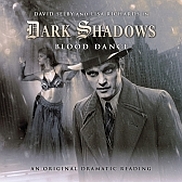
DARK SHADOWS: BLOOD DANCE Scheduled for April Release


Just received from Big Finish: cover art to Dark Shadows: Blood Dance. It's scheduled for April release and will be available for pre-order shortly.

"Blood Dance is written by returning author Stephen Mark Rainey, and features Quentin in prohibition-era Chicago, plunged into a supernatural mystery at the shady Arcadia Club. 'We learn about a chapter of Quentin’s life never revealed in the show itself,' says Rainey. 'There’s new insight into the people, places, and events that shaped one of the show’s most endearing characters.'"

Monday, February 8, 2010

Ebirah, Horror From the Deep


Godzilla vs. the Sea Monster
(Nankai No Daiketto, 1966)

DVD Description:
Released by Sony Pictures; additional material: trailers for Sony Pictures' DVD releases

Directed by Jun Fukuda

Starring Akira Takarada, Kumi Mizuno, Akihiko Hirata, Jun Tazaki, Chôtarô Tôgin, Hideo Sunazuka, Tôru Ibuki

Rating: 3 out of 5 stars

Sadly for us poor westerners, Godzilla vs. the Sea Monster never received a domestic theatrical release; instead, in 1967, it went straight to television, courtesy of the Walter Reade-Sterling Organization. The original U.S. version begins with footage swiped from later in the film of the titular sea monster (uber lobster Ebirah) destroying a yacht, ostensibly owned by Yata, the brother of our young protagonist Ryôta. However, it’s clearly the same yacht later commandeered by Ryôta (its name, Yahlen, is visible on the hull). The film then cuts to a dance competition, where Ryôta hopes to win a boat so he may go and rescue his lost brother. Missing is the actual opening from the Japanese version, in which the siblings’ mother goes to a medium, who tells her that her son cannot be found in the land of the dead, which motivates Ryôta to embark on his quest. Thankfully, this Sony release offers the full-length Japanese version, in anamorphic widescreen, with a choice of subtitles or English audio. The English dub, however, is the horrendous made-in-Hong-Kong international version rather than the superior Titra version from the original U.S release (which featured Hal Linden, TV's Barney Miller, as the voice of Yoshimura, the bank robber played by Akira Takarada).

The financial hardships that had begun to plague Japanese movie studios in the mid- to late-'60s—which would eventually lead to a near-total collapse of the Japanese film industry—began to reveal themselves in the production of Sea Monster. Rather than the intricately crafted miniature city sets that effects director Eiji Tsuburaya had overseen in earlier films, most of the monster action takes place on the much sparser Letchi Island set. Still, the monster scenes are generally well-directed and include a few superlative moments, such as Godzilla's attack on the base of the Red Bamboo (the military organization, presumably communist, that has enslaved the natives of Infant Island and is secretly building nuclear weapons) and the MIG jet assault on Godzilla.

To this time, most Godzilla movies—and the bulk of Toho's daikaiju and science fiction releases—had been scored by Akira Ifukube. For Sea Monster, Composer Masaru Sato provided the musical score, which made for a very different experience for those accustomed to Ifukube's familiar style. Sato had scored Godzilla Raids Again (Gigantis, the Fire Monster) and The Abominable Snowman (Half Human), but his greatest claim to fame was providing the the musical soundtracks for numerous films by Akira Kurosawa. His work for Sea Monster is highly enjoyable on its own, yet as a Godzilla movie score, it oftentimes seems too playful—particularly during the MIG attack on Godzilla. It's a rocking, guitar-driven piece, its riffs reminiscent of the Ventures. Some of the incidental music for scenes on the island rings of Mondo Exotica, a la Martin Denny and Les Baxter (not that this is a bad thing, said the confirmed old lounge lizard). Sato would go on to score most of the Godzilla films directed by Jun Fukuda, and while the mood his music sets deviates significantly from anything Ifukube might ever have imagined, it in its way, it certainly keeps the scores from coming across as stale retreads.

This DVD release is pretty much bare bones, with just a few trailers as extra features, but the very nice, anamorphic print of the original full-length film is certainly a coup for Godzilla completists.

That Time of Year...

...for the friggin' cold bug to hit. It's been tickling at my throat for several days. Now it's got me big time. Sucka-fraggin-riggin-grumble-ding-dong-blasted crap...

Sunday, February 7, 2010

Monster Zero


Invasion of the Astro Monster
(Kaiju Daisenso,
1966)

DVD Description:

Released by Classic Media; additional material: commentary, trailers, Tomoyuki Tanaka biography, still gallery

Directed by Ishiro Honda

Starring Nick Adams, Akira Takarada, Akira Kubo, Kumi Mizuno, Keiko Sawai, Jun Tazaki, Yoshio Tsuchiya

Rating: 4 out of 5 stars

Classic Media presents another first-class release with Invasion of the Astro Monster (a.k.a. Monster Zero, its 1970 U.S. theatrical release title, used on the English version here, a.k.a. Godzilla vs. Monster Zero, its U.S. television/video release title).

Back in those wonderful days of monster movie matinees and drive-in grindhouse shows, I caught the double-feature release of War of the Gargantuas/Monster Zero at our local theater, and the pair made a more powerful impression on me than just about any other film experience to that time. Perhaps strangely, given my special fondness for Godzilla, I found that I much favored War of the Gargantuas (and still do, for that matter). Like all of Toho's fantasy-oriented daikaiju films of the 1960s, Monster Zero is quite silly, and ever since childhood, I've preferred my monsters played straight, as in the original 1954 Godzilla. But Monster Zero is undeniably a colorful, action-packed, superbly crafted monster flick that features some of Eiji Tsuburaya's most accomplished special effects work (if also, sadly, some of his least). Much as its predecessor, Ghidrah, the Three-Headed Monster, the greater part of the movie revolves around its people scenes, which can be most disheartening for a young monster enthusiast; fortunately, in both films, the human story plays out as fun and engaging—even more so in Monster Zero than in Ghidrah.

In the same way that Ghidrah maintained some direct continuity with Mothra vs. Godzilla, Monster Zero's script, by veteran screenwriter Shinichi Sekizawa, builds on some of the dramatic cues from Ghidrah, such as the Godzilla-Rodan tag team that previously defeated King Ghidorah (though there's no mention of Mothra, who played a pivotal monster role in the earlier film). Toho had already used the space-aliens-invade-Earth theme in prior films, such as The Mysterians and Battle in Outer Space, but Monster Zero is the first that directly involves Godzilla. When Monster Zero came to the theater in 1970, I had already seen Destroy All Monsters, whose similar but somewhat grimmer storyline and distinctly superior depictions of the monsters—Godzilla in particular—made Monster Zero seem lacking in comparison. In retrospect, however, Monster Zero contains many finer elements, particularly the great chemistry between Nick Adams as Mister Astronaut Glenn and Akira Takarada as Astronaut Fuji. Although this film boasts fewer special effects scenes than Destroy All Monsters, the beasties' rampages, particularly King Ghidorah's, stand out as among Toho's all-time best.

In Ghidrah, the monster battles were played for laughs to a greater extent than in any previous Toho daikaiju film, with the possible exception of King Kong vs. Godzilla. Monster Zero continues the trend of anthropomorphizing the terrestrial monsters, although the humorous moments tend to be somewhat more palatable here than in Ghidrah—particularly since the monster interactions contain a few more "straight" moments. Design-wise, the Godzilla suit constructed for Monster Zero doesn't fare as well as the "Mosu-Goji" costume used in Mothra vs. Godzilla and Ghidrah, but the Rodan suit works somewhat better, especially when shown in the distance and in flight. In the audio commentary of Classic Media's Ghidrah release, author David Kalat posits that the original, "demonic"-looking Rodan suit from 1957's Rodan, the Flying Monster would have appeared out of place in such a light-hearted fantasy, and there may be some merit to this argument; however, if it were up to me, I would have happily seen the original Rodan costume duplicated for these films, and the whole tone played more seriously. Then again, they didn't ask me—possibly because I was a wee lad at the time and didn't work for Toho.

The lighter tone for these films was established by screenwriter Sekizawa and effects director Tsuburaya, whose penchant for entertaining young people was, by this point in their careers, so firmly cemented that their days of making monster movies with grim, semi-realistic undertones were long behind them. Yet director Ishiro Honda felt—as I always have—that the monsters should have maintained the dignity of their great stature. He was pained by scenes of Godzilla acting a clown and bouncing ludicrously in a "shie" dance after overcoming King Ghidorah on Planet X. Would that Honda's attitude might have prevailed. I mean, I was a young people back then, but I was also the most fervent possible advocate of very monstrous monsters.

Although the Japanese and American versions of Monster Zero are almost identical, the Japanese version is arguably superior, with a couple of possible exceptions. In the U.S. version, Akira Ifukube's opening theme—a rousing military march based on the depth charge attack motif from the original Godzilla—has been replaced by the far more ominous-sounding track titled "The Electromagnetic Capsule" from later in the film, and to much better effect. During Godzilla's aforementioned "shie" jig, the roars and booming sound effects in the American version offer at least some slight improvement to the otherwise ridiculous and utterly useless scene. However, a handful of special effects scenes—good ones—were excised from the American cut, and, more significantly, a number of lines in "X-ian" language, improvised by Yoshio Tsuchiya as the Controller of Planet X, were also cut.

Both the U.S. and Japanese prints on the Classic Media DVD are of very good quality, far better than the one used on the Simitar release of Godzilla vs. Monster Zero from 1998. As for extra features, the most noteworthy is kaiju authority Stuart Galbraith's informative commentary on Henry Saperstein/UPA's U.S. cut. Additionally, the bio documentary of Tomoyuki Tanaka, narrated by Mr. Ed Godziszewski, is highly enjoyable. For Godzilla fans, this release of Monster Zero is a necessity, and I suspect that even more casual monster movie viewers will have a rocking good time with it.